Mesothelioma and Asbestos Risk for First Responders

First responders may be exposed to asbestos while assisting with natural disasters and other events. Asbestos in buildings and equipment can expose firefighters, paramedics and law enforcement officers. As a result, they may develop an asbestos disease, such as mesothelioma.
Learn About Occupational Asbestos Exposure in Our Free Guide
Free 2026 Mesothelioma Guide
How Are First Responders Exposed to Asbestos?
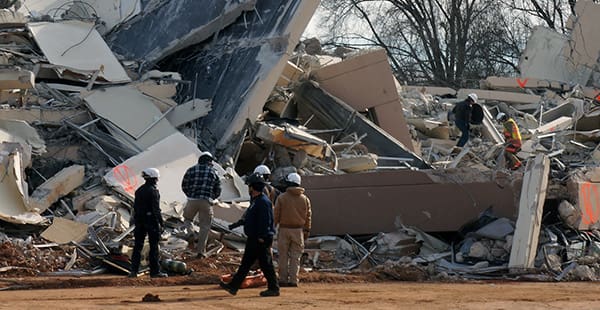
First responders face asbestos exposure risks when they assist with disaster recovery and repair. Catastrophes can disturb asbestos products in buildings, releasing fibers. Asbestos was a construction staple for decades until regulations slowed its use beginning in the 1970s.
Disasters present an exposure risk to anyone present before cleanup is completed. Inhaling or ingesting asbestos fibers can lead to various diseases, like mesothelioma cancer.
- 269,000 emergency medical technicians (EMTs) and paramedics, 334,200 firefighters, 808,700 police officers and detectives and 11,800 emergency management directors in the United States (2022)
- Asbestos Exposure: Previous and ongoing exposure risk
- Asbestos-Related Disease Risk: Moderate
First responders are at risk of exposure during and after any event that disturbs asbestos. Damage to asbestos-containing buildings or products can be hazardous. Common types of disasters first responders may be involved with include:
- Intentional man-made disasters: Intentional man-made disasters include acts of terrorism, arson, war and environmental degradation. First responders involved in firefighting, cleanup and search and rescue may experience exposure.
- Natural disasters: Hurricanes, floods and wildfires can tear apart older buildings and equipment. This can damage their internal asbestos products. Asbestos products may spread widely in areas affected by natural disasters. For example, New Jersey officials warned residents of asbestos risks after Hurricane Sandy.
- Unintentional man-made disasters: These include waterline bursts, gas explosions and other equipment failures. Old infrastructure, such as water pipes that may contain asbestos, can fail. When it does, it can release asbestos. When components are disturbed or worn, they may spread the dangerous carcinogen around.
Many people may be exposed to asbestos while responding to these events. In some cases, they may be equipped with personal protective equipment (PPE). However, immediate response teams may not be wearing PPE.
The 9/11 World Trade Center terrorist attacks exposed thousands to hazardous materials. The Twin Towers contained hundreds of tons of asbestos. The towers’ fall released toxic dust containing asbestos and other contaminants.
First responders may have inhaled or ingested the dust. Many present at Ground Zero have been diagnosed with various illnesses, including mesothelioma. This includes New York City police, response teams, firefighters and emergency personnel.
Learn More About the World Trade Center Attacks and AsbestosFirst responders continue to face asbestos exposure risks. The United States Environmental Protection Agency (EPA) took action to regulate asbestos beginning in the 1970s. By the 1980s, most companies had stopped using the mineral.
But there is no law that requires all buildings to remove any traces of asbestos. Old buildings may still contain asbestos that can be disturbed during emergency situations.
What Asbestos Products Put First Responders at Risk?
First responders may have been exposed to asbestos from:
- Adhesives, bonding and sealers
- Blankets
- Cement
- Cement sheets
- Construction materials
- Electric panels
- Felt
- Fireproofing materials
- Flooring
- Gaskets
- Household appliances
- Insulation
- Paint
- Pipes and plumbing
- Popcorn ceilings
- Roofing
- Siding
- Spray-on coating
- Textiles
- Tiles
- Vinyl
- Wallpaper
Before the 1980s, asbestos was commonly used in buildings, infrastructure and machinery. Many companies used it for its strength, low cost and resistance to heat and chemicals. But disturbed asbestos poses health risks.
Asbestos companies produced, distributed and used dangerous products. Many of these companies were aware of the negative health effects of the mineral. However, various manufacturers incorporated asbestos into products for nearly a century. As a result, many first responders have been exposed to the mineral. It continues to pose a threat.
Manufacturers of Asbestos Products That May Expose First Responders
- A.P. Green Industries
- A.W. Chesterton Company
- AC&S Inc.
- Amatex Corporation
- American Biltrite
- Amtico International Inc.
- Anchor Packing Company
- Armstrong International Inc.
- Armstrong World Industries
- ASARCO LLC
- AstenJohnson Inc
- Atlas Turner Inc.
- Babcock & Wilcox
- Bechtel Corporation
- Bird Corporation
- Boise Cascade Corporation
- Bondex International
- Celotex Corporation
- CertainTeed Corporation
- Chemical & Power Products Inc.
- Combustion Engineering
- Congoleum
- Crown Cork & Seal Company
- Crown-Zellerbach
- Dana Corporation
- DAP Inc.
- Dresser Industries Inc.
- Durabla Manufacturing Company
- Eagle-Picher Technologies
- Felt Products Manufacturing
- Flexitallic Gasket Company
- The Flintkote Company
- Foster Wheeler Corporation
- GAF Corporation
- Garlock Sealing Technologies
- Georgia-Pacific Corporation
- Goetze Gasket and Packing Company Inc.
- Goodyear Tire & Rubber Company Inc.
- Greene, Tweet & Company
- H.B. Fuller
- H.K. Porter (a brand from Apex Tool Group)
- Harbison-Walker Refractories Company
- Hercules Chemical Company
- John Crane Inc.
- Johns-Manville
- Kaiser Aluminum
- Kaiser Gypsum Company Inc.
- Keene Corporation
- Kentile Floors
- Koppers Company
- M.H. Detrick Company
- McCord Manufacturing Company Inc.
- Melrath Supply and Gasket Company
- Metalclad Insulation Corporation
- Minnesota Mining and Manufacturing (3M)
- Mobil Oil
- NARCO/Honeywell
- National Gypsum Company
- Nicolet Company (Keasbey & Mattison Company)
- New England Insulation
- Owens-Corning Fiberglas
- Owens Corning/Fibreboard Corporation
- Pecora Corporation
- Pittsburgh Corning (UNARCO Industries)
- Quigley Company
- Raybestos-Manhattan Inc.
- Raymark Industries Inc.
- Reynolds Metals Company
- Rock Wool Manufacturing Company
- Scapa Dryer Fabrics Inc.
- Sears-Roebuck and Company
- Sid Harvey Industries Inc.
- Synkoloid Company
- Thermo Fisher Scientific
- Turner & Newall
- U.S. Gypsum Company
- Uniroyal Holding Inc.
- United Gilsonite Laboratories
- United States Mineral Products Company
- W.R. Grace
- Weil-McLain Company
- Western MacArthur
- Westinghouse Electric Corporation
- Wheeler Protective Apparel Inc.
Common Places First Responders May Find Asbestos
First responders may come into contact with asbestos in areas like:
- Attics
- Basements
- Beaches
- Boiler rooms
- Buildings
- Factories
- Homes
- Manufacturing facilities
- Power and utility facilities
- Schools
- Ships
- Shipyards
- Waterways
Asbestos was often used in areas subject to heat, pressure and/or chemical exposure. This includes any equipment routinely subjected to high heat, such as HVAC systems and boilers.
Fire-resistant materials such as insulation and other building materials also contained asbestos. First responders may be exposed to these products in the buildings or in debris after a disaster.
First Responders and At-Risk Trades
Many people in different fields become first responders in times of need. Typically, these fields include medical personnel, law enforcement officers and firefighters. These and other individuals may come into contact with asbestos during relief efforts.
At-risk professions in the first responders field include:
- Cleanup crews
- Emergency medical technicians (EMTs)
- Firefighters
- Law enforcement officers
- Military personnel
- Paramedics
- Police officers
- Rebuilding teams
- Search and rescue personnel
- Volunteers
Any of these individuals may be at risk of asbestos exposure when responding to a disaster. Firefighters are among the most at risk for exposure. Because they respond so quickly to disasters, hazardous materials like asbestos may be present when they arrive. In addition, some fire suits were made with the mineral for flame resistance. Damage to such suits could result in asbestos exposure.
First responders may also unwittingly expose their loved ones to asbestos. This is called secondary asbestos exposure. It occurs when people accidentally transport asbestos fibers on their person. Family members at home may inhale or ingest the fibers. Even hugging their loved ones or assisting with their laundry can cause exposure.

- Don't lose your rights
- Free case evaluation
- Help filing VA claims
- Treatment for Vets

- Provide for loved ones
- $30 billion set aside
Mesothelioma Risk for First Responders
First responders may come into contact with asbestos while attending to disasters. Any level of asbestos exposure can cause illnesses like mesothelioma cancer.
Firefighters are among the first responders most at risk for an asbestos disease. Researchers in the United States and several Nordic countries have found that firefighters get mesothelioma much more often than the general population.
EMTs, search and rescue personnel and cleanup crews may also develop asbestos diseases. First responders may choose routine medical monitoring if they may have been exposed. The International Association of Fire Fighters (IAFF) provides routine screenings for members. The World Trade Center Health Program also offers health monitoring for 9/11 survivors.
Routine cancer screenings may allow mesothelioma doctors to diagnose asbestos-related cancers earlier. More treatment options may be available for patients whose mesothelioma is diagnosed earlier.
Compensation for First Responders With Occupational Asbestos Exposure
First responders who develop an asbestos disease in the line of duty may be eligible for compensation. They may qualify to file mesothelioma lawsuits and asbestos trust fund claims. Individuals exposed during the World Trade Center attacks may also be able to file a claim with the 9/11 Victim Compensation Fund (VCF).
The VCF provides compensation for victims who suffer a 9/11-related injury. This includes first responders who develop an asbestos-related disease. Those who lost a family member because of a 9/11-related injury may also receive compensation.
In 2019, Congress authorized the VCF to fulfill claims through 2090. This is thanks to a law called Never Forget the Heroes: James Zadroga, Ray Pfeifer and Luis Alvarez Permanent Authorization. This act provided the fund with $10.2 billion to fulfill current and future claims.
A mesothelioma attorney can help first responders and their families in a couple of ways. They can help determine the best course of action for compensation. They can also help them hold responsible parties accountable for their disease. Asbestos victims should contact a mesothelioma law firm to discuss their legal options.
Sources
Department of Veterans Affairs. On appeal from the Department of Veterans Affairs Regional Office in Jackson, Mississippi.
Fire Engineering. NIOSH Issues Safety Warning over Erionite.
Fritschi L, Glass DC. Firefighters and cancer: where are we and where to now? Occup Environ Med. 2014 Aug;71(8):525–6.
NJ.com. Officials warn Hurricane Sandy victims of mold, asbestos, lead paint.
September 11th Victim Compensation Fund. About the Victim Compensation Fund.
United States Bureau of Labor Statistics. OCCUPATIONAL OUTLOOK HANDBOOK: Emergency Management Directors.
United States Bureau of Labor Statistics. OCCUPATIONAL OUTLOOK HANDBOOK: EMTs and Paramedics.
United States Bureau of Labor Statistics. OCCUPATIONAL OUTLOOK HANDBOOK: Firefighters.
United States Bureau of Labor Statistics. OCCUPATIONAL OUTLOOK HANDBOOK: Police and Detectives.
Vox. The battle over extending the September 11th Victim Compensation Fund, explained.
Financial Assistance for Mesothelioma Patients

Tara Strand specializes in writing content about mesothelioma and asbestos. She focuses on topics like mesothelioma awareness, research, treatment, asbestos trust funds and other advocacy efforts.

 Legally
Reviewed by
Jennifer Lucarelli
Mesothelioma Lawyer and Legal Advisor
Legally
Reviewed by
Jennifer Lucarelli
Mesothelioma Lawyer and Legal Advisor
For more than two decades, Jennifer Lucarelli has served as Legal Advisor at Mesothelioma.com. She has advocated for more than 1,000 asbestos victims, securing millions in settlements and helping them access quality medical care.