
Asbestos Pipes

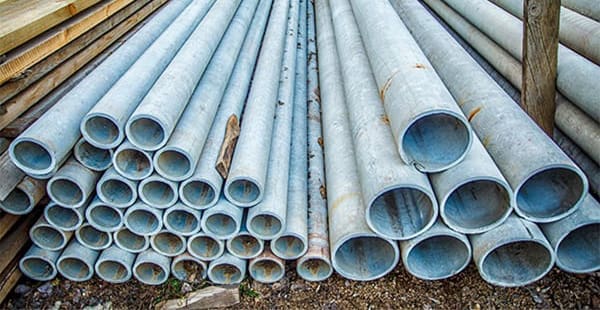
Until the 1980s, many types of pipes and pipe insulation contained asbestos. Homes, schools and public buildings may all have used asbestos piping. This piping poses asbestos exposure risks for workers, residents and the general public. Asbestos exposure may lead to the development of mesothelioma.
Learn More About Asbestos-Containing Products
Why Was Asbestos Used in Pipes?
For decades, pipe manufacturers used asbestos in their pipes and pipe wrappings. The mineral was popular because of its heat resistance and affordability. Manufacturers could also easily mix it with other materials. For instance, they often added asbestos to the steel and cement used for pipes. Asbestos as an additive helped prevent corrosion inside the pipes. Some pipes were covered with asbestos for further protection.
Asbestos Pipes History at a Glance
- Other Names: AC pipes, cast iron pipes, pipe coverings, pipe insulation, pipe jackets, pipelines, transite pipes, water pipes
- Years of Manufacture: 1920 – 1980
- Military Use: Barracks, boilers, ships
- Places Used: Above-ground pipes, homes, plumbing, public buildings, roof piping, underground sewer systems
- Asbestos Use Banned: Yes
- Noteworthy Brands: CertainTeed, The Flintkote Company, Johns-Manville, Owens-Corning Fiberglas, U.S. Gypsum Company
Dangers of Asbestos in Pipes
Pipes carry liquids, most often water, from one place to another. The water distribution process also often involves heating water with boilers and other similar machinery.
This high-heat environment led many pipe manufacturers to use asbestos. It was often added to the cement or steel pipes. Plumbing materials containing asbestos were also added to existing distribution pipes that were not originally manufactured with asbestos.
Asbestos insulation, felt wrapping and asbestos coatings on pipes were also common. Both non-asbestos and asbestos pipes may have had asbestos insulation or coatings.
Because asbestos is a versatile material, many pipes manufactured before the 1980s contained large amounts of the mineral. For example, the felt wrapping around a pipe may have contained anywhere from 5% to 50% asbestos. On average, pipe coatings may have had up to 25% asbestos.
Most pipes manufactured after the 1980s do not contain asbestos. But the mineral’s durability means legacy asbestos pipes are still commonplace. As a result, hundreds of thousands of feet of pipeline still contain asbestos. This puts many people, including homeowners and certain workers, at risk of asbestos exposure.
Evidence shows that these pipes may release asbestos into the water supply. The Environmental Protection Agency (EPA) has identified a threshold of allowable asbestos in water. But some studies show asbestos in the drinking water supply could potentially lead to the development of mesothelioma and other cancers.
Plumbers and other similar occupations have a high risk of occupational asbestos exposure. Their job duties often involve activities that release asbestos dust. For instance, plumbers often repair or replace pipes. This activity involves sawing or sanding the pipe, its coating and its insulation. Asbestos fibers may be released and inhaled by the plumbers.
Connect With a Top Mesothelioma Doctor Find a mesothelioma specialist near you Get Connected
List of Asbestos Pipes
Asbestos pipes were used for water systems in many types of buildings. Examples include factories, government facilities, homes, offices, public spaces, residential buildings and schools. The base material of the pipes may have been supplemented with asbestos. Other asbestos materials, like insulation, may have been added to non-asbestos piping.
Click below to see detailed types of asbestos pipe products:
| Product Name | Start Year | End Year |
|---|---|---|
| ACandS Aircell Pipe Covering | 1958 | 1968 |
| ACandS Armstrong Hi-Temp Pipe Covering | 1958 | 1965 |
| ACandS Armstrong Kay-Therm Pipe Covering | 1957 | 1964 |
| ACandS Duplex Wool Felt Pipe Insulation | 1956 | 1963 |
| ACandS Kaylo Pipe Covering | 1958 | 1959 |
| ACandS LK Pipe Covering | 1960 | 1973 |
| Capco Permaflex Waterpipe | ||
| Celetox Excel Pipe Covering | 1925 | 1960 |
| Celotex Carey Cell Pipe Covering | ||
| Celotex Carey Pipe Covering | ||
| Celotex Carey York Pipe Covering | ||
| Celotex Careytemp Pipe Covering | ||
| Celotex Careytemp Pre-Molded Insulation | ||
| Celotex Careytemp-Check PCB (Pipe Covering) | 1942 | 1958 |
| CertainTeed Asbestos Cement Pipe | 1962 | 1992 |
| Crown Cork and Seal Mundet Pipe Covering | 1958 | 1963 |
| Eagle Picher Hylo Pipe Covering | ||
| Eagle-Picher Pipe Coverings | 1956 | |
| Empire Ace Aircell Pipe Covering | 1959 | 1984 |
| Fibreboard Pabco 85% Magnesia Pipe Covering | 1941 | 1971 |
| Fibreboard Super Caltemp Pipe Covering | 1965 | 1975 |
| Flintkote Orangeburg Cement Pipe | 1940 | 1971 |
| GAF Ruberoid Calsilite Pipe Covering | 1944 | 1971 |
| Johns-Manville Asbestocel | 1902 | 1975 |
| Johns-Manville Asbestos Sponge Felt | 1961 | |
| Johns-Manville Pipe Covering | 1902 | 1970 |
| Johns-Manville Superex Pipe Covering | 1930 | 1971 |
| Johns-Manville Thermobestos Pipe Covering | 1950 | 1974 |
| Johns-Manville Transite Pipe | 1906 | 1975 |
| Keene Ehret Durant Insulated Pipe | 1938 | 1945 |
| Keene Enduro Pipe Covering | 1924 | 1955 |
| Keene Thermalite Pipe Covering | 1950 | 1974 |
| Keene Thermasil Pipe Covering | 1956 | 1972 |
| Nicolet BestFelt Pipe Covering | 1962 | 1963 |
| Nicolet Cellotone | 1939 | 1968 |
| Nicolet Kay-Therm Pipe Insulation | 1962 | 1964 |
| Owens-Corning Fiberglas Kaylo Pipe Covering | 1955 | 1975 |
| Owens-Illinois Kaylo Pipe Covering | 1948 | 1958 |
| Pittsburgh Corning Unibestos Pipe Covering | 1962 | 1972 |
| Ruberoid Anti-Sweat Pipe Covering | 1936 | 1958 |
| Ruberoid Frost-Proof Pipecovering | 1928 | 1958 |
| Ruberoid Woolfelt Pipe Covering | 1928 | 1959 |
| Shook & Fletcher Insulation | ||
| Turner & Newall Aircell Pipe Covering | 1952 | 1964 |
| Turner & Newall Featherweight Pipe Covering | 1962 | 1964 |
| Turner & Newall K & M Pipe Covering | 1962 | 1964 |
| Turner & Newall Kay-Therm Pipe Covering | 1962 | 1964 |
| Unarco Amocel Pipe Covering | ||
| United States Gypsum Corrugated Cool Felt Air C. Covering | 1936 | 1939 |
| United States Gypsum Pipe Covering | 1936 | 1939 |
| United States Gypsum Pyrobestos PC Board & Stack Lining | 1936 | 1939 |
Some asbestos companies produced pipes made with the mineral. Other companies produced asbestos-containing materials that were used around or with pipes. Many companies also sold asbestos pipe products made by other manufacturers.
- AC&S
- A.P. Green Industries
- Armstrong World Industries
- ASARCO LLC
- Blodgett Corporation
- Bondex International
- Capco
- Celotex Corporation
- CertainTeed Corporation
- Combustion Engineering
- Crown Cork & Seal Company
- DAP Inc.
- EaglePicher Technologies
- Empire Ace
- The Flintkote Company
- Foster Wheeler Corporation
- GAF Corporation
- Harbison-Walker Refractories Company
- Hercules Chemical Company, Inc.
- John Crane Inc.
- Johns-Manville
- Kaiser Aluminum
- Kaiser Gypsum Company
- Keene Corporation
- Kewaunee Scientific Corporation
- M.H. Detrick Company
- NARCO/Honeywell
- National Gypsum Company
- Owens-Corning Fiberglas
- Owens Corning/Fibreboard Corporation
- Owens-Illinois Inc.
- Pecora Corporation
- Pittsburgh Corning
- Quigley Company
- Sid Harvey Industries Inc.
- Synkoloid Company
- Thermo Fisher Scientific
- Turner & Newall
- UNARCO Industries
- United Gilsonite Laboratories
- United States Mineral Products Company
- U.S. Gypsum Company
- Weil-McLain Company
- W.R. Grace
 Did You Know?
Corporate documents show that asbestos companies knew the products they made were dangerous.
Speak with a lawyer today about filing a mesothelioma claim against these irresponsible companies.
Did You Know?
Corporate documents show that asbestos companies knew the products they made were dangerous.
Speak with a lawyer today about filing a mesothelioma claim against these irresponsible companies.
Who Is at Risk of Asbestos Exposure From Pipes?
The widespread use of asbestos in pipes puts workers and many other people at risk of exposure. In particular, plumbers and pipefitters faced occupational asbestos exposure risks. They may have inhaled or ingested asbestos while performing typical work duties. This includes installing, replacing or repairing asbestos pipes or their coverings.
One study in 1985 assessed the relationship between asbestos exposure, plumbers and pipefitters. Researchers found many participants showed abnormalities associated with asbestos exposure, like pleural thickening.
Workers in related industries, like construction or HVAC repair, also faced these exposure risks. Factory workers may have been exposed when making asbestos pipes and other plumbing materials.
- Appliance installers
- Boiler workers
- Bricklayers
- Carpenters
- Construction workers
- Contractors
- Demolition crews
- Dockworkers
- Electricians
- Factory workers
- Firefighters
- First responders
- Flooring installers
- General repair workers
- Heat and frost insulators
- HVAC workers
- Industrial workers
- Installation technicians
- Insulators
- Machinists
- Maintenance staff
- Masons
- Metal workers
- Pipefitters
- Plumbers
- Renovation teams
- Roofers
- Siding installers
- Steamfitters
The popularity of asbestos pipes also puts others at risk of non-occupational exposure. For instance, homeowners may be exposed when repairing pipes in their houses. Many older homes and buildings may still contain asbestos.
Asbestos exposure can lead to related diseases, like lung cancer and mesothelioma.
Asbestos Lawsuits, Settlements & Other Compensation
People who were exposed to asbestos in pipes may develop mesothelioma. If so, they or their loved ones may be able to file lawsuits against asbestos companies. Mesothelioma lawyers have filed lawsuits against many companies for exposure caused by their asbestos pipes. Asbestos lawsuits have named Honeywell, CertainTeed Corporation and John Crane Inc., among other notable companies.
Compensation Following Exposure From Asbestos Pipes
Successful asbestos pipe lawsuits have resulted in financial compensation for victims. This compensation was secured through jury verdicts or settlements, depending on each case.
- In 2019, a pipefitter diagnosed with pleural mesothelioma was awarded $10 million. He had filed a lawsuit against CertainTeed Corporation for his exposure. A jury upheld the verdict on appeal.
- In 2013, a mesothelioma patient filed a lawsuit against four companies. He had been exposed to asbestos pipe insulation while working as a pipefitter. After an appeal, Honeywell was found solely responsible, and he was awarded $8.5 million.
- In 2019, a pleural mesothelioma patient’s family filed a lawsuit against various asbestos companies. He had experienced asbestos exposure while working as a pipefitter. A jury upheld the verdict on appeal. His family was awarded $4.8 million from John Crane Inc.
Safely Removing Asbestos Pipes
Federal asbestos laws and regulations set various guidelines for safely removing asbestos pipes. Trained and licensed asbestos abatement contractors should handle this process. The general public, like homeowners and business owners, should not attempt asbestos removal themselves.
The Occupational Safety and Health Administration (OSHA) outlines criteria for asbestos pipe identification. It also classifies the pipe into specific categories of contamination. Asbestos contractors follow protocol based on the pipe’s contaminant level.
General OSHA guidelines for asbestos pipe removal include:
- Clean-up and disposal timelines
- HEPA vacuums
- How to perform dry clean-ups of dust and debris
- Instructions for wet methods
- Number of employees to perform tasks and in which rotation
- Personal protective equipment (suits, respirators and gloves) for workers
- Prohibitions against certain saws or compressed air devices
- Protocol for using glove bag systems
No level of asbestos exposure is safe. But these guidelines may help protect workers from related health risks.
Sources
New York State Department of Health. Investigation of Cancer Incidence among the Woodstock Asbestos Exposure Registry Population.
Occupational Safety and Health Administration. Standard 1926.1101 – Asbestos.
Occupational Safety and Health Administration. Standard Interpretations Requirements for tapping or tying-in to asbestos containing cement water pipes for construction.
Pipeline Equities. The Asbestos Coated Pipeline.
Sprince NL, Oliver LC, McLoud TC. Asbestos-related disease in plumbers and pipefitters employed in building construction. J Occup Med. 1985 Oct;27(10):771–5.
Legal Rights for Mesothelioma Victims

Tara Strand specializes in writing content about mesothelioma and asbestos. She focuses on topics like mesothelioma awareness, research, treatment, asbestos trust funds and other advocacy efforts.

 Legally
Reviewed by
Jennifer Lucarelli
Mesothelioma Lawyer and Legal Advisor
Legally
Reviewed by
Jennifer Lucarelli
Mesothelioma Lawyer and Legal Advisor
For more than two decades, Jennifer Lucarelli has served as Legal Advisor at Mesothelioma.com. She has advocated for more than 1,000 asbestos victims, securing millions in settlements and helping them access quality medical care.