
Asbestos Fireproofing and Fire-Resistant Materials

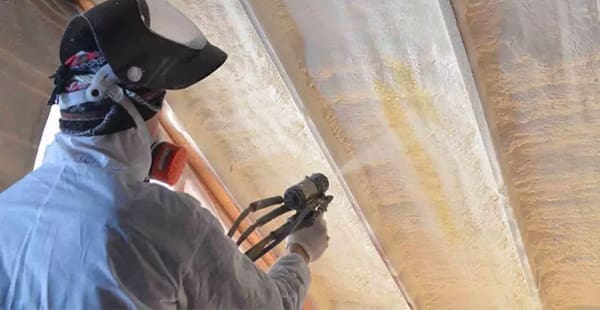
Asbestos was often used in products to fireproof homes, buildings and machines. Manufacturers used asbestos in insulation, spray-on fireproofing and more. These products may still be present in older buildings and machines. As the products age or become damaged, they can lead to asbestos exposure.
Learn More About Asbestos-Containing Products
Why Was Asbestos Used in Fireproofing Materials?
Asbestos is a fire-retardant material. This means it can slow the spread of fire. The mineral is durable and heat resistant. While it has fire-resistant properties, fire can still damage it.
Companies added asbestos to many products, including fireproofing materials, through the 1980s. It was readily available and inexpensive to produce. Some asbestos products were used in homes and other buildings and may contain 5% – 30% asbestos fibers.
Asbestos was also woven into textiles to create fireproof clothing and blankets. For example, the protective gear firefighters wore had asbestos in it. Other occupations that work around high temperatures may have used fire protective gear, like asbestos gloves.
Asbestos Fireproofing Materials History at a Glance
- Years of Manufacture: 1800s – Present
- Military Use: Air Force, Army, Coast Guard, Marines, Navy
- Places Used: Clothing, drywall, flooring, insulation, roofing
- Asbestos Use Banned: Partial
- Noteworthy Brands: A.P. Green Industries, Johns-Manville, Turner & Newall, W.R. Grace
Dangers of Asbestos in Fireproofing Materials
The use of asbestos in fire-resistant materials may pose health risks to many different people. Anyone who works with or around these asbestos-containing materials may risk exposure when the materials become worn or damaged.
Worn or damaged asbestos can become friable, meaning it is brittle and easily broken. Friable asbestos may become airborne when disturbed and is a health hazard.
Anyone who inhales or swallows airborne asbestos faces the risk of developing an asbestos-related disease. These diseases include asbestosis, mesothelioma, lung cancer and others.
In 1983, researchers studied 127 buildings with spray-on fireproofing and found roughly 50% had asbestos. The researchers also studied how much asbestos became airborne during the removal of dry materials. They found this method exposed workers to concentrations of more than 16 fibers per cubic centimeter. According to the Occupational Safety and Health Administration (OSHA), the safe level is one fiber per cubic centimeter over 30 minutes.
A dramatic example of asbestos exposure happened at the World Trade Center (WTC) in New York City. When the World Trade Center was constructed, builders used asbestos spray-on coatings as fireproofing. They also used asbestos-containing ceiling tiles and drywall.
When the towers fell on 9/11, asbestos dust was released into the air. Many first responders and people nearby were exposed.
Connect With a Top Mesothelioma Doctor Find a mesothelioma specialist near you Get Connected
List of Asbestos Fireproofing Materials
Asbestos materials used for fireproofing primarily consist of construction materials and textiles. Companies made these asbestos-containing products starting in the 1800s. Some U.S. products were manufactured into the 1980s. Anyone who handled these materials may have risked exposure.
Fireproof building materials with asbestos include:
- Asbestos boards
- Asbestos fireproofing sprays
- Asbestos helmets
- Ceiling tiles
- Firebrick
- Fire doors
- Fireproofing materials
- Floor tiles
- Magnesia
- Paint
- Refractory products
- Roof shingles
| Product Name | Start Year | End Year |
|---|---|---|
| 3M Rubber Coated Asbestos Cloth | 1977 | 1987 |
| A. W. Chesterton Asbestos Cloth | 1907 | 1974 |
| A.P. Green Asbestos Firebrick | ||
| A.P. Green Kast-O-Lite Refractory Cement | 1956 | 1972 |
| A.P. Green Mizzou Firebrick | 1966 | 1972 |
| A.P. Green No. 36 Refractory Cement | ||
| A.P. Green Refractory Cement | ||
| AC&S Armstrong 85% Magnesia Pipe Covering | 1958 | 1970 |
| Amatex Asbestos Cloth | 1950 | |
| Amatex Asbestos Cord | 1950 | |
| Amatex Asbestos Yarn | 1950 | |
| Armstrong FRJ | ||
| Armstrong Heavy Duty FRJ | ||
| Atlas Turner Asbestos Cord | ||
| Babcock & Wilcox Refractory Products | ||
| Celotex Carey Asbestos Cloth | ||
| Celotex Carey Firefoil Board | ||
| Celotex Carey Firefoil Panel | ||
| Celotex Carey Super-Light 85% Magnesia Pipe Covering | ||
| Combustion Engineering Block Stick | 1963 | 1972 |
| Combustion Engineering Expansion Joint Material | 1963 | 1966 |
| Combustion Engineering Gunisul | 1963 | 1966 |
| Combustion Engineering Lite Wate 22 | 1969 | 1972 |
| Combustion Engineering Mix A | 1963 | 1972 |
| Dana Corporation Spraycraft Fireproofing | 1964 | 1969 |
| Fibreboard Pabco 85% Magnesia Block Insulation | 1941 | 1971 |
| Fibreboard Pabco 85% Magnesia Pipe Covering | 1941 | 1971 |
| Flintkote Asbestos Cement Board | ||
| Flintkote Cement Board | ||
| H.K. Porter Cleangard | ||
| H.K. Porter Cloth | ||
| H.K. Porter Flamegard | 1958 | 1974 |
| H.K. Porter Lag | 1967 | 1974 |
| H.K. Porter Splashgard | ||
| H.K. Porter Therm-A-Gard | 1967 | 1974 |
| H.K. Porter Weldgard | ||
| H.K. Porter Yarn/Cord | ||
| Harbison Walker Metalkase Chromex 8 | 1964 | 1970 |
| Harbison Walker Micacrete 7/H-W 21-63 | 1963 | 1975 |
| Harbison-Walker Magnex Asbestos Firebrick | ||
| Harbison-Walker Nucon 60 Asbestos Firebrick | ||
| Harbison-Walker Nucon Asbestos Firebrick | ||
| John Crane Braid Over Braid Asbestos Yarn 915 | 1970 | |
| John Crane Commercial Grade Asbestos Yarn 9810 | 1970 | |
| Johns-Manville 319 Semi-Refractory Cement | 1925 | 1969 |
| Johns-Manville 85% Magnesia Block Insulation | 1902 | 1970 |
| Johns-Manville 85% Magnesia Pipe Covering | 1902 | 1970 |
| Johns-Manville Cable Fireproofing | ||
| Johns-Manville Cloth (Coated) | 1960 | 1983 |
| Kaiser Aluminum Plastic K-N Refractory Cement | ||
| Kaiser Gypsum Null-A-Fire Board | 1969 | 1978 |
| Keene Asbestos Cloth | ||
| Keene Ehret Pipe Covering (85% Magnesia) | ||
| National Gypsum Gold Bond Asbestos Cement Board | ||
| National Gypsum Thermotec | 1960 | 1981 |
| Nicolet Asbestos Gasket Cloth | 1962 | 1972 |
| Pacor Asbestos Cloth | 1942 | 1950 |
| Quigley Insulag Refractory Cement | 1935 | 1974 |
| Quigley Insulbox Refractory Cement | 1935 | 1974 |
| Quigley Insuline Refractory Cement | 1940 | 1970 |
| Quigley Panelag Refractory Cement | 1945 | 1974 |
| Quigley Panelbond Refractory Cement | 1940 | 1974 |
| Raymark Blankets | 1929 | 1944 |
| Raymark Novatex (Cloth) | 1967 | 1982 |
| Raymark Polybestos (Cloth) | 1962 | 1979 |
| Raymark Raybestos RM Asbestos Cord And Thread | ||
| Raymark Raybestos Silvabestos | ||
| Raymark Rhinobestos (Cloth) | 1959 | 1970 |
| Raymark Sealsafe (Cloth) | 1972 | 1982 |
| Raymark Sealsafe (Yarn) | 1972 | 1982 |
| Raymark Speedlag (Cloth) | 1969 | 1976 |
| Raymark Yarn | ||
| Rock Wool Asbestos Blanket | ||
| Southern Textile Cord | ||
| Unarco Asbestos Cord | ||
| Unarco Fibrous Glass Insulating Blankets | ||
| Uniroyal Asbestos Cloth (Asbeston) | 1941 | 1976 |
| United States Gypsum Spraydon Fireproofing Plaster | 1965 | 1971 |
| United States Mineral Cafco Blaze Shield Fireproofing | ||
| United States Mineral Cafco Blaze Shield Type D | ||
| United States Mineral Cafco Fireproofing | ||
| United States Mineral Cafco Heat Shield Fireproofing | ||
| United States Mineral Cafco Power Shield Fireproofing |
Besides construction materials, companies used asbestos in textiles. The practice of weaving asbestos into fabrics dates back centuries. In the United States, companies reportedly stopped making asbestos textiles, but other countries still do. Fireproof consumer products made with asbestos include:
- Asbestos cloth
- Asbestos cords
- Asbestos curtains
- Asbestos fire blankets
- Asbestos yarn
- Coveralls
- Gloves, mitts and mittens
| Product Name | Start Year | End Year |
|---|---|---|
| 3M Rubber Coated Asbestos Cloth | 1977 | 1987 |
| A. W. Chesterton Asbestos Cloth | 1907 | 1974 |
| A.P. Green Asbestos Firebrick | ||
| A.P. Green Kast-O-Lite Refractory Cement | 1956 | 1972 |
| A.P. Green Mizzou Firebrick | 1966 | 1972 |
| A.P. Green No. 36 Refractory Cement | ||
| A.P. Green Refractory Cement | ||
| AC&S Armstrong 85% Magnesia Pipe Covering | 1958 | 1970 |
| Amatex Asbestos Cloth | 1950 | |
| Amatex Asbestos Cord | 1950 | |
| Amatex Asbestos Yarn | 1950 | |
| Armstrong FRJ | ||
| Armstrong Heavy Duty FRJ | ||
| Atlas Turner Asbestos Cord | ||
| Babcock & Wilcox Refractory Products | ||
| Celotex Carey Asbestos Cloth | ||
| Celotex Carey Firefoil Board | ||
| Celotex Carey Firefoil Panel | ||
| Celotex Carey Super-Light 85% Magnesia Pipe Covering | ||
| Combustion Engineering Block Stick | 1963 | 1972 |
| Combustion Engineering Expansion Joint Material | 1963 | 1966 |
| Combustion Engineering Gunisul | 1963 | 1966 |
| Combustion Engineering Lite Wate 22 | 1969 | 1972 |
| Combustion Engineering Mix A | 1963 | 1972 |
| Dana Corporation Spraycraft Fireproofing | 1964 | 1969 |
| Fibreboard Pabco 85% Magnesia Block Insulation | 1941 | 1971 |
| Fibreboard Pabco 85% Magnesia Pipe Covering | 1941 | 1971 |
| Flintkote Asbestos Cement Board | ||
| Flintkote Cement Board | ||
| H.K. Porter Cleangard | ||
| H.K. Porter Cloth | ||
| H.K. Porter Flamegard | 1958 | 1974 |
| H.K. Porter Lag | 1967 | 1974 |
| H.K. Porter Splashgard | ||
| H.K. Porter Therm-A-Gard | 1967 | 1974 |
| H.K. Porter Weldgard | ||
| H.K. Porter Yarn/Cord | ||
| Harbison Walker Metalkase Chromex 8 | 1964 | 1970 |
| Harbison Walker Micacrete 7/H-W 21-63 | 1963 | 1975 |
| Harbison-Walker Magnex Asbestos Firebrick | ||
| Harbison-Walker Nucon 60 Asbestos Firebrick | ||
| Harbison-Walker Nucon Asbestos Firebrick | ||
| John Crane Braid Over Braid Asbestos Yarn 915 | 1970 | |
| John Crane Commercial Grade Asbestos Yarn 9810 | 1970 | |
| Johns-Manville 319 Semi-Refractory Cement | 1925 | 1969 |
| Johns-Manville 85% Magnesia Block Insulation | 1902 | 1970 |
| Johns-Manville 85% Magnesia Pipe Covering | 1902 | 1970 |
| Johns-Manville Cable Fireproofing | ||
| Johns-Manville Cloth (Coated) | 1960 | 1983 |
| Kaiser Aluminum Plastic K-N Refractory Cement | ||
| Kaiser Gypsum Null-A-Fire Board | 1969 | 1978 |
| Keene Asbestos Cloth | ||
| Keene Ehret Pipe Covering (85% Magnesia) | ||
| National Gypsum Gold Bond Asbestos Cement Board | ||
| National Gypsum Thermotec | 1960 | 1981 |
| Nicolet Asbestos Gasket Cloth | 1962 | 1972 |
| Pacor Asbestos Cloth | 1942 | 1950 |
| Quigley Insulag Refractory Cement | 1935 | 1974 |
| Quigley Insulbox Refractory Cement | 1935 | 1974 |
| Quigley Insuline Refractory Cement | 1940 | 1970 |
| Quigley Panelag Refractory Cement | 1945 | 1974 |
| Quigley Panelbond Refractory Cement | 1940 | 1974 |
| Raymark Blankets | 1929 | 1944 |
| Raymark Novatex (Cloth) | 1967 | 1982 |
| Raymark Polybestos (Cloth) | 1962 | 1979 |
| Raymark Raybestos RM Asbestos Cord And Thread | ||
| Raymark Raybestos Silvabestos | ||
| Raymark Rhinobestos (Cloth) | 1959 | 1970 |
| Raymark Sealsafe (Cloth) | 1972 | 1982 |
| Raymark Sealsafe (Yarn) | 1972 | 1982 |
| Raymark Speedlag (Cloth) | 1969 | 1976 |
| Raymark Yarn | ||
| Rock Wool Asbestos Blanket | ||
| Southern Textile Cord | ||
| Unarco Asbestos Cord | ||
| Unarco Fibrous Glass Insulating Blankets | ||
| Uniroyal Asbestos Cloth (Asbeston) | 1941 | 1976 |
| United States Gypsum Spraydon Fireproofing Plaster | 1965 | 1971 |
| United States Mineral Cafco Blaze Shield Fireproofing | ||
| United States Mineral Cafco Blaze Shield Type D | ||
| United States Mineral Cafco Fireproofing | ||
| United States Mineral Cafco Heat Shield Fireproofing | ||
| United States Mineral Cafco Power Shield Fireproofing |
Some of these fireproof materials may still be in homes or other buildings. An asbestos abatement professional can safely remove them. Homeowners should never attempt to repair or remove these materials themselves. These activities may lead to asbestos exposure.
Anyone who has developed an asbestos-related disease may be eligible for compensation. Mesothelioma lawyers can help affected individuals understand their options. Options may include filing mesothelioma lawsuits and claims against companies that made these fireproofing products.
- AC&S
- Amatex Corporation
- A.P. Green Industries
- Armstrong World Industries
- A.W. Chesterton Company
- Babcock & Wilcox
- Celotex Corporation
- Combustion Engineering
- Dana Corporation
- The Flintkote Company
- Foster Wheeler Corporation
- GAF Corporation
- Harbison-Walker Refractories Company
- H.K. Porter
- John Crane Inc.
- Johns-Manville
- Kaiser Gypsum Company Inc.
- Keene Corporation
- Minnesota Mining & Manufacturing 3M
- National Gypsum Company
- Quigley Company
- Raymark Industries
- Turner & Newall
- UNARCO
- United States Mineral Products Company
- U.S. Gypsum Company
- W.R. Grace
 Did You Know?
Corporate documents show that asbestos companies knew the products they made were dangerous.
Speak with a lawyer today about filing a mesothelioma claim against these irresponsible companies.
Did You Know?
Corporate documents show that asbestos companies knew the products they made were dangerous.
Speak with a lawyer today about filing a mesothelioma claim against these irresponsible companies.
Who Is at Risk of Asbestos Exposure From Fireproofing Materials?
Many people may still be at risk of asbestos exposure from fire-resistant materials. The popularity of these materials through the 1970s means many older homes and buildings contain them today.
Homeowners may also face exposure risks if asbestos materials in their homes become worn or damaged. Certain activities, like repairs and renovations, may lead to asbestos exposure.
Many occupations also encountered asbestos fireproofing products. Examples include builders, factory workers and insulators. Anyone who worked with or around these products may face exposure risks.
- Aluminum manufacturers
- Bricklayers
- Carpenters
- Chemical plant workers
- Construction workers
- Electricians
- Firefighters
- HVAC workers
- Industrial workers
- Insulators
- Machinists
- Masons
- Metal workers
- Millwrights
- Oil refinery workers
- Painters
- Pipefitters
- Power plant workers
- Roofers
- Service members
- Shipbuilders
- Shipwrights
- Welders
Asbestos Lawsuits, Settlements & Other Compensation
Anyone who develops an asbestos-related disease from fireproofing materials may be eligible for compensation. Compensation options may include asbestos lawsuits, asbestos trust fund claims or workers’ compensation claims.
Asbestos attorneys can help determine the best options for individuals. These attorneys have the resources and experience to handle complex asbestos cases.
Some companies have declared bankruptcy because of asbestos lawsuits. When companies do this, they often establish asbestos trust funds. These trust funds provide compensation to people with verifiable asbestos exposure.
Some notable asbestos companies with trust funds include:
- Armstrong World Industries
- Combustion Engineering
- The Flintkote Company
- Harbison-Walker Refractories Company
- Johns-Manville
- U.S. Gypsum Company
- W.R. Grace
Any compensation from a lawsuit, settlement or claim may help mesothelioma patients with medical costs. Mesothelioma compensation may also cover other expenses and lost income.
Compensation Following Exposure From Fireproofing Materials
Many people who have developed an asbestos-related disease have been awarded compensation. In some cases, their asbestos exposure resulted from working with or around asbestos fireproofing materials.
In 1999, a jury awarded over $2 million to a retired millwright who was exposed to asbestos while on the job:
- Doctors diagnosed the millwright with pleural mesothelioma in 1999. The man and his wife filed a lawsuit against his former employers. The man came into contact with asbestos cement, fireproofing spray and pipe covering at work. A jury verdict awarded the man more than $2 million. They also awarded $125,000 to his wife.
People may also risk secondary exposure. This type of exposure happens when one person brings the mineral home on their clothes or in their hair.
A 2019 case awarded more than $2 million to a woman whose husband worked as an electrical and instrumentation technician. The case is an example of secondary exposure:
- The woman developed peritoneal mesothelioma after washing her husband’s work clothes when he got home each night. The man worked at a paper mill that had large boilers to supply electricity. The boilers had asbestos insulation materials and fireproofing around them. The jury awarded the woman more than $2 million.
Anyone who has experienced negative health effects from asbestos products can contact a mesothelioma law firm. Experienced asbestos attorneys can help victims and their loved ones seek compensation.
Sources
Airsafe. 7 products you won’t believe were made with asbestos.
Australian Government Asbestos Safety and Eradication Agency. Asbestos awareness for fire protection trades.
History Hit. The Surprising Ancient Origins of Asbestos.
Indoor Science. When was asbestos used in homes?
Landrigan PJ. The wtc disaster: landrigan’s response. Environ Health Perspect. 2004 Aug;112(11):A607.
Minnesota Department of Health. Common Asbestos-Containing Products.
New Jersey Institute of Technology. Hazard recognition regulation: an asbestos chronology.
New York City Health. Asbestos: What You Need to Know.
Occupational Safety and Health Administration. OSHA Fact Sheet: Asbestos.
Paik NW, Walcott RJ, Brogan PA. Worker exposure to asbestos during removal of sprayed material and renovation activity in buildings containing sprayed material. Am Ind Hyg Assoc J. 1983 Jun;44(6):428–32.
Pira E, Donato F, Maida L, Discalzi G. Exposure to asbestos: past, present and future. J Thorac Dis. 2018 Jan;10(Suppl 2):S237–45.
United States Environmental Protection Agency. Asbestos: Industry Profile.
United States Environmental Protection Agency. EPA Actions to Protect the Public from Exposure to Asbestos.
United States Environmental Protection Agency. Learn About Asbestos.
United States Geological Survey. Worldwide Asbestos Supply and Consumption Trends from 1900 through 2003.
Legal Rights for Mesothelioma Victims

Tara Strand specializes in writing content about mesothelioma and asbestos. She focuses on topics like mesothelioma awareness, research, treatment, asbestos trust funds and other advocacy efforts.

 Legally
Reviewed by
Jennifer Lucarelli
Mesothelioma Lawyer and Legal Advisor
Legally
Reviewed by
Jennifer Lucarelli
Mesothelioma Lawyer and Legal Advisor
For more than two decades, Jennifer Lucarelli has served as Legal Advisor at Mesothelioma.com. She has advocated for more than 1,000 asbestos victims, securing millions in settlements and helping them access quality medical care.