Mesothelioma and Asbestos Risk for Textile Mill Workers

Asbestos textile mills created high exposure risks. Some asbestos textile workers turned raw asbestos into materials like yarn and thread. Others used these materials to make cloth, gloves, padding and other products. Workers who develop mesothelioma may be able to seek compensation.
Learn About Occupational Asbestos Exposure in Our Free Guide
Free 2026 Mesothelioma Guide
How Are Textile Mill Workers Exposed to Asbestos?
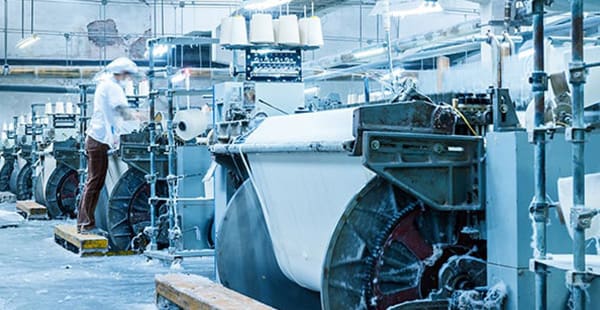
Before the 1980s, textile mill workers faced a high risk of asbestos exposure. Many mills made items like asbestos blankets, clothing and other fabrics. Companies used asbestos in their textile products because of the mineral’s durability and heat resistance.
Today, asbestos may still be present at older textile factories. Any worker who inhales the mineral’s fibers may be at risk of developing an asbestos disease like mesothelioma.
- 89,500 textile mill workers in the United States (2024)
- Asbestos Exposure: Previous and ongoing exposure risk
- Asbestos-Related Disease Risk: High
- Similar Occupations: Fabricators, industrial workers, tailors
Workers at textile mills used raw asbestos to make spun materials like yarn. Using raw asbestos fibers put textile workers at a high risk of exposure. Workers also wove these spun materials into fabrics and other textiles.
Starting in the 1970s, public pressure and regulations pushed companies to stop using asbestos. Today, U.S. manufacturers use other materials to make durable and fire-resistant textiles. But older textiles may still contain the mineral.
What Asbestos Products Put Textile Mill Workers at Risk?
Asbestos textile mill workers faced exposure risks when making products like:
- Aprons
- Blankets
- Brake linings
- Cloth
- Fire curtains
- Fireproof clothing
- Furniture padding
- Gloves
- Heat mats
- Insulation
- Ironing board covers
- Oven mitts
- Pipe coverings
- Roofing felts
- Ropes
- Tapes
- Yarns
Equipment and building materials used in textile mills may also have contained asbestos. These were present both at mills making asbestos products and at other types of mills.
Looms and other machines may have had asbestos insulation and other asbestos components. Construction materials subject to high heat, like pipes and gaskets, also commonly contained the mineral. The wear, tear, repair and maintenance of these products can disturb asbestos fibers, causing them to become airborne.
Inhaling asbestos fibers can cause mesothelioma and other serious illnesses. Many companies continue to face consequences for making and selling asbestos textiles. People who develop diseases from exposure may have legal options.
- Amatex Corporation
- Anchor Packing Company
- Armstrong World Industries
- Asbestos Textile Institute
- Asten Group Inc.
- Atlas Turner Inc.
- Celotex Corporation
- CertainTeed Corporation
- Dresser Industries Inc.
- GAF Corporation
- Garlock Sealing Technologies
- Golden Belt Manufacturing
- H.K. Porter
- Johns-Manville
- Koppers Inc.
- Laclede Christy
- Minnesota Mining & Manufacturing (3M)
- National Gypsum Company
- Pacor Inc.
- Philip Carey Manufacturing Company
- Raybestos-Manhattan Inc.
- Southern Textile Corporation
- Thermoid Corporation
- Turner & Newell
- Uniroyal Holding Inc.
- Wheeler Protective Apparel Inc.
Common Places Textile Mill Workers May Find Asbestos
Asbestos was common both at asbestos textile mills and other types of textile mills. In general, these mills used looms and other machines with asbestos components. The buildings themselves may have been made with asbestos construction materials.
Textile production jobsites where workers may have been exposed to asbestos include:
- Cotton mills
- Fabric mills
- Fiber mills
- Knitting mills
- Thread mills
- Yarn mills
Workers at non-asbestos textile mills may have faced lower exposure risks compared to textile workers who handled raw asbestos. But any level of exposure is dangerous and can lead to diseases like mesothelioma.
Textile Mill Workers and At-Risk Trades
The textile industry encompasses a number of trades that work at the mills. Textile mill-related trades at risk of occupational asbestos exposure include:
- Auto mechanics
- Carpenters
- Construction workers
- Engineers
- Fabricators
- Firefighters
- Industrial workers
- Insulators
- Loom repairers
- Machine operators
- Maintenance workers
- Masons
- Metal workers
- Millwrights
- Oil refinery workers
- Pipefitters
- Power plant workers
- Seamstresses
- Shipbuilders
- Tailors
- Textile mill workers
- Tool and die makers
- Weavers
- Welders
- Veterans
Members of an asbestos textile worker’s household can experience secondary exposure. This happens when a worker accidentally brings asbestos fibers home on their clothes or hair. Many people have developed asbestos diseases from this type of exposure.

- Don't lose your rights
- Free case evaluation

- Help filing VA claims
- Treatment for Vets

- Provide for loved ones
- $30 billion set aside
Mesothelioma Risk for Textile Mill Workers
Scientific interest in the link between asbestos disease and asbestos textile work began at least a century ago. In fact, the first medical paper on asbestos illness was written in 1924 about a textile worker. The paper described a woman who developed lung scarring after working in the spinning room of an asbestos factory.
Other studies about asbestos disease among textile workers include:
- A case study of a former asbestos textile factory worker who developed ovarian cancer. According to the authors, the worker’s ovarian cancer was highly related to on-the-job asbestos exposure.
- Another study looked at asbestos textile workers employed between 1950 and 1973. Deaths from mesothelioma and other cancers were significantly higher among the 5,770 workers than in the general population.
- A study of South Carolina textile workers reported similar findings. The workers had at least twice the average risk of dying from lung cancer. In the data, increasing asbestos exposure came with an increasing risk of lung cancer.
Any level of asbestos exposure can cause asbestos diseases. But concentrated and long-term exposures may increase the likelihood of developing these diseases.
Mesothelioma commonly takes 10 – 50 years to develop. This means former textile mill workers may still be at risk of developing asbestos diseases.
Treatment is available for people diagnosed with an asbestos illness. Mesothelioma cancer centers exist throughout the United States.
Asbestos Safety for Textile Mill Workers
In the 1970s, U.S. regulators began making rules to protect asbestos workers. For example, the Occupational Safety and Health Administration (OSHA) provides rules and guidelines for asbestos in the workplace.
Textile mills and other jobsites that may contain asbestos textiles should hire professionals to inspect any potential asbestos materials. Not hiring abatement professionals may create unnecessary exposure risks.
Exposed workers who develop mesothelioma can speak to an asbestos attorney. An attorney can explain options for compensation and file lawsuits on behalf of their clients.
Sources
Bartrip PWJ. History of asbestos related disease. Postgrad Med J. 2004 Feb;80(940):72–6.
Dement JM, Brown DP, Okun A. Follow-up study of chrysotile asbestos textile workers: cohort mortality and case-control analyses. Am J Ind Med. 1994 Oct;26(4):431–47.
Loomis D, Dement JM, Wolf SH, Richardson DB. Lung cancer mortality and fibre exposures among North Carolina asbestos textile workers. Occup Environ Med. 2009 Aug;66(8):535–42.
Occupational Safety and Health Administration. OSHA Fact Sheet: Asbestos.
Park S, Park J, Lee E, Eom H, Shin MY, Kim J, et al. Ovarian cancer in a former asbestos textile factory worker: a case report. Ann Occup Environ Med. 2018;30:65.
U.S. Bureau of Labor Statistics. Industries at a Glance: Textile Mills: NAICS 313.
Financial Assistance for Mesothelioma Patients

Tara Strand specializes in writing content about mesothelioma and asbestos. She focuses on topics like mesothelioma awareness, research, treatment, asbestos trust funds and other advocacy efforts.

 Legally
Reviewed by
Jennifer Lucarelli
Mesothelioma Lawyer and Legal Advisor
Legally
Reviewed by
Jennifer Lucarelli
Mesothelioma Lawyer and Legal Advisor
For more than two decades, Jennifer Lucarelli has served as Legal Advisor at Mesothelioma.com. She has advocated for more than 1,000 asbestos victims, securing millions in settlements and helping them access quality medical care.