Mesothelioma and Asbestos Risk for Machinists

Machinists have been at risk of asbestos exposure for decades. Before the 1980s, products used by machinists were commonly made with asbestos. Machinists were also responsible for repairing and maintaining asbestos-containing machinery. As a result, many machinists have been diagnosed with mesothelioma.
Learn About Occupational Asbestos Exposure in Our Free Guide
Free 2026 Mesothelioma Guide
How Are Machinists Exposed to Asbestos?
Before the 1980s, asbestos was widely used in industrial equipment and machinery. The mineral was often used to make equipment resistant to high temperatures.
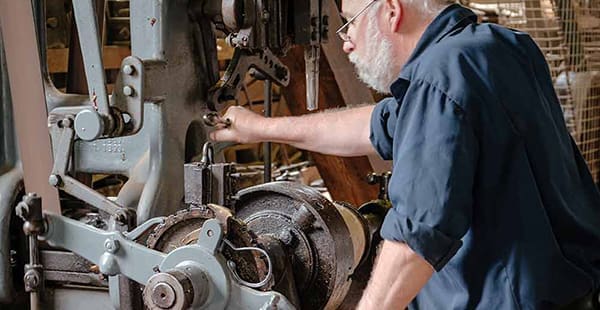
Machinists used tools and machinery to create metal and wooden parts. Machinists were also responsible for maintaining and repairing machines that contained asbestos. They frequently handled asbestos insulation, gaskets and valves.
- 460,600 machinists in the United States (2019)
- Asbestos Exposure: Previous and ongoing exposure risk
- Asbestos-Related Disease Risk: High
- Similar Occupations: Machine operators, millwrights, tool and die makers
While scraping metal parts or cutting insulation, asbestos fibers may have been released into the air. This put many machinists at risk of occupational asbestos exposure.
In the 1970s, asbestos laws and regulations were created to protect workers from occupational exposure. But, asbestos materials may still be present in old buildings and machinery. Today, machinists may still risk exposure from lingering asbestos parts.
What Asbestos Products Put Machinists at Risk?
Machinists came in contact with many different asbestos products. Asbestos was a common additive in industrial machinery to improve resistance to fire and corrosion.
During installation or repair, asbestos fibers may have been released into the air. Machinists may have been exposed to asbestos from:
- Adhesives
- Asbestos aprons
- Asbestos cloth
- Boilers
- Drill presses
- Gaskets
- Insulation
- Packing
- Pipe insulation
- Pumps
- Sealants
- Sheet metal
- Valves
These products were once manufactured in the United States by asbestos companies. As the dangers of asbestos became well known, these companies began to face many mesothelioma lawsuits. These companies are still common defendants in lawsuits today.
- Armstrong International, Inc.
- Bath Iron Works
- Combustion Engineering
- Connecticut Light and Power Company
- De Laval Steam Turbine
- Fisher Scientific
- Foster Wheeler Corporation
- Gardner Denver Inc.
- General Dynamics Electric Boat
- Goulds Pumps, Inc.
- Ingersoll Rand Company
- John Crane Company
- Leslie Controls, Inc.
- Metalclad Insulation Corporation
- Sid Harvey Industries, Inc.
- Yarway Corporation
Companies can no longer manufacture asbestos products in the U.S. However, there is currently no U.S. ban on asbestos. Some products with small amounts of asbestos may still be imported into the country, including some types of insulation.
Common Places Machinists Experienced Asbestos Exposure
Machinists may have experienced asbestos exposure at several different jobsites. Asbestos was commonly used in areas subjected to high heat. For example, machinists worked in poorly ventilated boiler rooms repairing insulation and gaskets. Poor ventilation could create a higher risk of exposure, as airborne fibers could become more concentrated.
Other areas and jobsites that often exposed machinists include:
In many cases, machinists were not provided protective gear. These working conditions increased the risk of inhaling or ingesting asbestos fibers. If inhaled or ingested, asbestos in the body may lead to mesothelioma and other illnesses.
Machinists and At-Risk Trades
Machinists may have experienced asbestos exposure in a variety of different industries. In many of these industries, machinists operated, maintained and repaired machinery.
Similar to machinists, tool and die makers were also at high risk of asbestos exposure. Tool and die makers were responsible for filing, grinding and adjusting asbestos parts to fit into machinery. During these processes, workers may have been exposed to asbestos dust.
Other at-risk trades in the machine operation and manufacturing industry include:
- Factory workers
- Industrial workers
- Machine operators
- Metal workers
- Military service members
- Millwrights
- Pipefitters
- Railroad workers
- Shipyard workers
- Welders
Family members of these workers also faced asbestos exposure. Machinists and other workers sometimes carried asbestos dust home on their hair and clothing. Secondary asbestos exposure was a particularly high risk to individuals who laundered or handled workers’ clothing.

- Don't lose your rights
- Free case evaluation

- Help filing VA claims
- Treatment for Vets

- Provide for loved ones
- $30 billion set aside
Mesothelioma Risk for Machinists
Machinists in many industries are at risk of developing asbestos-related illnesses. These diseases include asbestosis, lung cancer and mesothelioma.
Several studies have linked high rates of asbestos disease to machinists. For example, a 1983 study explored mesothelioma incidence amongst railroad machinists. By studying 197 machinists, researchers found:
- 29 deaths could be attributed to cancer
- 9 deaths could be attributed to mesothelioma cancer
Researchers said mesothelioma rates were remarkably high for the small sample size.
In another study, researchers studied the mortality of 114,000 veterans. Researchers categorized the veterans’ jobs based on asbestos exposure risk. Researchers found machinist’s mates, boiler repairmen and pipefitters had the highest potential for asbestos exposure.
Compensation for Victims of Occupational Asbestos Exposure
Machinists who developed an illness after asbestos exposure may be eligible for compensation. Asbestos victims may learn about their legal options by contacting a mesothelioma law firm.
Mesothelioma lawyers can help machinists and their loved ones file a claim or lawsuit. Claims and lawsuits are filed against negligent companies that made asbestos products.
From 1965 to 2002, Richard Walmach worked as a machine repairman and marine machinist. Walmach worked at shipyards, such as the Puget Sound Naval Shipyard, and served in the U.S. Navy. During his career, Walmach was exposed to asbestos gaskets, insulation and packing.
In 2006, Walmach was diagnosed with pleural mesothelioma and later died. Walmach’s family filed a lawsuit against Foster Wheeler and several other companies. The jury awarded Walmach’s wife and daughters $2.66 million in economic, non-economic and punitive damages.
Many companies filed for bankruptcy after facing a large number of lawsuits. As part of bankruptcy proceedings, these companies often established asbestos trust funds. These trust funds ensure current and future claimants receive compensation. For instance, machinists may be eligible to file a claim with Yarway Corporation’s asbestos trust fund.
Financial compensation from a successful claim or lawsuit may help asbestos victims and their families pay for treatment and more.
Sources
Huncharek M. Changing Risk Groups for Malignant Mesothelioma. American Cancer Society Journals. September 1991.
Leagle. KELEMEN v. JOHN CRANE, INC. September 2011.
Leagle. WALMACH v. WHEELER. September 2009.
Mancuso T. Mesothelioma among machinists in railroad and other industries. American Journal of Industrial Medicine. 1983;4(4):501-13. doi: 10.1002/ajim.4700040404
Till J, Beck H, et al. Asbestos Exposure and Mesothelioma Mortality among Atomic Veterans. International Journal of Radiation Biology. December 2018:1-15. doi: 10.1080/09553002.2018.1551641
United States Bureau of Labor Statistics. Machinists and Tool and Die Makers. Updated April 2021.
Financial Assistance for Mesothelioma Patients

Tara Strand specializes in writing content about mesothelioma and asbestos. She focuses on topics like mesothelioma awareness, research, treatment, asbestos trust funds and other advocacy efforts.

 Legally
Reviewed by
Jennifer Lucarelli
Mesothelioma Lawyer and Legal Advisor
Legally
Reviewed by
Jennifer Lucarelli
Mesothelioma Lawyer and Legal Advisor
For more than two decades, Jennifer Lucarelli has served as Legal Advisor at Mesothelioma.com. She has advocated for more than 1,000 asbestos victims, securing millions in settlements and helping them access quality medical care.