
Asbestos Textiles

Textile workers wove raw asbestos into yarn, rope and other materials. These materials were used to make products like cloth, fabric and clothing. Workers who made and used asbestos textiles faced asbestos exposure risks. Exposure can cause diseases like mesothelioma.
Learn More About Asbestos-Containing Products
Why Was Asbestos Used in Textiles?
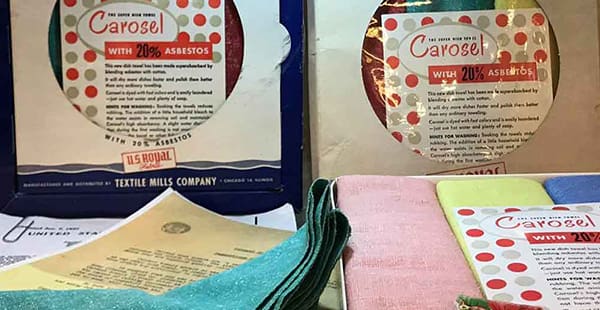
In the United States, asbestos fibers were commonly used to make cloth, fabric and other textiles. The mineral was popular because of its strength and heat-resistant characteristics.
Chrysotile was one of the most common types of asbestos used in textiles. The fibrous nature of chrysotile asbestos made it easy to spin or weave into fabric.
Workers used asbestos textiles in many situations to protect them from fire and heat. For example, firefighters, welders and industrial workers wore asbestos clothing. People who worked with hot machinery also used asbestos cloth.
Asbestos Textiles History at a Glance
- Other Names: Asbestos blankets, cloth, clothing, fabric, garments
- Years of Manufacture: 1880s – 1980s
- Places Used: Factories, oil refineries, power plants, ships, shipyards, steel mills, textile factories
- Asbestos Use Banned: No
- Noteworthy Brands: Garlock Sealing Technologies, Johns-Manville, Raybestos-Manhattan Inc., Uniroyal Holding Inc.
Dangers of Asbestos in Textiles
The dangers of asbestos textiles were known for decades before many companies stopped using them. Workers who spun raw asbestos into threaded materials faced high risks of inhaling the dangerous mineral. Those who used these materials to make cloth and fabrics also faced exposure risks.
Research into the effects of asbestos on textile workers goes back more than 50 years. In 1965, a scientific journal published a paper comparing deaths between asbestos textile and cotton textile workers. Workers who made asbestos textiles had higher rates of cancer and asbestosis.
Another study reviewed health records of asbestos textile workers in Italy. They were significantly more likely to die from mesothelioma or lung cancer than the average person.
Textile workers diagnosed with asbestos diseases can seek treatment from mesothelioma cancer centers. These centers have doctors who specialize in asbestos-related illnesses.
Connect With a Top Mesothelioma Doctor Find a mesothelioma specialist near you Get Connected
List of Asbestos Textile Products
A variety of textile products were once made with asbestos fibers. Click on the linked asbestos products below to see brand names and specific products.
- Aprons
- Brake linings
- Cloth
- Cord
- Fire blankets
- Fire curtains
- Fireproof clothing
- Furniture padding
- Gloves
- Heat mats
- Insulation
- Ironing board covers
- Oven mitts
- Pipe coverings
- Roofing felt
- Ropes
- Tapes
- Yarn
| Product Name | Start Year | End Year |
|---|---|---|
| 3M Rubber Coated Asbestos Cloth | 1977 | 1987 |
| A. W. Chesterton Asbestos Cloth | 1907 | 1974 |
| Amatex Asbestos Cloth | 1950 | |
| Amatex Asbestos Cord | 1950 | |
| Amatex Asbestos Yarn | 1950 | |
| Atlas Turner Asbestos Cord | ||
| Celotex Carey Asbestos Cloth | ||
| H.K. Porter Cleangard | ||
| H.K. Porter Cloth | ||
| H.K. Porter Lag | 1967 | 1974 |
| H.K. Porter Splashgard | ||
| H.K. Porter Therm-A-Gard | 1967 | 1974 |
| H.K. Porter Weldgard | ||
| H.K. Porter Yarn/Cord | ||
| John Crane Braid Over Braid Asbestos Yarn 915 | 1970 | |
| John Crane Commercial Grade Asbestos Yarn 9810 | 1970 | |
| Johns-Manville Cloth (Coated) | 1960 | 1983 |
| Keene Asbestos Cloth | ||
| Nicolet Asbestos Gasket Cloth | 1962 | 1972 |
| Pacor Asbestos Cloth | 1942 | 1950 |
| Raymark Blankets | 1929 | 1944 |
| Raymark Novatex (Cloth) | 1967 | 1982 |
| Raymark Polybestos (Cloth) | 1962 | 1979 |
| Raymark Raybestos RM Asbestos Cord And Thread | ||
| Raymark Raybestos Silvabestos | ||
| Raymark Rhinobestos (Cloth) | 1959 | 1970 |
| Raymark Sealsafe (Cloth) | 1972 | 1982 |
| Raymark Sealsafe (Yarn) | 1972 | 1982 |
| Raymark Speedlag (Cloth) | 1969 | 1976 |
| Raymark Yarn | ||
| Rock Wool Asbestos Blanket | ||
| Southern Textile Cord | ||
| Unarco Asbestos Cord | ||
| Unarco Fibrous Glass Insulating Blankets | ||
| Uniroyal Asbestos Cloth (Asbeston) | 1941 | 1976 |
Many companies manufactured asbestos textiles. These companies often knew the dangers of asbestos but failed to warn workers and consumers.
- Amatex Corporation
- Anchor Packing Company
- Armstrong World Industries
- Asbestos Textile Institute
- Asten Group Inc.
- Atlas Turner Inc.
- Celotex Corporation
- CertainTeed Corporation
- Dresser Industries Inc.
- GAF Corporation
- Garlock Sealing Technologies
- Golden Belt Manufacturing
- H.K. Porter
- Johns-Manville
- Koppers Inc.
- Laclede Christy
- Minnesota Mining & Manufacturing (3M)
- National Gypsum Company
- Pacor Inc.
- Philip Carey Manufacturing Company
- Raybestos-Manhattan Inc.
- Southern Textile Corporation
- Thermoid Corporation
- Turner & Newell
- Uniroyal Holding Inc.
- Wheeler Protective Apparel Inc.
 Did You Know?
Corporate documents show that asbestos companies knew the products they made were dangerous.
Speak with a lawyer today about filing a mesothelioma claim against these irresponsible companies.
Did You Know?
Corporate documents show that asbestos companies knew the products they made were dangerous.
Speak with a lawyer today about filing a mesothelioma claim against these irresponsible companies.
Who Is at Risk of Asbestos Exposure From Textiles?
Workers in a number of industries faced asbestos exposure risk from textiles. People who made asbestos textiles often handled raw asbestos or wove asbestos yarn into fabrics. Across different textile industries, machines like looms may have contained the mineral.
People who worked with asbestos textiles on the job also faced occupational exposure risks. Workers in a number of trades used asbestos cloths, padding and other textiles to insulate against heat and fire.
- Auto mechanics
- Carpenters
- Construction workers
- Engineers
- Fabricators
- Firefighters
- Industrial workers
- Loom repairers
- Machine operators
- Maintenance workers
- Masons
- Metal workers
- Millwrights
- Oil refinery workers
- Pipefitters
- Power plant workers
- Sewers
- Shipbuilders
- Tailors
- Textile mill workers
- Tool and die makers
- Veterans
- Weavers
- Welders
People who lived with asbestos workers may have experienced secondary asbestos exposure. This occurs when a worker accidentally brings asbestos home on their clothes or in their hair. Some people may have also been exposed when doing workers’ laundry.
Workers and others who develop mesothelioma can seek compensation. Money from a mesothelioma lawsuit can help pay for medical costs and other expenses that come with a diagnosis. Patients and their families can contact asbestos attorneys to explore their legal options.
Sources
Enterline PE. Mortality among asbestos products workers in the United States. Ann N Y Acad Sci. 1965 Dec 31;132(1):156–65.
InspectAPedia. Asbestos Textiles.
Mamo C, Costa G. Mortality experience in an historical cohort of chrysotile asbestos textile workers [Internet]. 2005 [cited 2024 Jul 12]. Available from: https://www.semanticscholar.org/paper/Mortality-Experience-in-an-Historical-Cohort-of-Mamo-Costa/130cb39760019832ddfb77a7c16c5a7622c8ec3c
U.S. Environmental Protection Agency. Asbestos: Industry Profile Final Report.
Legal Rights for Mesothelioma Victims

Tara Strand specializes in writing content about mesothelioma and asbestos. She focuses on topics like mesothelioma awareness, research, treatment, asbestos trust funds and other advocacy efforts.

 Legally
Reviewed by
Jennifer Lucarelli
Mesothelioma Lawyer and Legal Advisor
Legally
Reviewed by
Jennifer Lucarelli
Mesothelioma Lawyer and Legal Advisor
For more than two decades, Jennifer Lucarelli has served as Legal Advisor at Mesothelioma.com. She has advocated for more than 1,000 asbestos victims, securing millions in settlements and helping them access quality medical care.