
Asbestos in Drywall

Companies like Kaiser Gypsum used asbestos in drywall for most of the 20th century. It increased drywall’s strength, flexibility and fire resistance. Buildings with these finishing products can lead to asbestos exposure. Workers and residents who develop mesothelioma may be able to seek compensation.
Learn More About Asbestos-Containing Products
Why Was Asbestos Used in Drywall Products?
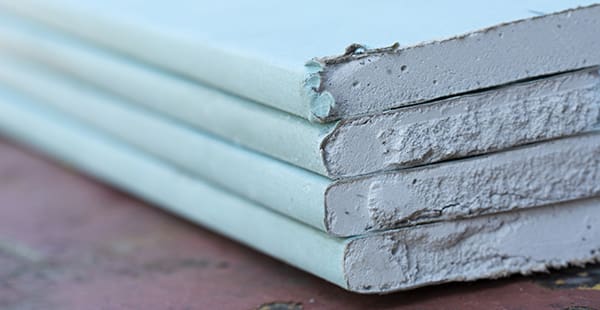
For decades, construction manufacturers produced drywall materials with asbestos. It was an affordable way to make drywall lighter, stronger and more fire-resistant. Builders used these materials in many commercial, residential and military buildings. Homeowners may also handle these asbestos drywall materials during do-it-yourself repairs or renovations.
Before the 1980s, companies used asbestos with drywall materials in various ways. Asbestos was often part of the drywall mixture itself.
The mineral was also used in materials like joint compounds. This is either a pre-mixed paste or a powder that water is added to. It is used to seal the seams between drywall panels. Construction workers may also have used joint compound for smaller wall patches and repairs.
By the 1980s, asbestos regulations limited the use of asbestos in materials like drywall. Companies in the United States could no longer produce or use asbestos-containing drywall or joint compound. But existing buildings constructed before the 1980s may still contain asbestos construction products.
Asbestos Drywall History at a Glance
- Other Names: Gypsum board, plasterboard, sheetrock, wallboard
- Years of Manufacture: 1916 – 1970s
- Military Use: Barracks and other buildings for the Air Force, Army, Marines, Navy
- Places Used: Businesses, factories, homes, offices, retail stores, schools
- Asbestos Use Banned: Partial ban
- Noteworthy Brands:Bondex International, Georgia-Pacific Corporation, Kaiser Gypsum Company Inc., National Gypsum Company, U.S. Gypsum Company
What Types of Asbestos Sheetrock and Compounds Are Banned?
In 1977, the U.S. Consumer Product Safety Commission (CPSC) set a partial asbestos drywall ban. The Commission banned patching compounds containing asbestos for consumer use. At the time, asbestos was in about half of all patching compounds. The product labels did not disclose this risk to consumers. The ban did not extend to all types of drywall products.
Dangers of Asbestos in Drywall and Finishing Materials
Anyone who handles asbestos products or materials faces a risk of asbestos exposure. Activities that disturb asbestos fibers increase the risk of exposure. This includes making, installing or repairing drywall boards and finishing materials.
Workers often cut, mix, sand and sweep drywall materials. This can release asbestos dust, leading to exposure. Testing shows the primary type of asbestos in drywall materials is chrysotile. This type comprises 90% – 95% of asbestos used in buildings in the United States.
Some research from the 1970s to the 1980s has shown asbestos air fiber measurements in drywall to be above regulation limits at the time of their usage. This research also showed typical asbestos-related diseases, like mesothelioma, in drywall construction workers.
A 2012 study found that demolishing or repairing wallboard may disturb asbestos joint compound. The study stated these materials continue to be potential sources of exposure. Any craftspeople or homeowners can discuss suspected asbestos drywall exposure with their doctors.
Connect With a Top Mesothelioma Doctor Find a mesothelioma specialist near you Get Connected
List of Wallboard, Gypsumboard and Other Asbestos Drywall Products
Many companies that manufactured construction products once used asbestos. The mineral’s heat resistance and durability made it popular for materials like drywall and its finishing products.
All the various types of drywall materials and layers may have contained asbestos. The most common asbestos drywall components include:
- Acoustical and patching plasters
- Ceiling panels
- Drywall and vinyl base adhesives
- Finishing compounds
- Joint system cements
- Joint wall compounds (or muds)
- Laminating and joint topping compounds
- Liquid adhesives
- Plasterboards
- Sheetrock or gypsum boards
- Spackling compounds
- Tapes
- Wall and ceiling surfacing textures
| Product Name | Start Year | End Year |
|---|---|---|
| 3M Adhesives | 1935 | 1986 |
| A.P. Green Insulation Adhesive | 1947 | 1972 |
| Armstrong Finishes | 1939 | 1957 |
| Armstrong S-89 Adhesive | 1965 | 1983 |
| Armstrong S-90 Adhesive | 1934 | 1983 |
| Bestwall Joint System Cement 1956-1965 | 1956 | 1965 |
| Bondex All Purpose Joint Cement | 1976 | |
| Bondex Dramex Ready Mixed Interior Finish | 1977 | |
| Bondex F.O. Pierce Dramex | 1977 | |
| Bondex Formula 1031 | ||
| Bondex Joint Cement | 1977 | |
| Bondex Joint Compound | 1977 | |
| Bondex Pre-Mixed Joint Cement | 1977 | |
| Celotex Carey Fibrous Adhesive | 1906 | 1984 |
| Celotex Carey Panel Board | ||
| Celotex Carey Thermaboard | ||
| Celotex Careytemp Adhesive | 1961 | 1968 |
| Celotex Excel Block | 1925 | 1960 |
| Denswall Ceiling Texture | 1956 | 1974 |
| Denswall Wall Texture | 1956 | 1974 |
| Flintkote #229 Antisweat Compound | 1947 | 1978 |
| Flintkote Joint Treatment Compound | 1955 | 1976 |
| Garlock Asbestos Tape | 1907 | 1980 |
| Garlock Insulation Tape | 1907 | 1980 |
| Garlock Spiral Plasti-Thread Seal Tape | 1907 | 1980 |
| Georgia-Pacific All Purpose Joint Compound | 1967 | 1977 |
| Georgia-Pacific Bedding Compound | 1956 | 1977 |
| Georgia‐Pacific Bedding Vinyl Base Adhesive | 1956 | 1977 |
| Georgia-Pacific Ceiling Texture | 1956 | 1974 |
| Georgia-Pacific Ceiling Texture Perlite | 1956 | 1974 |
| Georgia-Pacific Ceiling Texture Polystyrene | 1956 | 1974 |
| Georgia-Pacific Ceiling Texture Vermiculite | 1956 | 1974 |
| Georgia-Pacific Central Mix | 1970 | 1973 |
| Georgia‐Pacific Denswall Wall Texture | 1956 | 1974 |
| Georgia-Pacific Drywall Adhesive | 1972 | 1972 |
| Georgia-Pacific Joint Compound | 1956 | 1971 |
| Georgia-Pacific Kalite | 1956 | 1959 |
| Georgia-Pacific Laminating Compound | 1969 | 1969 |
| Georgia-Pacific Lite Acoustical Plaster | 1958 | 1964 |
| Georgia-Pacific Patching Plaster | 1956 | 1976 |
| Georgia-Pacific Ready Mix Joint Compound | 1963 | 1977 |
| Georgia-Pacific Spackling Compound | 1956 | 1971 |
| Georgia-Pacific Speed Set Joint Compound | 1970 | 1973 |
| Georgia-Pacific Topping Joint Compound | 1956 | 1977 |
| Georgia-Pacific Topping-Casein | 1956 | 1977 |
| Georgia-Pacific Triple Duty Joint Compound | 1956 | 1977 |
| Georgia-Pacific Triple Duty Wallboard Joint Compound | 1956 | 1977 |
| H.B. Fuller Adhesives | ||
| H.K. Porter Duoflex | 1958 | 1974 |
| H.K. Porter Laco | 1958 | 1974 |
| H.K. Porter Tape | ||
| Johns-Manville Asbestogard Adhesive | ||
| Johns-Manville Chemtite Epoxy Joint Cement | ||
| Kaiser Gypsum Cover-Tex Wall Texture | 1968 | 1975 |
| Kaiser Gypsum Dual Purpose Joint Compound | 1959 | 1976 |
| Kaiser Gypsum Finishing Compound | 1953 | 1976 |
| Kaiser Gypsum Joint Compound | 1953 | 1976 |
| Kaiser Gypsum One-Day Joint Compound | 1953 | 1976 |
| Kaiser Gypsum Premix Finishing Compound | 1959 | 1976 |
| Keene Uni-Coustic | 1963 | 1971 |
| Kelly-Moore Deco-Tex Ceiling Texture | 1964 | 1978 |
| Kelly-Moore Paco All-Purpose Joint Compound | 1960 | 1978 |
| Kelly-Moore Paco Finishing Compound | 1960 | 1977 |
| Kelly-Moore Paco Joint Cement | ||
| Kelly-Moore Paco Joint Compound | 1960 | 1978 |
| Kelly-Moore Paco Quik-Set Joint Compound | 1963 | 1978 |
| Kelly-Moore Paco Ready Mix Joint Compound | 1960 | 1978 |
| Kelly-Moore Paco Spray Texture | ||
| Kelly-Moore Paco Taping Compound | 1970 | 1977 |
| Kelly-Moore Paco Texture | ||
| Kelly-Moore Paco Wall Texture | 1960 | 1978 |
| Kelly-Moore Paco-Tex Wall Texture | ||
| Mobil Oil Armorcote Adhesive | 1964 | 1973 |
| Mobil Oil Dum-Dum Adhesive | 1964 | 1973 |
| Mobil Oil Dum-Dum Masonic Adhesive | 1964 | 1973 |
| National Gypsum All Purpose Joint Cement | 1949 | 1973 |
| National Gypsum Asbestibel Panels | 1963 | 1981 |
| National Gypsum Asbesto-Grid Panels | 1958 | 1981 |
| National Gypsum Asbestos Stripping Tape | 1944 | 1945 |
| National Gypsum Drywall Laminating Adhesive | 1953 | 1956 |
| National Gypsum Gold Bond Acoustical Plaster | 1949 | 1968 |
| National Gypsum Gold Bond All Purpose Joint Compound | 1966 | 1973 |
| National Gypsum Gold Bond Asbestone Panels | 1958 | 1981 |
| National Gypsum Gold Bond Asbestos Faced Wool Mineral Board | 1944 | 1945 |
| National Gypsum Gold Bond Color Texture | 1936 | 1969 |
| National Gypsum Gold Bond Craftex | 1937 | 1937 |
| National Gypsum Gold Bond Decorite | 1937 | 1945 |
| National Gypsum Gold Bond E-Z Spray Texture | 1971 | 1972 |
| National Gypsum Gold Bond E-Z Tex | 1937 | 1970 |
| National Gypsum Gold Bond Finisher | 1958 | 1960 |
| National Gypsum Gold Bond Fire-Shield Plaster | 1958 | 1970 |
| National Gypsum Gold Bond Joint Compound | 1949 | 1973 |
| National Gypsum Gold Bond Macoustic Smooth Finish | 1935 | 1943 |
| National Gypsum Gold Bond Patching Plaster | 1933 | 1950 |
| National Gypsum Gold Bond Perfo-Lyte Acoustical Plaster | 1955 | 1972 |
| National Gypsum Gold Bond Quick-Weld Compound | 1972 | 1974 |
| National Gypsum Gold Bond Quik-Treat Joint Compound | 1963 | 1974 |
| National Gypsum Gold Bond Ready Mixed Joint Cement | 1953 | 1976 |
| National Gypsum Gold Bond Ready Mixed Joint Compound | 1953 | 1976 |
| National Gypsum Gold Bond Spackling Paste | 1962 | 1967 |
| National Gypsum Gold Bond Sprayolite | 1956 | 1973 |
| National Gypsum Gold Bond Sta-Smooth Compound | 1968 | 1974 |
| National Gypsum Gold Bond Super Westex | 1952 | 1969 |
| National Gypsum Gold Bond Texas Texture | 1946 | 1962 |
| National Gypsum Gold Bond Thermo Weld Compound | 1972 | 1972 |
| National Gypsum Gold Bond Topping Compound | 1958 | 1976 |
| National Gypsum Gold Bond Triple T. Compound | 1968 | 1976 |
| National Gypsum Gold Bond Tri-Treatment Joint Cement | 1957 | 1973 |
| National Gypsum Gold Bond Tri-Treatment Joint Compound | 1957 | 1973 |
| National Gypsum Gold Bond Two-in-One Joint Compound | 1968 | 1970 |
| National Gypsum Gold Bond Velvet Joint Compound | 1958 | 1975 |
| National Gypsum Gold Bond Velvet Texture A.R. | 1962 | 1967 |
| National Gypsum Gold Bond Velvet Topping Compound | 1958 | 1975 |
| National Gypsum Gold Bond Vinyl Texture | 1963 | 1975 |
| National Gypsum Gold Bond Vinyl Topping Compound | 1964 | 1976 |
| National Gypsum Humiguard Asbestos Panels | 1968 | 1981 |
| National Gypsum Laminating Adhesive A | 1970 | 1974 |
| National Gypsum Natcor | 1944 | 1946 |
| National Gypsum Perforated Panels | 1958 | 1981 |
| National Gypsum Plasticrylic Panels, aka Ripple Tone Panels | 1958 | 1981 |
| National Gypsum Pliaboard | 1954 | 1969 |
| National Gypsum Soffit Panels | 1959 | 1981 |
| National Gypsum Thermo Weld Compound | 1972 | 1972 |
| National Gypsum Two-in-One Compound | 1968 | 1970 |
| National Gypsum Unperforated Panels | 1958 | 1981 |
| National Gypsum Wesco Joint Cement | 1952 | 1965 |
| Raymark Allbestos Tape | ||
| Raymark Gatortape | ||
| Raymark Glassbestos (Tape) | 1948 | 1982 |
| Raymark Pyrotex (Tape) | ||
| Raymark Tape | ||
| Synkoloid EZE-Tex | 1949 | 1975 |
| Synkoloid Plastibond | 1950 | 1976 |
| Synkoloid Prime ‘N Fill | 1960 | 1975 |
| Synkoloid Snohide | 1962 | 1975 |
| Synkoloid SYNKO Triple Duty Joint Cement and Texture | 1950 | 1975 |
| Synkoloid Synko Triple Duty Joint Compound | 1950 | 1975 |
| Synkoloid Tex-Add | 1950 | 1975 |
| Synkoloid Tex-Wall | 1949 | 1975 |
| Synkoloid Vinyl Prep Mix | 1962 | 1975 |
| Unarco Board | 1958 | |
| Unarco Super Insulation Tape | ||
| Unarco Super Insultape | ||
| Union Carbide Panelboard | 1939 | 1974 |
| Union Carbide Panels | 1939 | 1974 |
| Uniroyal B.F. Goodrich Adhesives | 1960 | 1963 |
| United States Gypsum "Sheetrock" Texture | 1964 | 1976 |
| United States Gypsum Durabond Joint Compound | 1960 | 1975 |
| United States Gypsum Firecode Plaster | 1959 | 1964 |
| United States Gypsum Gypsum Wood Fibre Plaster | 1944 | 1973 |
| United States Gypsum Imperial Gypsum Cement Plaster | 1944 | 1973 |
| United States Gypsum Imperial Tape | 1962 | 1968 |
| United States Gypsum Perf-A-Tape Compound | 1945 | 1975 |
| United States Gypsum Red Top Cement Plaster | 1920 | 1954 |
| United States Gypsum Red Top Structo-Lite Gypsum Plaster | 1920 | 1954 |
| United States Gypsum Structo-Lite | 1950 | 1975 |
| United States Gypsum Structo-lite Perlited Gypsum Plaster | 1975 | |
| W.R. Grace Zonolite Acoustical Plaster | 1945 | 1972 |
| W.R. Grace Zonolite Econo-White 65 & 70 | 1956 | 1968 |
| W.R. Grace Zonolite Finish Coat (Decorators White) | 1950 | 1973 |
| W.R. Grace Zonolite Zono-Coustic | 1959 | 1973 |
| Westinghouse Panels |
Many well-known manufacturers once made these asbestos drywall products. For years, these companies put people at risk of asbestos exposure. After regulations began, they stopped using the mineral in their U.S. product lines. Homeowners and construction workers may still face these risks in older buildings and homes.
- American Biltrite
- Amtico Floors
- Armstrong World Industries
- Bestwall Gypsum Company
- Bondex International
- CertainTeed Corporation
- Congoleum
- EverWear
- The Flintkote Company
- GAF Corporation
- Georgia-Pacific Corporation
- Hamilton Materials Inc.
- Kaiser Gypsum Company Inc.
- Kelly-Moore Paints
- Kentile Floors
- Montgomery Ward
- National Gypsum Company
- Sears-Roebuck
- Synkoloid Company
- U.S. Gypsum Company
- W.R. Grace
 Did You Know?
Corporate documents show that asbestos companies knew the products they made were dangerous.
Speak with a lawyer today about filing a mesothelioma claim against these irresponsible companies.
Did You Know?
Corporate documents show that asbestos companies knew the products they made were dangerous.
Speak with a lawyer today about filing a mesothelioma claim against these irresponsible companies.
Who Is at Risk of Asbestos Exposure From Drywall Materials?
The use of asbestos drywall materials may have led to occupational exposure for many people. These workers were often involved in the construction industry or a related field. For example, both carpenters and painters may have been exposed to asbestos through drywall materials, like joint compound and wallboard. Veterans of all military branches may have experienced exposure in barracks and other buildings. Homeowners may have also experienced non-occupational exposure to asbestos drywall materials when doing home repairs or renovations.
By the 1980s, new drywall products did not contain asbestos. But older drywall materials still present an exposure risk. Workers, homeowners and renters may all face risks when renovating or repairing older buildings. Asbestos exposure may lead to mesothelioma and other asbestos cancers.
- Acoustical workers
- Air Force veterans
- Architects
- Army veterans
- Bricklayers
- Carpenters
- Caulkers and chippers
- Ceiling tile installers
- Cement layers
- Construction workers
- Contractors
- Demolition crews
- Drywall tapers
- Electricians
- Firefighters
- HVAC workers
- Industrial workers
- Insulators
- Joiners
- Linoleum layers
- Machine operators
- Machinists
- Marine veterans
- Masons
- Merchant Marines
- Navy veterans
- Painters
- Pipefitters
- Plasterers
- Plumbers
- Roofers
- Sawyers
- Shipyard workers
- Steamfitters
- Stonemasons
- Teachers
- Tile repairers and setters
- Woodworkers
Asbestos Lawsuits, Settlements & Other Compensation
People who have been exposed to asbestos drywall materials may have legal rights. Mesothelioma lawyers can review exposure details and help victims understand their best options. These options may include mesothelioma lawsuits, workers’ compensation claims and bankruptcy trust fund claims.
Many construction companies that produced asbestos drywall have asbestos trust funds. These funds exist to compensate current and future asbestos claims. Based on their work and exposure history, victims may be able to file bankruptcy claims against asbestos companies. Asbestos drywall companies with bankruptcy trust funds include:
- Bondex International
- The Flintkote Company
- Georgia-Pacific Corporation
- National Gypsum Company
- U.S. Gypsum Company
- W.R. Grace / Zonolite
Compensation Following Exposure From Asbestos Drywall-Related Products
People may develop mesothelioma after asbestos exposure through drywall and finishing materials. Many victims have received mesothelioma compensation from lawsuits against asbestos drywall companies. This financial compensation may come from mesothelioma settlements or verdicts. Some successful lawsuits for mesothelioma and asbestos materials, like joint compound, include:
- A 2012 lawsuit against a construction company called Tishman Liquidating Co. (Tishman). The mesothelioma victim worked with drywall at two of the company’s projects in New York from 1975 to 1977. The jury found that the joint compound contained unsafe levels of asbestos, which Tishman should have known. The company failed to use reasonable care and acted with reckless disregard. The jury awarded the victim $19 million.
- A 2009 lawsuit against Georgia-Pacific and other drywall product manufacturers. The mesothelioma victim and her husband ran a construction business for decades. The victim’s main work duty was applying joint compound between drywall panels. Then she would sand, reapply and sand again. This process created asbestos dust that the victim inhaled regularly. A jury awarded the victim and her husband $6.2 million.
Safely Removing Asbestos Drywall Materials
Asbestos may be present in buildings constructed before the 1980s. Homeowners or workers may be renovating or repairing drywall in these buildings. Some specific protocols to follow when working with potential asbestos drywall materials include:
- Only asbestos professionals should test for asbestos presence.
- For suspected asbestos drywall, homeowners or contractors should consult with state-accredited asbestos inspection firms.
- Homeowners should not handle or remove asbestos themselves.
- Asbestos abatement professionals are available for hire. They will follow laws for handling and disposing of asbestos drywall materials.
The Environmental Protection Agency (EPA) also created specific asbestos work practices. These practices are part of the National Emission Standards for Hazardous Air Pollutants (NESHAP). These standards establish processes to help release fewer asbestos fibers during construction activities.
If demolition or renovation impacts a wall system, the EPA requires a composite analysis. This wall system analysis includes drywall components like joint compound, tape and wallboard. If the analysis shows more than 1% asbestos, the project must follow the EPA’s NESHAP guidelines.
Common Questions About Asbestos Drywall
Does drywall have asbestos today?
How can you tell if drywall has asbestos?
Can you put drywall over asbestos?
Sources
Asbestos123. How To Identify Asbestos-Based Drywall.
The Atlantic. An Exciting History of Drywall.
Dahlgren J, Peckham T. Mesothelioma associated with use of drywall joint compound: a case series and review of literature. Int J Occup Environ Health. 2012;18(4):337–43.
Fischbein A, Rohl AN, Langer AM, Selikoff IJ. Drywall construction and asbestos exposure. Am Ind Hyg Assoc J. 1979 May;40(5):402–7.
InspectAPedia. Asbestos Content in Drywall & Joint Compound (drywall mud).
RPF Environmental. How to Identify Sheetrock Asbestos: What Does Asbestos Drywall Look Like?
Supreme Court, New York County. Konstantin v 630 Third Ave. Assoc.
United States Environmental Protection Agency. Does dry wall or sheet rock contain asbestos?
United States Environmental Protection Agency. Letter to L. Carroll re applicability of Asbestos NESHAP to asbestos-containing joint compound – September 1992 (pdf).
United States Environmental Protection Agency. Overview of the Asbestos National Emission Standards for Hazardous Air Pollutants (NESHAP).
United States Environmental Protection Agency. Protect Your Family from Exposures to Asbestos.
Verma DK, Middleton CG. Occupational exposure to asbestos in the drywall taping process. Am Ind Hyg Assoc J. 1980 Apr;41(4):264–9.
World Health Organization. Chrysotile asbestos.
Legal Rights for Mesothelioma Victims

Tara Strand specializes in writing content about mesothelioma and asbestos. She focuses on topics like mesothelioma awareness, research, treatment, asbestos trust funds and other advocacy efforts.

 Legally
Reviewed by
Jennifer Lucarelli
Mesothelioma Lawyer and Legal Advisor
Legally
Reviewed by
Jennifer Lucarelli
Mesothelioma Lawyer and Legal Advisor
For more than two decades, Jennifer Lucarelli has served as Legal Advisor at Mesothelioma.com. She has advocated for more than 1,000 asbestos victims, securing millions in settlements and helping them access quality medical care.