Mesothelioma Drugs and Medications

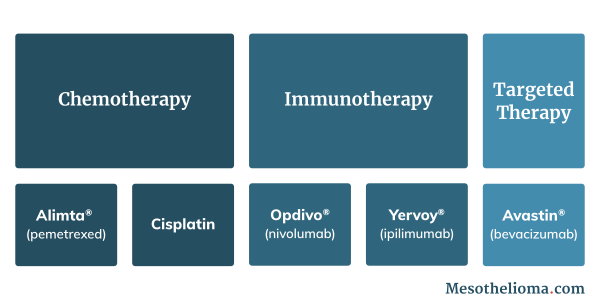
Pleural mesothelioma has two standard drug regimens:
- Chemotherapy: Alimta® (pemetrexed) and cisplatin
- Immunotherapy: Opdivo® (nivolumab) and Yervoy® (ipilimumab)
Mesothelioma drugs can help improve life expectancy and manage symptoms. Patients can discuss drug options with their doctors.
Read About Mesothelioma Drugs in Our Free Guide
Types of Mesothelioma Drug Treatment
A mesothelioma drug is any non-food substance used to treat or relieve symptoms of mesothelioma cancer. Doctors commonly use drugs to improve prognosis and quality of life for mesothelioma patients. Some drugs may also help relieve symptoms.
Mesothelioma drugs fall into three general categories:
- Chemotherapy drugs: This type of drug generally kills fast-growing cells. Chemotherapy is a standard treatment for several forms of mesothelioma. It has improved life expectancy for many patients.
- Immunotherapy drugs: This type of drug recruits the immune system to fight cancer. Immune checkpoint inhibitors (ICIs) are the most common form of immunotherapy for mesothelioma. The ICI combo of Opdivo® + Yervoy® is a standard treatment for inoperable pleural mesothelioma. Opdivo + Yervoy has boosted survival and quality of life for many patients.
- Other drugs: Other drugs sometimes used for mesothelioma include targeted therapies and photosensitizers. Targeted therapies like Avastin® (bevacizumab) interfere with cancer cells’ ability to grow and divide. Photosensitizer drugs work together with specific types of light to kill cancer cells. This approach is called photodynamic therapy.
Mesothelioma is a rare cancer caused by asbestos exposure. This rarity can make the development of mesothelioma drugs challenging. Researchers often study new drugs in pleural mesothelioma, the most common of mesothelioma types.
As such, mesothelioma drugs generally earn approval for treating pleural mesothelioma. But doctors still use them for peritoneal mesothelioma and other rare cell types. When it seems advantageous, doctors may also use drugs approved for cancers other than mesothelioma.
The U.S. Food and Drug Administration (FDA) has approved four drugs for inoperable pleural mesothelioma.
- Alimta® (pemetrexed)
- Cisplatin
- Opdivo® (nivolumab)
- Yervoy® (ipilimumab)
None of the drugs above is approved as a single-drug treatment. Alimta and cisplatin form an approved chemotherapy regimen. Opdivo and Yervoy form an approved immunotherapy regimen.
Some mesothelioma patients undergo treatment with a single drug regimen. Others may take mesothelioma drugs alongside other therapies. Combination treatments (multimodal therapies) may extend survival better than a single therapy.
Fact: Multimodal mesothelioma treatments improve survival. In a study, researchers looked at data from nearly 450 mesothelioma patients. The analysis compared survival between different treatment plans. Combination treatment patients had better survival rates than those who had a single therapy. This was true across all mesothelioma types.
Multimodal treatments often combine chemotherapy and surgery. Some approaches also include radiation. Researchers are currently investigating the combination of chemotherapy and immunotherapy. This research may expand mesothelioma treatment options in the future.
Questions About Mesothelioma Drugs? Ask experienced mesothelioma advocate Jennifer Lucarelli Ask a Question
Chemotherapy Drugs Used to Treat Mesothelioma
Chemotherapy drugs treat cancer using substances that damage fast-growing cells. Cancer cells grow faster than healthy cells. So chemo kills mesothelioma cells, but its toxicity can cause side effects.
Patients can receive either systemic or local chemotherapy for mesothelioma.
- Systemic chemotherapy travels through the bloodstream. Patients may receive it intravenously (through an IV), as an injection or as a pill. Systemic chemo may cause more side effects than local. This type of chemo may also be called traditional chemotherapy.
- Local chemotherapy targets a specific area or body compartment. For mesothelioma, local chemo may go in the chest or abdominal cavities as a wash. Local chemotherapy may cause fewer side effects than systemic. This type of chemo may also be called targeted chemo, heated intraperitoneal chemotherapy (HIPEC) or hyperthermic intrathoracic chemotherapy (HITHOC).
The most common chemo drugs for all types of mesothelioma are Alimta and cisplatin. But doctors may prescribe other drugs to account for individual patient factors.
Alimta and Cisplatin for Mesothelioma
Alimta and cisplatin form the standard chemotherapy regimen for mesothelioma. This combination is the only FDA-approved chemotherapy for mesothelioma. Together, Alimta and cisplatin are approved for the treatment of inoperable pleural mesothelioma.
Alimta and cisplatin have been a standard mesothelioma treatment for nearly 20 years. But researchers are still looking for new, more effective ways to use them. Alimta and cisplatin will play a key role in several upcoming clinical trials.
One trial aims to find out if immunotherapy can further extend survival when given alongside Alimta and cisplatin. Another will investigate using Opdivo (checkpoint inhibitor), Alimta and cisplatin after surgery for pleural mesothelioma.
These and other research efforts may find more ways to improve survival and quality of life for mesothelioma patients.
There are also other mesothelioma chemotherapy drugs:
- Carboplatin is a platinum-based chemo drug, like cisplatin. But carboplatin tends to be a gentler option. This property may lead doctors to choose carboplatin for elderly patients or those in poor health. It is a standard option for qualified patients with pleural or peritoneal mesothelioma.
- Doxorubicin is a chemo drug that interferes with important cellular processes, causing cancer cells to die. It may be used alongside cisplatin to treat peritoneal mesothelioma. This combo is a standard option for local chemotherapy known as HIPEC.
- Gemcitabine is a chemo drug that interferes with important cellular processes and harms cancer cells. It may be used for some mesothelioma patients but is not the most common option.
- Navelbine is a chemo drug that binds to important proteins, causing cancer cells to die. It may be used for some mesothelioma patients but is not the most common option.
Common Side Effects of Chemotherapy Drugs
Chemotherapy drugs can kill cancer cells, but they also harm healthy cells. This means patients may have side effects. Common side effects of mesothelioma chemotherapy drugs include:
- Breathlessness (difficulty breathing)
- Fatigue
- Low blood cell counts
- Nausea
- Vomiting
Hair loss is a common side effect of many chemotherapy drugs. But the Alimta and cisplatin combo is less prone to causing hair loss than other drugs. Patients should report any side effects to their treatment teams. Healthcare providers can help manage side effects.
What to Expect From Chemotherapy Drug Treatment
A patient’s chemotherapy experience depends on individual factors and overall treatment approach. Systemic chemo generally requires an infusion appointment once every few weeks or so.
For instance, systemic Alimta with cisplatin treatment includes receiving vitamin injections and key supplements the week before infusion. This preparation helps reduce side effects.
Local chemo commonly takes place during or after mesothelioma surgery. Once tumors have been physically removed, doctors wash the affected body compartment with chemo drugs. The procedural details vary between individual patients and types of local chemo.
Patients can prepare for chemotherapy by following healthcare providers’ instructions. Patients and their caregivers can also discuss any treatment concerns with the care team. These discussions may cover aftercare guidelines and potential prescription interactions.
Immunotherapy Drugs Used to Treat Mesothelioma
Immunotherapy drugs turn the immune system against cancer cells. This can allow immune cells to target and kill mesothelioma tumors. Immunotherapy comes in many different forms. Of those, checkpoint inhibitors and CAR T cells have done the most for mesothelioma patients.
- Immune checkpoint inhibitors (ICIs) block checkpoints in the immune system. This allows immune cells to recognize and attack cancer. The ICI combo of Opdivo + Yervoy is the only immunotherapy with FDA approval for treating mesothelioma.
- CAR T cells are immune cells modified to recognize and attack cancer cells. Doctors collect regular immune cells from a patient, reprogram them, then give them back. CAR T cells do not yet have FDA approval for treating mesothelioma.
Opdivo and Yervoy for Mesothelioma
The combo of Opdivo + Yervoy has FDA approval for treating inoperable pleural mesothelioma. It is a standard treatment option. In a clinical trial, patients treated with Opdivo + Yervoy had a median survival of about 18 months. They also experienced improved quality of life compared to patients treated with chemo.
Opdivo is an ICI that blocks the PD-1/PD-L1 checkpoint.
Yervoy is an ICI that blocks the CTLA-4 checkpoint.
Several clinical trials are investigating new ways to use Opdivo, Yervoy and other ICIs. This research may lead to even more immunotherapy treatment options for mesothelioma.
Researchers are also studying other mesothelioma checkpoint inhibitor drugs:
- Imfinzi® (durvalumab) is an ICI that blocks the PD-1/PD-L1 checkpoint. It is not yet approved for mesothelioma but gave promising study results.
- Imjudo® (tremelimumab) is an ICI that blocks the CTLA-4 checkpoint. It is not yet approved for mesothelioma but gave promising study results.
- Keytruda® (pembrolizumab) is an ICI that blocks the PD-1/PD-L1 checkpoint. It is approved for treating tumors with many mutations, like some mesothelioma tumors.
- Tecentriq® (atezolizumab) is an ICI that blocks the PD-1/PD-L1 checkpoint. It is approved for some forms of lung cancer but not yet mesothelioma.
Common Side Effects of Immunotherapy Drugs
Immunotherapy side effects vary between patients and specific drugs and combos. For mesothelioma ICIs, common side effects include:
- Diarrhea
- Fatigue
- Pain (muscle or body aches)
- Rash
Some immunotherapy side effects happen because the drugs hamper immune cells’ ability to aim attacks. This means immune cells can strike more broadly and — at times — may target healthy cells and tissues. This type of side effect is called an immune-related adverse event (irAE). Some irAEs can become serious, but doctors have methods of handling them.
For Opdivo + Yervoy, experts say most side effects are manageable and resolve with standard treatment. Still, patients should promptly report all side effects to their oncologists or care teams. This can help secure timely and effective management.
Other Drugs Used to Treat Mesothelioma
Some mesothelioma medications fall outside the categories of chemotherapy and immunotherapy. These drugs use different approaches to kill cancer cells, like targeting important proteins.
Targeted Therapy Drugs
Targeted therapies interfere with proteins that allow cancer cells to grow, divide and spread. This interference can damage or kill tumor cells. No targeted therapies have FDA approval for treating mesothelioma. But some have done well in early studies.
What It Is: ADI-PEG 20 is a drug that breaks down a specific amino acid. Without the amino acid, some cancer cells cannot survive.
Why It Matters: A small study treated lung cancer and mesothelioma patients with ADI-PEG 20 and chemo. Nearly 80% had their tumors shrink or disappear.
Status: ADI-PEG 20 has no drug approvals. It is still under investigation for mesothelioma and other cancers.
What It Is: Avastin is a targeted therapy that limits blood supply to tumors. This may make chemo more effective.
Why It Matters: A study compared pleural mesothelioma patients who received chemotherapy with or without Avastin. Median survival was about 17% higher for patients treated with Avastin.
Status: Avastin is FDA-approved for treating some cancers but not mesothelioma. However, it is considered a standard treatment option for certain mesothelioma patients.
What It Is: Lynparza is a molecule that permanently damages DNA, killing cancer cells.
Why It Matters: In an early study, Lynparza killed more than 50% of lab-grown mesothelioma cells. This means it could be a promising treatment for mesothelioma.
Status: Lynparza is FDA-approved for treating some cancers. It is still considered experimental for mesothelioma.
What It Is: Zepzelca is a molecule that causes DNA to bend. This can interfere with cellular processes and kill cancer cells.
Why It Matters: A small study looked at Zepzelca after chemotherapy for pleural mesothelioma. Zepzelca kept tumors from progressing for about 4 months.
Status: Zepzelca is FDA-approved for some forms of lung cancer. It is still considered experimental for mesothelioma.
Photodynamic Therapy Drugs
Photodynamic therapy (PDT) takes a creative approach to shrinking tumors. It uses a photosensitizer drug and light to kill cancer cells. Patients receive the photosensitizer ahead of time, allowing it to collect in tumor cells. Then a doctor shines a specific form of light on the tumor. This light reacts with the photosensitizer, setting off a chain reaction that kills the illuminated cells.
Several PDT drugs have FDA approval for treating certain cancers and other conditions. Researchers have investigated at least one of these drugs in mesothelioma.
In a small study, doctors treated pleural mesothelioma with surgery. Then patients received PDT with the photosensitizer Photofrin® (porfimer sodium). Some patients also had systemic chemotherapy. Median survival was more than 2.5 years.
The Future of Mesothelioma Drug Research
Mesothelioma patients currently have more treatment options than ever. These drugs and other therapies are a direct result of mesothelioma research, which is ongoing. Clinical studies are investigating experimental treatments and new combinations of existing therapies.
In this study, researchers want to learn about Imfinzi alongside chemotherapy. The trial will include patients with inoperable pleural mesothelioma. They will receive Alimta with cisplatin or carboplatin alongside Imfinzi.
In this study, researchers want to learn about a combination treatment with Opdivo. Pleural mesothelioma patients will undergo surgery with the option of local chemo. Then they will receive systemic chemo and Opdivo.
In general, mesothelioma drugs result from research into experimental treatments. This type of investigation helps doctors understand how best to help mesothelioma patients. For example, study data for a drug called NGR-hTNF showed it made no difference in survival.
The Opdivo + Yervoy clinical trial turned out very differently. It showed the drug combo boosted survival and quality of life for pleural mesothelioma patients.
However, patients may have different experiences depending on their own unique factors. A mesothelioma specialist can explain the benefits and risks of different drugs. This discussion can help patients understand the optimal choices for their individual situations.
Common Questions About Mesothelioma Drugs
What types of mesothelioma drugs are available?
What drugs are approved for mesothelioma?
The FDA has approved two drug combinations for treating pleural mesothelioma. Each combination has two drugs.
- Approved chemotherapy regimen: Alimta (pemetrexed) and cisplatin
- Approved immunotherapy regimen: Opdivo (nivolumab) and Yervoy (ipilimumab)
These drugs may be recommended for non-pleural forms of mesothelioma.
How do mesothelioma drugs work to treat cancer?
What are the potential side effects of mesothelioma drugs?
How can I pay for mesothelioma drugs?
Sources
Albandar HJ, Fuqua J, et al. Immune-Related Adverse Events (irAE) in Cancer Immune Checkpoint Inhibitors (ICI) and Survival Outcomes Correlation: To Rechallenge or Not? Cancers. March 2021;13(5):989. doi: 10.3390/cancers13050989
Baas P, Scherpereel A, et al. First-line nivolumab plus ipilimumab in unresectable malignant pleural mesothelioma (CheckMate 743): a multicentre, randomised, open-label, phase 3 trial. The Lancet. January 2021;397(10272):375-386. doi: 10.1016/S0140-6736(20)32714-8
Beddowes E, Spicer J, at al. Phase 1 Dose-Escalation Study of Pegylated Arginine Deiminase, Cisplatin, and Pemetrexed in Patients With Argininosuccinate Synthetase 1-Deficient Thoracic Cancers. Journal of Clinical Oncology. June 2017;35(16):1778-1785. doi: 10.1200/JCO.2016.71.3230
Ceresoli GL, Zucali PA, et al. Phase II study of pemetrexed plus carboplatin in malignant pleural mesothelioma. Journal of Clinical Oncology. March 2006;24(9):1443-1448. doi: 10.1200/JCO.2005.04.3190
ClinicalTrials.gov. DuRvalumab With chEmotherapy as First Line treAtment in Advanced Pleural Mesothelioma (DREAM3R). Updated March 2023.
ClinicalTrials.gov. Nivolumab With Chemotherapy in Pleural Mesothelioma After Surgery. Updated April 2022.
Enewold L, Sharon E, et al. Patterns of Care and Survival Among Patients with Malignant Mesothelioma in the United States. Lung Cancer. October 2017;112:102-108. doi: 10.1016/j.lungcan.2017.08.009
Fennell DA, Dulloo S, et al. Immunotherapy approaches for malignant pleural mesothelioma. Nature Reviews Clinical Oncology. September 2022;19(9):573-584. doi: 10.1038/s41571-022-00649-7
Friedberg JS, Culligan MJ, et al. Radical Pleurectomy and Intraoperative Photodynamic Therapy for Malignant Pleural Mesothelioma. Annals of Thoracic Surgery. May 2012;93(5):1658-1667. doi: 10.1016/j.athoracsur.2012.02.009
Fujimoto E, Kijima T, et al. First-line chemotherapy with pemetrexed plus cisplatin for malignant peritoneal mesothelioma. Expert Review of Anticancer Therapy. September 2017;17(9):865-872. doi: 10.1080/14737140.2017.1340157
Gregorc V, Gaafar RM, et al. NGR-hTNF in combination with best investigator choice in previously treated malignant pleural mesothelioma (NGR015): a randomised, double-blind, placebo-controlled phase 3 trial. The Lancet Oncology. June 2018;19(6):799-811. doi: 10.1016/S1470-2045(18)30193-1
Kazazi-Hyseni F, Beijnen JH, et al. Bevacizumab. The Oncologist. August 2010;15(8):819-825. doi: 10.1634/theoncologist.2009-0317
Kim J, Bhagwandin S, et al. Malignant peritoneal mesothelioma: a review. Annals of Translational Medicine. June 2017;5(11):236. doi: 10.21037/atm.2017.03.96
Klampatsa A, Haas AR, et al. Chimeric Antigen Receptor (CAR) T Cell Therapy for Malignant Pleural Mesothelioma (MPM). Cancers. September 2017;9(9):115. doi: 10.3390/cancers9090115
Mark M, Rusakiewicz S, et al. Long-term benefit of lurbinectedin as palliative chemotherapy in progressive malignant pleural mesothelioma (MPM): final efficacy and translational data of the SAKK 17/16 study. ESMO Open. June 2022;7(3):100446. doi: 10.1016/j.esmoop.2022.100446
Mayo Clinic. Chemotherapy. March 2022.
Metaxas Y, Früh M, et al. Lurbinectedin as second- or third-line palliative therapy in malignant pleural mesothelioma: an international, multi-centre, single-arm, phase II trial (SAKK 17/16). Annals of Oncology. April 2020;31(4):495-500. doi: 10.1016/j.annonc.2019.12.009
National Cancer Institute. Photodynamic Therapy to Treat Cancer. Updated June 2021.
National Cancer Institute. Targeted Therapy to Treat Cancer. Updated May 2022.
National Comprehensive Cancer Network. NCCN Guidelines Version 1.2023 Malignant Peritoneal Mesothelioma. Updated December 2022.
National Comprehensive Cancer Network. NCCN Guidelines Version 1.2023 Malignant Pleural Mesothelioma. Updated December 2022.
Rice SR, Li YR, et al. A Novel Prospective Study Assessing the Combination of Photodynamic Therapy and Proton Radiation Therapy: Safety and Outcomes When Treating Malignant Pleural Mesothelioma. Photochemistry and Photobiology. January 2019;95(1):411-418. doi: 10.1111/php.13065
Srinivasan G, Sidhu GS, et al. Synthetic lethality in malignant pleural mesothelioma with PARP1 inhibition. Cancer Chemotherapy and Pharmacology. October 2017;80(4):861-867. doi: 10.1007/s00280-017-3401-y
Vogelzang NJ, Rusthoven JJ, et al. Phase III study of pemetrexed in combination with cisplatin versus cisplatin alone in patients with malignant pleural mesothelioma. Journal of Clinical Oncology. July 2003;21(14):2636-2644. doi: 10.1200/JCO.2003.11.136
Zalcman G, Mazieres J, et al. Bevacizumab for newly diagnosed pleural mesothelioma in the Mesothelioma Avastin Cisplatin Pemetrexed Study (MAPS): a randomised, controlled, open-label, phase 3 trial. The Lancet. April 2016;387(10026):1405-1414. doi: 10.1016/S0140-6736(15)01238-6
Free Mesothelioma Treatment Guide
Katy Moncivais, Ph.D., has more than 15 years of experience as a medical communicator. As the Medical Editor at Mesothelioma.com, she ensures our pages and posts present accurate, helpful information.

 Medically
Reviewed by
Francis Perry Wilson, MD
Senior Medical Advisor
Medically
Reviewed by
Francis Perry Wilson, MD
Senior Medical Advisor
Dr. Francis Perry Wilson is the Director of the Clinical and Translational Research Accelerator at the Yale University School of Medicine. He specializes in nephrology and clinical research.