Alimta® (Pemetrexed) for Mesothelioma

Alimta® (pemetrexed) is an FDA-approved chemotherapy drug. It is approved for pleural mesothelioma and non-small cell lung cancer. For pleural mesothelioma, pemetrexed is used in conjunction with cisplatin. The combination of pemetrexed and cisplatin may extend life expectancy for patients.
Read About Mesothelioma Chemotherapy in Our Free Guide Free 2026 Mesothelioma Guide
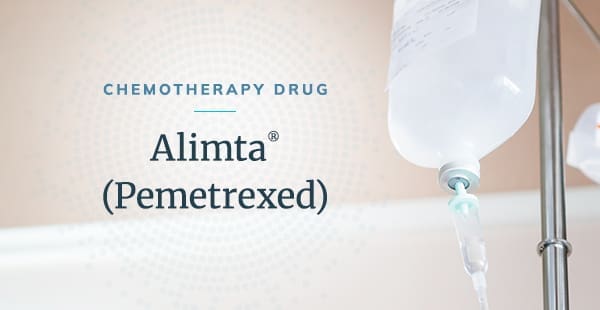
What Is Alimta (Pemetrexed)?
Alimta®, known generically as pemetrexed, is a chemotherapy drug called an antifolate. This type of drug can kill or slow the growth of cancer cells. In 2004, Alimta in combination with another chemo drug, cisplatin, received approval by the Food and Drug Administration (FDA) to treat malignant pleural mesothelioma. It was the first FDA-approved chemotherapy drug for mesothelioma. The drug is also FDA-approved for non-small cell lung cancer (NSCLC).
- Generic names: Pemetrexed and pemetrexed disodium are the generic names for Alimta.
- Brand names: Alimta and Pemfexy are the brand names for pemetrexed.
- Administration: Alimta is administered intravenously.
- Drug combination: Alimta is often combined with cisplatin or carboplatin as part of a multimodal therapy.
- Types of mesothelioma treated: Alimta is used in treating pleural mesothelioma and peritoneal mesothelioma.
- Manufacturer: Alimta is manufactured by Eli Lilly and Company and Pemfexy is manufactured by Eagle Pharmaceuticals.
- FDA approval: Alimta and Pemfexy are both approved as a first-line treatment for unresectable pleural mesothelioma and non-small cell lung cancer in conjunction with cisplatin. Both drugs are approved as second-line treatment for non-small cell lung cancer.
In 2024, the FDA approved another combination treatment using Alimta to treat some cases of mesothelioma. The combination includes Keytruda® (pembrolizumab), an immunotherapy drug, and a platinum-based chemotherapy drug, like cisplatin. This drug combo is approved as a first-line treatment for inoperable cases of pleural mesothelioma.
In the trial that supported this approval, patients receiving pembrolizumab with chemotherapy had a median survival of 17.3 months, compared with 16.1 months for patients receiving chemotherapy alone.
Patients who are eligible for pemetrexed also have an alternative to Alimta. Pemfexy® (pemetrexed injection) is a newer brand of pemetrexed and is widely available abroad. It is manufactured as a ready-to-dilute solution, whereas Alimta is manufactured as a powder and is mixed into an intravenous solution.



How Does Alimta (Pemetrexed) Treat Mesothelioma?
Alimta is an antifolate drug. It works by blocking the actions of folic acid, which are necessary for copying DNA. When mesothelioma cells cannot copy DNA, they grow more slowly or die. Mesothelioma patients receive Alimta and cisplatin at the same time. The two drugs work together to fight mesothelioma tumors.
Alimta is a systemic chemotherapy drug. This means patients are given Alimta through an IV, allowing the drug to circulate through patients’ bloodstreams. Patients may receive multiple cycles of the chemotherapy, depending on their needs.
Alimta (Pemetrexed) and Cisplatin for Pleural Mesothelioma
In 2004, the FDA approved Alimta and cisplatin for the treatment of unresectable pleural mesothelioma. Cisplatin is another chemotherapy drug that works to stop tumor growth. Currently, this combination is the only approved first-line, chemotherapy-only option for use against mesothelioma.
This regimen may be used as a first- or second-line treatment. As a first-line therapy, one study found Alimta and cisplatin may extend survival to about one year. Patients taking cisplatin on its own had a median survival of about nine months.
Second-line treatments are used after an initial treatment to further treat the disease. A follow-up analysis looked at patients from the original trial who went on to receive further chemotherapy after it ended. Those originally treated with Alimta and cisplatin had a median survival of 15.3 months. Those originally treated with cisplatin alone had a median survival of 12.2 months.
As a result, this combination can be an effective option to extend survival for pleural mesothelioma patients who are not eligible for surgery.
Alimta (Pemetrexed) for Peritoneal Mesothelioma
Alimta with cisplatin is not FDA-approved for peritoneal mesothelioma, but doctors sometimes use the combination off-label. Small studies report a median survival ranging from about 10 to 24 months with this combination in peritoneal mesothelioma, a range similar to what is seen in pleural mesothelioma, though the treatment has been studied far less in peritoneal disease.
Alimta (Pemetrexed) for Asbestos-Related Lung Cancer
Alimta is also approved for treating patients with NSCLC. The FDA has approved three uses of the chemotherapy drug for NSCLC. Research has shown asbestos can cause any type of lung cancer.
| FDA-Approved Alimta Regimen | Median Survival for Lung Cancer Patients* |
|---|---|
| Initial treatment, combined with cisplatin | 10.3 months |
| Maintenance treatment, after four cycles of platinum-based chemotherapy for patients whose disease has not progressed | 13.4 months |
| Single-agent treatment, after prior chemotherapy | 8.3 months |
*Source: Eli Lilly and Company. ALIMTA (pemetrexed disodium) Injection.
Alimta has also been used in combination with Keytruda for patients with advanced nonsquamous NSCLC. In the phase III KEYNOTE-189 trial, researchers found 48% of patients experienced a reduction in tumor size when taking Alimta, Keytruda and a platinum-based chemotherapy, such as cisplatin. Comparatively, 19% of patients saw their tumors shrink when taking Alimta and platinum chemotherapy alone.
 Did You Know?
The average cost of mesothelioma treatment is $11,000 to $12,000 per month.
Over $30 billion in funds have been set aside to help mesothelioma patients with treatment costs.
Did You Know?
The average cost of mesothelioma treatment is $11,000 to $12,000 per month.
Over $30 billion in funds have been set aside to help mesothelioma patients with treatment costs.
What to Expect During Treatment
For malignant pleural mesothelioma, Alimta is given in 21-day cycles. In the seven-day week before treatment begins, patients will receive:
- Daily oral folic acid, starting 7 days before the first dose and continuing until 21 days after the last dose
- A vitamin B12 injection 1 week before the first dose, repeated every 3 cycles for as long as treatment continues
- A corticosteroid (dexamethasone) the day before, the day of and the day after treatment
These premedications help reduce the incidence of side effects for patients.
On the first day of the 21-day cycle, patients will receive the intravenous Alimta and cisplatin infusions. These infusions are given in a hospital or cancer center. The treatment combination is given as infusions in several stages:
- Patient receives 500 mg/m2 of pemetrexed infusion over 10 minutes.
- Patient rests for 30 minutes between the pemetrexed infusion and cisplatin infusion.
- Patient receives 75 mg/m2 of cisplatin infusion over 2 hours.
The dosages are calculated using the surface area of the patient’s skin, which is why it is measured per square meter.
The patients spend the following days of the cycle resting and recovering. Cycles can be repeated as many times as recommended by a doctor. In a clinical study, more than half of pleural mesothelioma patients received at least six cycles of treatment.
Preparing for Your Appointment
Patients taking Alimta will receive several supplements in the form of injections and tablets leading up to the infusion. These can help reduce the instances of adverse events from the treatment. In addition to taking these supplements, patients can also take other steps to prepare.
Patients may feel nervous before their chemotherapy appointments. Common tips for preparing for chemotherapy include:
- Notifying your employer of your appointment. Beyond the day of treatment, prepare your employer for the possibility of needing further time to recuperate during the 21-day cycle.
- Telling your friends and family about your appointments and follow-up care needs.
- Arranging for transport to and from the appointment.
- Clearing your schedule the day of the appointment.
- Stocking up on easy-to-prepare food to eat during treatment and readily available fluids.
Mesothelioma patients should also speak with their care team about what to expect and how to manage their treatment.
Managing Treatment and Follow-Up Care
Chemotherapy can be physically taxing and leave patients tired. In the days after an infusion, a patient’s biggest responsibility is to rest and let the chemotherapy drugs do their work.
In most cases, patients will receive several cycles of Alimta and cisplatin. Patients can speak with their doctors about arranging follow-up visits to measure progress and manage side effects.
Alimta (Pemetrexed) Benefits
In a pivotal clinical trial, adding Alimta to cisplatin increased median survival from 9.3 to 12.1 months compared with cisplatin alone. For patients ineligible for surgery, the combination may be used as a first-line treatment.
Alimta patients do experience some chemotherapy side effects. However, the common chemotherapy side effect of hair loss is relatively rare with Alimta. Some patients may find this to be a key benefit.
Research and clinical trials are ongoing to test Alimta in combination with other treatments, including immunotherapy and Tumor Treating Fields (TTFields).

Alimta (Pemetrexed) Side Effects
Alimta may cause side effects, similar to other chemotherapy drugs. These side effects can differ based on how the patient reacts to the treatment. Patients may also experience different side effects depending on if pemetrexed is given alone or combined with other therapies.
- Diarrhea
- Fatigue
- Hair loss
- Loss of appetite
- Low blood cell counts (red, white and platelets)
- Mouth, throat or lip sores
- Nausea
- Rash
- Upset stomach
- Vomiting
The approved combination of Alimta and cisplatin is generally well-tolerated. However, it may cause side effects such as fatigue, loss of appetite and nausea. Like many other chemotherapy drugs, there is also a risk of the patient sustaining hair loss or thinning. However, the risk of hair loss is low for patients taking Alimta.
Alimta can also cause more serious side effects, including kidney problems and lung inflammation (pneumonitis). Patients should not take Alimta during pregnancy, since it can harm a developing fetus.
A mesothelioma doctor will discuss these side effects with the patient and their care team before beginning treatment. They will also help with managing any side effects that arise.
Managing Side Effects
Mesothelioma patients may be given supplements during and after treatment to help prevent and manage side effects of Alimta. These supplements include:
- Daily folic acid starting 7 days before the first Alimta dose and ending 21 days after the final dose.
- A vitamin B12 injection 1 week before treatment with Alimta begins, repeated every 3 cycles for as long as treatment continues. This helps to reduce the incidence of side effects from Alimta.
- A corticosteroid (dexamethasone) the day before, the day of and the day after Alimta is administered. This treatment helps to reduce the incidence and severity of skin rashes.
Patients should consult their doctor before taking over-the-counter medications. Interactions may occur between common nonsteroidal anti-inflammatory drugs (NSAIDs) and chemotherapy drugs. For example, patients with kidney problems may be advised to avoid ibuprofen before, during and after receiving pemetrexed.
Patients should consult their doctors before taking any medications and supplements while receiving treatment.
Who Is Eligible for Alimta (Pemetrexed)?
Pleural mesothelioma patients who do not qualify for surgery may be eligible for Alimta with cisplatin. This includes anyone who has inoperable pleural mesothelioma. Alimta is also approved for the treatment of NSCLC.
Mesothelioma patients should talk with their doctor about Alimta to determine if they may be eligible. Doctors will discuss the benefits and potential risks associated with the treatment. They can help patients understand all of their mesothelioma treatment options and guide them through the decision process.
Clinical Trials and Studies on Alimta (Pemetrexed) for Pleural Mesothelioma
Many studies and clinical trials have been conducted concerning Alimta for mesothelioma.
One of the most important studies on Alimta was published in 2005. That study was a follow-up analysis of patients from the original pemetrexed-and-cisplatin trial who went on to receive further chemotherapy after it ended. Patients originally treated with Alimta and cisplatin had a median survival of 15.3 months, compared with 12.2 months for patients originally treated with cisplatin alone.
Researchers continue to study how the drug may be combined with other therapies for positive patient outcomes.
One such study combined Avastin® (bevacizumab) with Alimta and cisplatin. Bevacizumab is an anti-angiogenesis drug, which blocks blood supply to cancerous cells. As a result, it can help prevent mesothelioma from spreading. Pleural mesothelioma patients who received all three drugs had a median survival of 18.8 months. Those who received only Alimta and cisplatin had a median survival of 16.1 months.
This study prompted the National Comprehensive Cancer Network (NCCN) to update their guidelines for treating mesothelioma in 2016. In addition to pemetrexed plus cisplatin, the panel recommended bevacizumab with cisplatin and pemetrexed as a first-line treatment for patients with unresectable pleural mesothelioma.
Tumor Treating Fields (TTFields) have also been used in combination with Alimta. TTFields use low-intensity electrical fields to inhibit cell division, which can slow or halt cancer growth. In 2019, the FDA approved a TTFields treatment called the NovoTTF-100L™ System. The approval applies to the NovoTTF-100L System combined with pemetrexed and platinum-based chemotherapy.
The treatment combination is a first-line treatment for pleural mesothelioma patients. The NovoTTF-100L System is also known by the brand name Optune Lua™. With this approval and increased interest around this treatment regimen, Optune Lua has become more widely available in recent years.
Researchers continue to conduct mesothelioma clinical trials to test these and other treatments in an effort to extend patient life expectancy.
Common Questions About Alimta for Mesothelioma
What is the success rate of Alimta chemotherapy?
Is Alimta used to treat mesothelioma?
Will I lose my hair on Alimta?
Sources
Financial Assistance for Mesothelioma Patients
Dr. Francis Perry Wilson is the Director of the Clinical and Translational Research Accelerator at the Yale University School of Medicine. He specializes in nephrology and clinical research.
Amy Zappone brings nearly two decades of experience in education and research-based communication. At Mesothelioma.com, she translates complex topics into understandable resources that help patients and families make informed decisions.