
Asbestos in Bakelite Plastics

Bakelite is a moldable plastic invented in 1907. For decades it was used in everything from home appliances to airplane propellers to jewelry. It can still be found in game pieces and vintage collectibles. But Bakelite also contains asbestos, which can lead to cancers like mesothelioma.
Learn More About Asbestos-Containing Products
Why Was Asbestos Used in Bakelite?
Chemist Leo Baekeland created the first synthetic plastic in 1907. He called it Bakelite. Baekeland used asbestos in his formula for the plastic. Asbestos is a durable, flexible, fire-resistant material. It helped Bakelite to be moldable and resistant to electricity, heat and chemicals.
The plastic became a popular material for all manner of mass production uses. This was especially true in the growing electrical and automotive industries. Marketing itself as “The Material of a Thousand Uses,” Bakelite went on to be present in many consumer goods, electrical components and other plastic products for the first half of the 20th century.
Union Carbide Corporation acquired Bakelite in 1939. But Bakelite was largely discontinued by the end of World War II.
Factories switched gears to manufacturing wartime products, making Bakelite expensive to produce. When the war ended, new plastics products had replaced Bakelite. But even with reduced applications, Bakelite persisted.
In 1992, Union Carbide Corporation sold the Bakelite trademark to Georgia-Pacific Corporation, which used it in construction materials. Bakelite remains a common ingredient for game pieces.
Asbestos Bakelite Plastics History at a Glance
- Other Names: Plastic, phenol-formaldehyde resin, synthetic resin
- Years of Manufacture: 1907 – Present
- Military Use: Air Service (later became the Air Force) used Bakelite in motors, propellers and telephones
- Places Used: Circuitry panels, home appliances, jewelry, novelties, radios
- Asbestos Use Banned: Chrysotile asbestos was banned for new uses in 2024, but Bakelite was made with amosite asbestos
- Noteworthy Brands: Bakelite, Catalin, Georgia-Pacific, Union Carbide Corporation
Dangers of Asbestos in Bakelite
Vintage Bakelite products are common collectors’ items, with some pieces being about 100 years old. When the plastic deteriorates, it can release asbestos fibers into the air. Asbestos poses health risks when ingested or inhaled. Once fibers settle in the lining around organs, asbestos-related diseases like mesothelioma may develop.
In 1973, an industrial hygienist performed a study at Union Carbide Corporation. He tested how much asbestos was in the air after handling Bakelite. The concentration far exceeded the exposure limit.
Square D, another manufacturer that worked with Union Carbide Corporation’s materials, found similar issues. They determined that asbestos-containing plastics were “basically not encapsulated.” Working with the plastic by actions like sanding or sawing could release asbestos dust.
Connect With a Top Mesothelioma Doctor Find a mesothelioma specialist near you Get Connected
List of Asbestos Bakelite Products
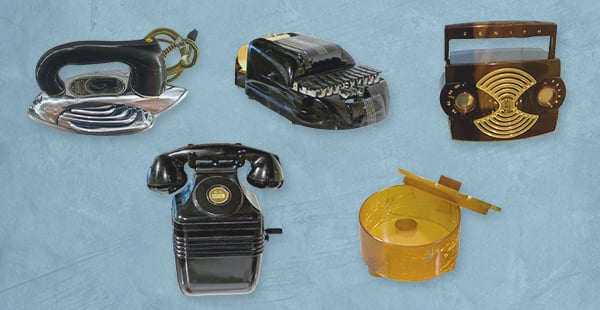
Bakelite’s malleability made it popular for a wide range of consumer asbestos products. In home goods, it appeared in the handles of kitchen appliances and utensils like toasters and egg beaters. In jewelry, it took the shape of buttons and bangles. In electronics, it was in phones and radios. It also appeared in industrial products.
Here are just some of the many asbestos-containing products manufactured with Bakelite:
- Airplane propellers
- Brake pads
- Cameras
- Children’s toys
- Door handles
- Electrical insulators
- Hair dryers
- Jewelry
- Kitchen appliance handles
- Particleboard
- Pistol grips
- Radios
- Telephones
In addition to Bakelite Corporation and its successors, other companies used the formula, too. The American Catalin Company made its own version, Catalin, after the initial Bakelite patent expired in 1927. Plus, dozens of companies used Bakelite in their own products. This leaves behind a long list of related asbestos companies.
- American Catalin Company
- American Insulator Corporation
- Bakelite Corporation
- Boonton Rubber
- General Electric Company
- Georgia-Pacific Corporation
- Kellogg Switchboard Company
- Remy Electric Company
- Union Carbide Corporation
- Westinghouse Electric Corporation
- Weston Electrical Instrument Corporation
 Did You Know?
Corporate documents show that asbestos companies knew the products they made were dangerous.
Speak with a lawyer today about filing a mesothelioma claim against these irresponsible companies.
Did You Know?
Corporate documents show that asbestos companies knew the products they made were dangerous.
Speak with a lawyer today about filing a mesothelioma claim against these irresponsible companies.
Who Is at Risk of Asbestos Exposure From Bakelite?
Because Bakelite had so many uses, many people may have been at risk of asbestos exposure from the plastic. Asbestos is most dangerous when fibers become airborne. So when Bakelite products experience wear and tear, those nearby are at risk. Workers who used Bakelite products may have faced occupational asbestos exposure.
- Air Force veterans
- Aircraft mechanics
- Auto mechanics
- Collectors
- Compounding engineers
- Construction workers
- Cooks
- Demolition crews
- Drywall tapers
- Electricians
- Industrial maintenance mechanics
- Industrial workers
- Insulators
- Laboratory technicians
- Logistics specialists
- Machine operators
- Machinists
- Maintenance technicians
- Manufacturing workers
- Material handlers
- Molders
- Operations managers
- Plant managers
- Plastic extrusion operators
- Plastic fabricators
- Plastic molders
- Process technicians
- Product designers
- Production associates
- Utility operators
- Warehouse associates
- Welders
Families of these workers may also face secondary exposure risks. This can occur when workers bring home asbestos on their clothes or belongings. Others in the household can also unknowingly inhale or ingest those asbestos fibers. Consumers of products with Bakelite could also experience exposure as the products age.
Anyone who develops an asbestos cancer because of asbestos exposure has legal options. Specialized lawyers can help patients file asbestos lawsuits to seek compensation.
Sources
Air Force Historical Support Division. Evolution of the Department of the Air Force.
American Chemical Society. Leo Hendrick Baekeland and the Invention of Bakelite®.
Asbestos123.com. The Risk Of Asbestos Exposure From Vintage Products.
Bee Plastic. A COLLECTOR’S GUIDE TO VINTAGE BAKELITE HOUSEWARES AND ACCESSORIES.
Britannica. Bakelite.
Egilman D. The production of corporate research to manufacture doubt about the health hazards of products: an overview of the exponent bakelite® simulation study. New Solut. 2018 Aug;28(2):179–201.
Historical Retail. BAKELITE, CATALIN, LUCITE OR CELLULOID?
Ledbury Surveys Ltd. WHAT IS ASBESTOS?
Plastics News. 100 years later, Bakelite shines.
Science History Institute Museum & Library. Leo Hendrik Baekeland.
Splendette. The History of Bakelite.
Syracuse University. Bakelite Collection.
Legal Rights for Mesothelioma Victims

Tara Strand specializes in writing content about mesothelioma and asbestos. She focuses on topics like mesothelioma awareness, research, treatment, asbestos trust funds and other advocacy efforts.

 Legally
Reviewed by
Jennifer Lucarelli
Mesothelioma Lawyer and Legal Advisor
Legally
Reviewed by
Jennifer Lucarelli
Mesothelioma Lawyer and Legal Advisor
For more than two decades, Jennifer Lucarelli has served as Legal Advisor at Mesothelioma.com. She has advocated for more than 1,000 asbestos victims, securing millions in settlements and helping them access quality medical care.