Types of Mesothelioma

The four main types of mesothelioma are:
- Pleural: Develops in the lining around the lung
- Peritoneal: Develops in the lining of the abdomen
- Pericardial: Develops in the lining around the heart
- Testicular: Develops in the lining of the testicles
Mesothelioma also has three cell types: epithelioid, sarcomatoid and biphasic.
Learn More About Mesothelioma Types in Our Free Guide
Mesothelioma Types by Location
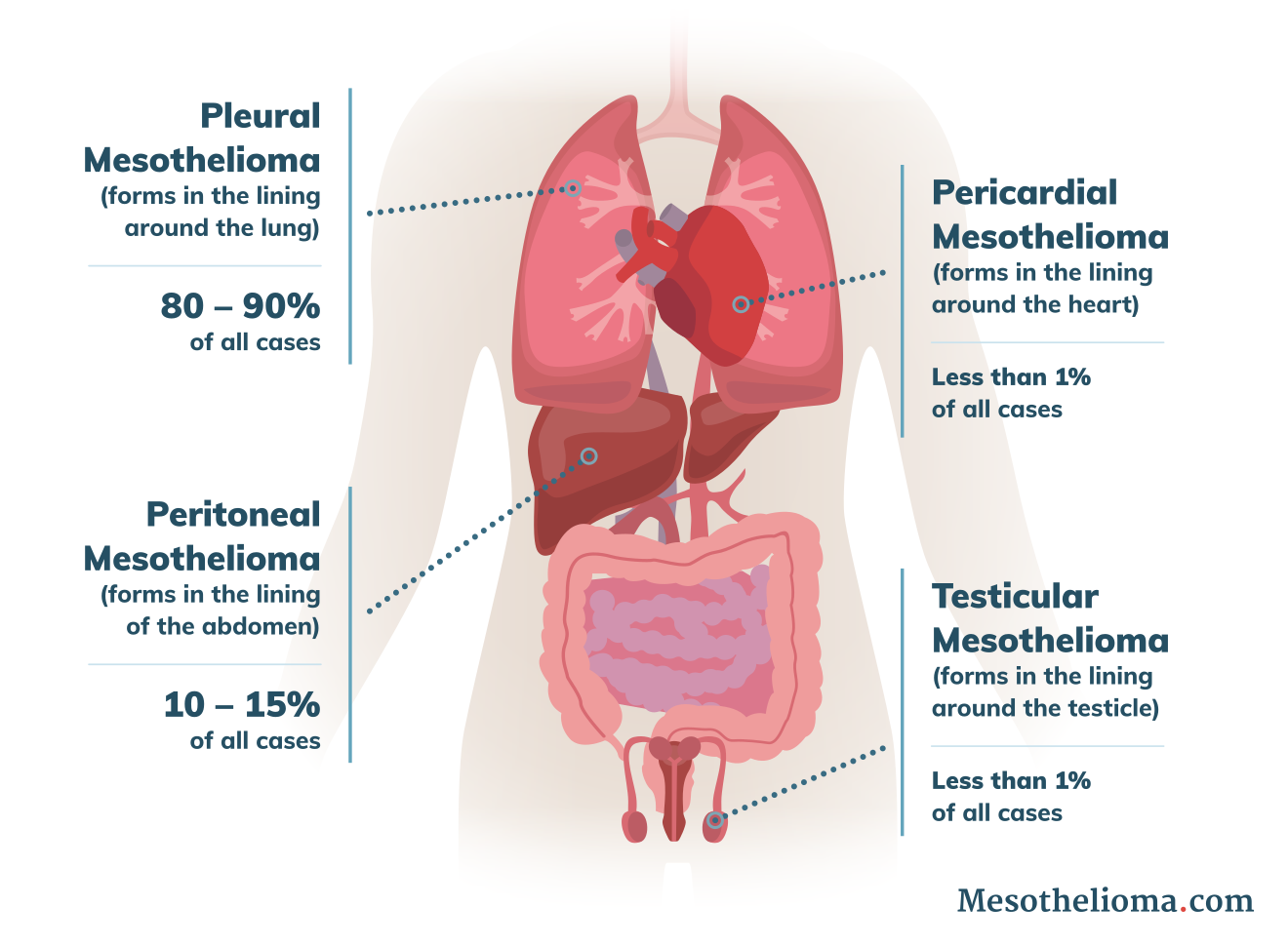
Mesothelioma has four main types based on where tumors grow in the body. Mesothelioma occurs in the linings around the lungs, abdomen, heart and testicles. Mesothelioma can be further classified by cell type. The three main mesothelioma cancer cell types are epithelioid, sarcomatoid and biphasic.
According to medical literature:
- Pleural mesothelioma accounts for 80% – 90% of all mesothelioma cases.
- Peritoneal mesothelioma accounts for 10% – 15% of cases.
- Pericardial mesothelioma accounts for less than 1% of cases.
- Testicular mesothelioma accounts for less than 1% of cases.
According to medical literature:
- The epithelioid cell type is most common, accounting for about 70% of mesothelioma cases.
- The biphasic cell type accounts for about 20% of mesothelioma cases.
- The sarcomatoid cell type is most rare, accounting for about 10% of mesothelioma cases.
Pleural Mesothelioma (Lungs)
Pleural mesothelioma forms in the lining around the lungs, also called the pleura. It accounts for 80% – 90% of cases, making it the most common type of mesothelioma. This rare cancer is caused by asbestos exposure. When a person inhales asbestos fibers, the fibers may end up in the pleura. Over time, irritation caused by these fibers may lead to tumor growth.
- Chest pain
- Coughing up blood
- Difficulty swallowing
- Dry cough
- Fatigue
- Loss of appetite
- Night sweats
- Pleural effusion (fluid buildup in the pleura)
- Pleural plaques
- Shortness of breath
- Unexplained weight loss
The median survival for pleural mesothelioma is about 18 months with treatment. Common pleural mesothelioma treatments include:
- Chemotherapy
- Extrapleural pneumonectomy (EPP) surgery
- Immunotherapy
- Pleurectomy decortication (P/D) surgery
- Radiation therapy
Doctors may combine treatments, a method called multimodal therapy. Combination plans are associated with better pleural mesothelioma survival than single treatment plans. For example, one study reported a median survival of 35 months in patients treated with chemotherapy plus surgery.
Peritoneal Mesothelioma (Abdomen)
Peritoneal mesothelioma forms in the lining of the abdomen, also called the peritoneum. This mesothelioma type accounts for 10% – 15% of cases. It is caused by asbestos exposure. When inhaled or ingested, asbestos fibers end up in the peritoneum. These fibers can cause irritation and cellular damage that can lead to tumor growth.
- Abdominal pain
- Abdominal swelling
- Ascites/peritoneal effusion (fluid buildup in the peritoneum)
- Blood clots
- Fever
- Inflammatory lesions
- Intestinal obstruction
- Night sweats
- Weight loss
Median survival for peritoneal patients who receive treatment is about 2.5 years. Peritoneal mesothelioma patients have different treatment options, including:
- Chemotherapy
- Cytoreductive surgery (CRS)
Mesothelioma doctors may combine therapies for more effective treatment. For example, CRS plus heated intraperitoneal chemotherapy (HIPEC) are standard for qualified patients. HIPEC is a local chemotherapy applied to the abdominal cavity. Survival for patients who receive CRS and HIPEC may range from 2.5 to 7.5 years.
Pericardial Mesothelioma (Heart)
Pericardial mesothelioma forms in the lining of the heart, also called the pericardium. It is a rare type of mesothelioma, accounting for less than 1% of all cases. Pericardial mesothelioma has been linked to asbestos exposure. However, there is a lack of information about the exact way this mesothelioma type develops due to its rarity.
- Cardiac tamponade (fluid or blood buildup between the heart and pericardium)
- Chest pain
- Difficulty swallowing
- Dry cough
- Pericardial effusion (fluid buildup in the pericardium)
- Pericardial thickening
- Shoulder pain
- Swelling of the legs or lower extremities
Patients with pericardial mesothelioma have a median survival of 6 months. But in recent studies, patients who received multimodal therapy have lived longer than 6 months. Treatment for pericardial mesothelioma may include:
- Chemotherapy
- Pericardiectomy surgery
- Radiation therapy
Specialists continue to explore new pericardial mesothelioma treatment options. Possible experimental treatments include photodynamic therapy and mesothelioma vaccines. Eligible patients may be able to receive these treatments through clinical trials.
Testicular Mesothelioma
Testicular mesothelioma forms in the lining around the testicle, called the tunica vaginalis. This lining covers the testes. This type is very rare, accounting for less than 1% of mesothelioma cases. This form of mesothelioma has been connected to asbestos exposure. But the exact way it develops is not fully understood.
- Hydrocele (fluid buildup in the scrotum)
- Inguinal mass (a mass that may mimic a hernia in the groin)
- Scrotal swelling
- Solid scrotal mass
- Spermatocele (a cyst near the top or behind the testicle)
With treatment, testicular mesothelioma has a median survival of 6 years. The most common treatment removes a testicle and its spermatic cord. Patients may also receive chemotherapy or radiation.



Mesothelioma Cell Types
Mesothelioma type can be defined by cell type and tumor location. Specialists identify different cell types by their unique shapes.
Cancer cell type may affect how a patient responds to certain treatments. The three main mesothelioma cell types are epithelioid, sarcomatoid and biphasic.
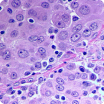
Epithelioid mesothelioma is the most common cell type, making up about 70% of cases. Epithelioid cells have box or oval shapes. They tend to respond better to treatment than other cell types.
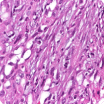
Sarcomatoid mesothelioma makes up about 10% of cases. These cells are characterized by oval or spindle shapes. Historically, prognosis for this cell type has been poorer than for others, but treatment advances are changing this.
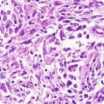
Biphasic mesothelioma, or mixed mesothelioma, accounts for about 20% of cases. Biphasic tumors contain both epithelioid and sarcomatoid cells.
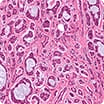
In addition to the three main cell types, there are also rarer mesothelioma cell types. These rare cells are often subtypes of epithelioid or sarcomatoid mesothelioma. Some defy classification.
Treatment options may vary by type of cancer cell. Many of the rarer types have the same treatment options and similar outcomes to the more common cell types. Options may also vary by whether the mesothelioma tumor is benign or malignant.
Questions About the Types of Mesothelioma? Ask experienced mesothelioma advocate Jennifer Lucarelli Ask a Question
Malignant vs. Benign Mesothelioma
The majority of diagnosed mesothelioma cases are malignant, meaning they are cancerous. But in rare cases, mesothelioma tumors can also be non-cancerous, or benign.
Malignant tumors can grow and spread fast, which can limit treatment options. Malignant mesothelioma patients have an average life expectancy of 18 – 31 months.
Benign mesothelioma cells do not grow as aggressively. This can allow doctors to perform complete tumor removal procedures. Treatment may consist of surgery to fully remove the tumor. Benign mesothelioma generally has a good prognosis, although recurrence is possible. In rare cases, it may become malignant mesothelioma.
Mesothelioma Treatment by Type
Mesothelioma treatment options vary based on location and cell type. A doctor can create an individualized treatment plan based on a patient’s unique mesothelioma diagnosis. Treatment options include surgery, chemotherapy and immunotherapy. Patients may receive two or more treatments as part of a multimodal therapy plan.
Surgery
Patients eligible for aggressive mesothelioma treatment may undergo surgery. Multimodal treatment involving surgery may be the best way of extending survival. The type of surgery a patient undergoes depends on the type and location of their mesothelioma. Surgery options for the main mesothelioma types include:
- Pericardial mesothelioma: Pericardiectomy
- Peritoneal mesothelioma: Cytoreductive surgery (CRS)
- Pleural mesothelioma: Extrapleural pneumonectomy (EPP), pleurectomy decortication (P/D)
- Testicular mesothelioma: Radical orchiectomy
Currently, doctors consider cell type as a factor affecting surgery options. For example, sarcomatoid patients may not be eligible for surgery. But some experts believe this could change. They want to reexamine cell-type-based surgery qualifications in light of new immunotherapy treatments.

Heather Von St. James is a mesothelioma survivor and awareness advocate. In 2006, she underwent an extrapleural pneumonectomy to treat her pleural mesothelioma. Heather also received chemotherapy and radiation. She has survived more than 15 years post-surgery.
Learn More About Heather’s Surgery ExperienceImmunotherapy
Different types of mesothelioma patients are increasingly likely to receive immunotherapy. The most promising mesothelioma immunotherapy uses drugs called immune checkpoint inhibitors (ICIs). A combination of the ICIs Opdivo® (nivolumab) and Yervoy® (ipilimumab) is approved to treat pleural mesothelioma.
What are checkpoint inhibitors? Checkpoint inhibitor drugs allow the immune system to fight cancer. In general, immune checkpoints exist to help protect healthy cells. These checkpoints identify cells that the immune system should not attack. Cancer cells can manipulate this immune system process to protect themselves instead. Checkpoint inhibitor drugs block these checkpoints. This helps immune cells identify and attack tumor cells.
Research into the use of ICIs to treat mesothelioma is ongoing. Some specialists are looking into using ICIs to treat mesothelioma in locations other than the pleura. Clinical trials are looking into treating peritoneal patients with immunotherapy.
Other specialists are looking into the potential of ICIs for fighting different cancer cell types. Early research suggests they may help sarcomatoid patients qualify for surgery. In one recent case, doctors diagnosed a patient with inoperable sarcomatoid mesothelioma. They then treated the patient with Opdivo and Yervoy. After this treatment, the patient’s condition improved enough that doctors determined the cancer was operable.
Chemotherapy
Chemotherapy is a common treatment for different types of mesothelioma. Doctors may treat any of the main mesothelioma types with chemotherapy. Chemotherapy may be systemic or local depending on a patient’s diagnosis and their doctor’s recommendation. It may be combined with other forms of treatment, like surgery and immunotherapy.
Patients with inoperable mesothelioma may receive systemic chemotherapy. Patients with operable pleural or peritoneal mesothelioma may be eligible for local chemotherapy. Local chemotherapy is often administered with surgery.
For example, CRS plus HIPEC is a standard peritoneal mesothelioma treatment involving surgery and localized chemotherapy. This treatment combination is associated with long-term peritoneal mesothelioma survival.
Radiation
Doctors may use radiation to treat certain types of mesothelioma. Pleural and pericardial mesothelioma patients may receive radiation. It is most often applied in a multimodal plan and seldom used alone.
Radiation is not a common treatment for peritoneal or testicular mesothelioma. It has not been tied to improved peritoneal mesothelioma survival. It is unclear whether radiation is helpful in treating testicular mesothelioma.
Palliative
Patients with any type of mesothelioma may receive palliative care. Palliative treatment is healthcare aimed at improving a patient’s quality of life at any stage of illness. For example, patients may receive fluid drainage procedures to decrease discomfort. The palliative treatment a patient receives may depend on the type of mesothelioma they have.
Mesothelioma patients may receive palliative care at any point during their cancer journey. It does not prevent patients from receiving care aimed at treating mesothelioma.
Common Questions About Mesothelioma Types
What are the main types of mesothelioma?
What is the difference between mesothelioma location and cell type?
What is the rarest form of mesothelioma?
Sources
Alexander Jr. HR, Li CY, et al. Current Management and Future Opportunities for Peritoneal Metastases: Peritoneal Mesothelioma. Annals of Surgical Oncology. August 2018;25(8):2159-2164. doi: 10.1245/s10434-018-6337-5
American Cancer Society. Chemotherapy for Malignant Mesothelioma. Updated November 2018.
American Cancer Society. Signs and Symptoms of Mesothelioma. Updated November 2018.
Amin W, Linkov F, et al. Factors influencing malignant mesothelioma survival: a retrospective review of the National Mesothelioma Virtual Bank cohort. F1000 Research. June 2019;7:1184. doi: 10.12688/f1000research.15512.3
An JY, Kim D, et al. Clinical Features and Outcomes of Tunica Vaginalis Mesothelioma: A Case Series from the National Institutes of Health. Clinical Genitourinary Cancer. October 2017;15(5):e871-e875. doi: 10.1016/j.clgc.2017.04.02
Baas P, Scherpereel A, et al. First-line nivolumab plus ipilimumab in unresectable malignant pleural mesothelioma (CheckMate 743): a multicentre, randomised, open-label, phase 3 trial. The Lancet. January 2021;397(10272):375-386. doi: 10.1016/S0140-6736(20)32714-8
Bibby AC, Tsim S, et al. Malignant pleural mesothelioma: an update on investigation, diagnosis and treatment. European Respiratory Review. December 2016;25(142):472-486. doi: 10.1183/16000617.0063-2016
Brcic L and Kern I. Clinical significance of histologic subtyping of malignant pleural mesothelioma. Translational Lung Cancer Research. June 2020;9(3):924-933. doi: 10.21037/tlcr.2020.03.38
Bridda A, Padoan I, et al. Peritoneal Mesothelioma: A Review. Medscape General Medicine. May 2007;9(2):32.
Brown M, Jersmann H, et al. A challenging diagnosis of malignant mesothelioma with osteosarcomatous differentiation metastasizing to bone. Respirology Case Reports. November 2020;8(8):e00664. doi: 10.1002/rcr2.664
Chekol SS, Sun C-C, et al. Malignant mesothelioma of the tunica vaginalis testis: diagnostic studies and differential diagnosis. Archives of Pathology & Laboratory Medicine. January 2012;136(1):113-117. doi: 10.5858/arpa.2010-0550-RS
ClinicalTrials.gov. A Study of Immunotherapy Drugs Nivolumab and Ipilimumab in Patients w/Resectable Malignant Peritoneal Mesothelioma. Updated July 2023.
de Boer NL, van Kooten JP, et al. Malignant Peritoneal Mesothelioma: Patterns of Care and Survival in the Netherlands: A Population-Based Study. Annals of Surgical Oncology. December 2019;26(13):4222-4228. doi: 10.1245/s10434-019-07803-z
Enewold L, Sharon E, et al. Patterns of Care and Survival Among Patients with Malignant Mesothelioma in the United States. Lung Cancer. October 2017;112:102-108. doi: 10.1016/j.lungcan.2017.08.009
Faig J, Howard S, et al. Changing Pattern in Malignant Mesothelioma Survival. Translational Oncology. February 2015;8(1):35-39. doi: 10.1016/j.tranon.2014.12.002
Freitas DMM, Ramos RL, et al. Primary pericardial mesothelioma and asbestos exposure: a rare fatal disease. BMJ Case Reports. May 2017;2017:bcr2017219949. doi: 10.1136/bcr-2017-219949
Godar M, Liu J, et al. Primary Pericardial Mesothelioma: A Rare Entity. Case Reports in Oncological Medicine. June 2013;2013:283601. doi: 10.1155/2013/283601
Gong W, Ye X, et al. Primary malignant pericardial mesothelioma—a rare cause of superior vena cava thrombosis and constrictive pericarditis. Journal of Thoracic Disease. December 2014;6(12):E272-E275. doi: 10.3978/j.issn.2072-1439.2014.11.36
Kajiyama K, Taira A, et al. Salvage Pleurectomy/Decortication After Immunotherapy for Sarcomatoid Malignant Pleural Mesothelioma. Annals of Thoracic Surgery Short Reports. March 2023;1(1):121-123. doi: 10.1016/j.atssr.2022.07.004
Kim J, Bhagwandin S, et al. Malignant peritoneal mesothelioma: a review. Annals of Translational Medicine. June 2017;5(11):236. doi: 10.21037/atm.2017.03.96
Kim JS, Lim SY, et al. A Case Report of Primary Pericardial Malignant Mesothelioma Treated with Pemetrexed and Cisplatin. Journal of Korean Medical Science. November 2017;32(11):1879-1884. doi: 10.3346/jkms.2017.32.11.1879
Klebe S, Mahar A, et al. Malignant mesothelioma with heterologous elements: clinicopathological correlation of 27 cases and literature review. Modern Pathology. September 2008;21(9):1084-1094. doi: 10.1038/modpathol.2008.125
McGehee E, Gerber DE, et al. Treatment and Outcomes of Primary Pericardial Mesothelioma: A Contemporary Review of 103 Published Cases. Clinical Lung Cancer. March 2019;20(2):e152-e157. doi: 10.1016/j.cllc.2018.11.008
Mesothelioma Applied Research Foundation. News from the Science Session | 2022 International Symposium on Malignant Mesothelioma. YouTube. July 2022.
Mezei G, Chang ET, et al. Epidemiology of mesothelioma of the pericardium and tunica vaginalis testis. Annals of Epidemiology. May 2017;27(5):348-359.e11. doi: 10.1016/j.annepidem.2017.04.001
Miserocchi G, Sancini G, et al. Translocation pathways for inhaled asbestos fibers. Environmental Health. January 2008;7:4. doi: 10.1186/1476-069X-7-4
Moffitt Cancer Center. Mesothelioma Symptoms.
Myers DJ and Babiker HM. Benign Mesothelioma. StatPearls Publishing. Updated May 2023.
National Cancer Institute. Palliative Care in Cancer. Updated November 2021.
Nazemi A, Nassiri N, et al. Testicular Mesothelioma: An Analysis of Epidemiology, Patient Outcomes, and Prognostic Factors. Urology. April 2019;126:140-144. doi: 10.1016/j.urology.2019.01.009
Plas E, Riedl CR, et al. Malignant mesothelioma of the tunica vaginalis testis: review of the literature and assessment of prognostic parameters. Cancer. December 1998;83(12):2437-2446. doi: 10.1002/(SICI)1097-0142(19981215)83:12<2437::AID-CNCR6>3.0.CO;2-G
Rodríguez M, Mallidi HR, et al. Recurrence of Pericardial Mesothelioma Affecting the Myocardium After Pericardial Resection. The Annals of Thoracic Surgery. November 2018;106(5):e243-e245. doi: 10.1016/j.athoracsur.2018.04.057
Rossini M, Rizzo P, et al. New Perspectives on Diagnosis and Therapy of Malignant Pleural Mesothelioma. Frontiers in Oncology. April 2018;8:91. doi: 10.3389/fonc.2018.00091
Rusch VW, Giroux D, et al. Initial analysis of the international association for the study of lung cancer mesothelioma database. Journal of Thoracic Oncology. November 2012;7(11):1631-1639. doi: 10.1097/JTO.0b013e31826915f1
Salo SAS, Ilonen I, et al. Malignant Peritoneal Mesothelioma: Treatment Options and Survival. Anticancer Research. February 2019;39(2):839-845. doi: 10.21873/anticanres.13183
Shavelle R, Vavra-Musser K, et al. Life Expectancy in Pleural and Peritoneal Mesothelioma. Lung Cancer International. January 2017;2017:2782590. doi: 10.1155/2017/2782590
Suman S, Schofield P, et al. Primary pericardial mesothelioma presenting as pericardial constriction: a case report. Heart. January 2004;90(1):e4. doi: 10.1136/heart.90.1.e4
Vlahu T and Vigneswaran WT. Pleurectomy and decortication. Annals of Translational Medicine. June 2017;5(11):246. doi: 10.21037/atm.2017.04.03
Yan TD, Deraco M, et al. A novel tumor-node-metastasis (TNM) staging system of diffuse malignant peritoneal mesothelioma using outcome analysis of a multi-institutional database. Cancer. May 2011;117(9):1855-1863. doi: 10.1002/cncr.25640
Free Mesothelioma Treatment Guide

Katy Moncivais, Ph.D., has more than 15 years of experience as a medical communicator. As the Medical Editor at Mesothelioma.com, she ensures our pages and posts present accurate, helpful information.

 Medically
Reviewed by
James Stevenson, MD
Thoracic Medical Oncologist
Medically
Reviewed by
James Stevenson, MD
Thoracic Medical Oncologist
Dr. James Stevenson is a Board-Certified Medical Oncologist. He specializes in treating mesothelioma and lung cancer and practices at the Cleveland Clinic in Cleveland, Ohio.