Mesothelioma vs. Lung Cancer

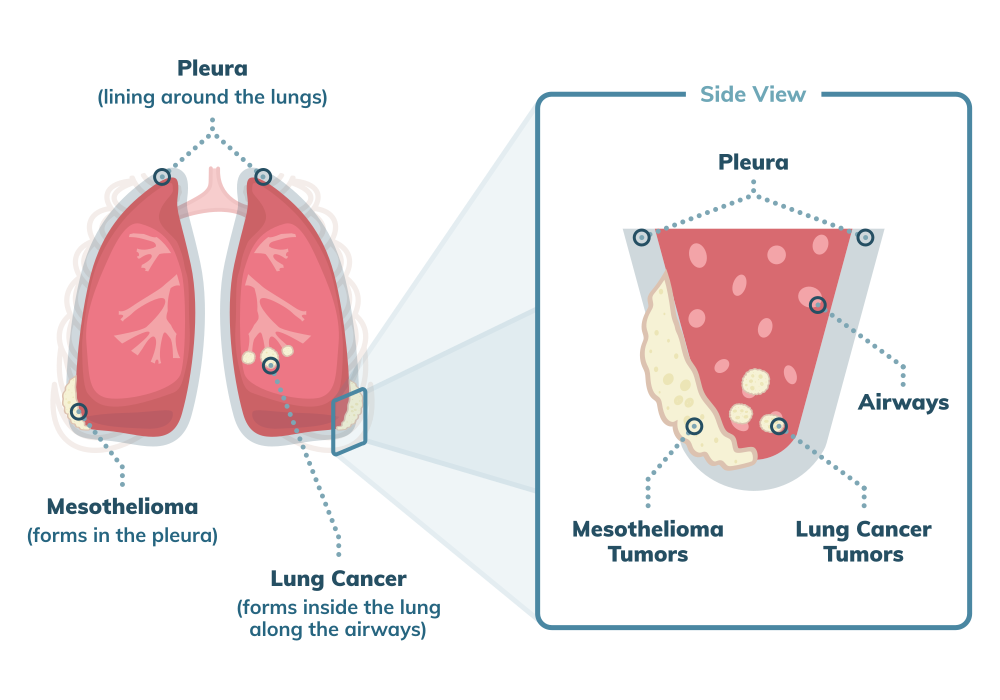
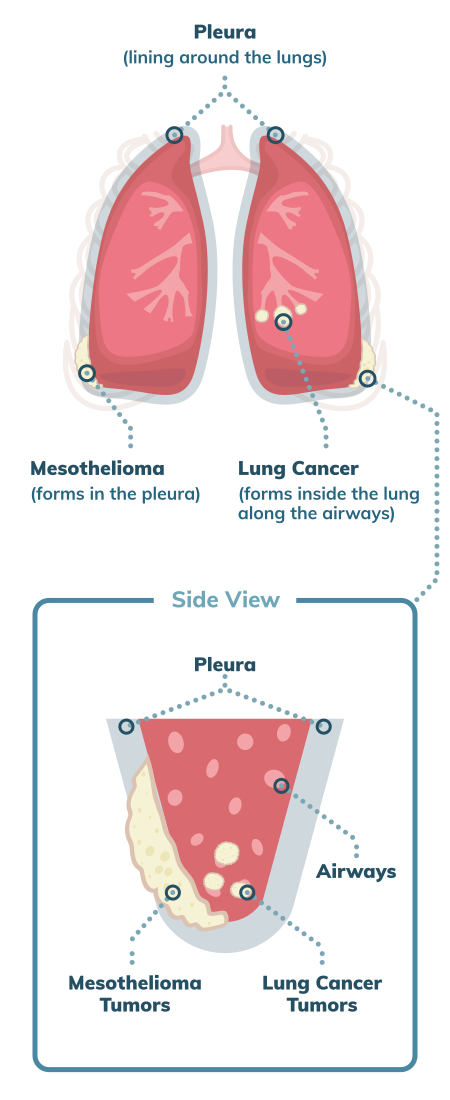
Mesothelioma is not a form of lung cancer. Mesothelioma develops in the lining around the lungs (the pleura). Lung cancer develops inside the lungs. Asbestos exposure is the one known cause of mesothelioma. Lung cancer can be caused by asbestos, smoking and other factors.
Learn More About Asbestos and Cancer in Our Free Guide

Is Mesothelioma the Same as Lung Cancer?
Mesothelioma and lung cancer are not the same. Pleural mesothelioma and lung cancer occur in the same region of the body, but they affect different tissues. Mesothelioma develops in the tissue surrounding the lungs (the pleura). Lung cancer develops inside the lungs, often along the airways.
Quick Facts About Lung Cancer and Mesothelioma
- Cases: There are about 2,500 pleural mesothelioma cases and more than 200,000 lung cancer cases each year.
- Causes: Asbestos exposure is the only cause of mesothelioma. Lung cancer is caused by asbestos exposure, radon or smoking.
- Location: Pleural mesothelioma forms in the lining around the lung. Lung cancer forms inside the lungs.
- Survival: Life expectancy for pleural mesothelioma is about 18 months. Life expectancy for lung cancer is about 12 months.
Mesothelioma may also develop in other tissues similar to the pleura. For example, peritoneal mesothelioma occurs in the tissue lining the abdomen (the peritoneum). In contrast, each form of lung cancer starts inside the lungs. Both cancers may spread to other areas if they go without treatment.
Breathing in asbestos fibers can cause mesothelioma or lung cancer. But asbestos exposure is the only confirmed cause of mesothelioma while lung cancer has several potential causes. In fact, data indicates smoking causes most cases of lung cancer.
The key difference between lung cancer and mesothelioma is where they form. Lung cancer develops inside the lungs. Mesothelioma develops outside the lungs in the lining that surrounds them (the pleura).
What Is Lung Cancer?
Lung cancer is a tumor that develops inside the lungs, often along airways. Several things can cause lung cancer, including asbestos exposure, smoking and radiation. In the United States, more than 200,000 cases of lung cancer occur each year. It causes more deaths in this country than any other form of cancer.
Lung cancer occurs in two main types: small cell lung cancer (SCLC) and non-small cell lung cancer (NSCLC). NSCLC also has subtypes including adenocarcinoma and squamous cell carcinoma.
- Cells: Larger, slower-growing cells than SCLC
- Frequency: 80% to 85% of lung cancers
- Treatment: Chemotherapy, cryotherapy, electrocautery, immunotherapy, laser therapy, photodynamic therapy, radiation, surgery
- Cells: Small cells that tend to grow quickly
- Frequency: 10% to 15% of lung cancers
- Treatment: Chemotherapy, immunotherapy, radiation, surgery
What Is Pleural Mesothelioma?
Pleural mesothelioma is a tumor that develops outside the lung in its exterior lining (the pleura). Mesothelioma can also develop in other tissue linings like the peritoneum and the lining around the heart. About 2,500 pleural mesothelioma cases occur each year in the United States.
Pleural mesothelioma has three main cell types: epithelioid, sarcomatoid and biphasic.
- Cells: Oval or box-like cells
- Frequency: ~70% of cases
- Treatment: Chemotherapy, immunotherapy, radiation, surgery
- Cells: Spindle-shaped cells
- Frequency: ~10% of cases
- Treatment: Chemotherapy, immunotherapy, radiation, surgery
- Cells: Mix of epithelioid and sarcomatoid cells
- Frequency: ~20% of cases
- Treatment: Chemotherapy, immunotherapy, radiation, surgery
Many hospitals and cancer centers have lung cancer specialists, possibly because of the high number of cases. On the other hand, mesothelioma is rare, and far fewer doctors specialize in treating it. This means mesothelioma patients may have to travel beyond the closest hospital to find expert care.
Research shows access to a team of mesothelioma experts can improve survival. Patients should speak with their treatment teams to ensure mesothelioma doctors are included.
- Cases: ~2,500 each year
- Cases linked to asbestos: ~80%
- Causes: Asbestos exposure
- Location: The lining around the lung (the pleura)
- Estimated life expectancy: 18 months
- Cases: 200,000+ each year
- Cases linked to asbestos: ~1%
- Causes: Asbestos exposure, radon (a naturally occurring gas), smoking
- Location: Inside the lungs, often along airways
- Estimated life expectancy: ~12 months
What Causes Lung Cancer and Mesothelioma?
Asbestos is the only confirmed cause of malignant mesothelioma. Lung cancer can also be caused by asbestos, but it has other causes as well, including smoking and radon gas.
How Asbestos Causes Lung Cancer and Mesothelioma
When a person inhales asbestos, the fibers can embed in their lung tissue and cause irritation. Over time, this irritation can trigger changes in nearby cells that lead to cancer. This process may occur over a period of decades. This means people could develop lung cancer or mesothelioma many years after they were exposed.
This same general process may occur in asbestos-related lung cancer and mesothelioma. The difference between the two is where the fibers become embedded. In asbestos-related lung cancer, the fibers generally embed in the lungs and stay there. In mesothelioma, asbestos fibers migrate through the lungs and embed in the pleura.
How Cigarette Smoke Causes Lung Cancer
Cigarette smoke carries harmful chemicals into the lungs. The chemicals directly damage DNA. They also make it more difficult for cells to repair DNA damage. Over time, the buildup of DNA damage can cause cells to become cancerous.
How Radon Gas Causes Lung Cancer
Radon is a radioactive gas that can be naturally released by soil and rocks. If people inhale radon, it can release radioactive particles in the lungs. These particles can damage any cells they contact. Over time, this damage can lead to lung cancer.
Multiple factors may put a person at risk of developing lung cancer. People who have past or present exposure to the following may be at risk:
- Asbestos
- Cigarette smoke (direct or secondhand)
- Inhalable carcinogens like arsenic and chromium compounds
- Radon gas
Individuals concerned about lung cancer risk factors should speak with their doctors. A doctor can help them understand their personal risk and potential ways to reduce it.
People with a history of asbestos exposure may be at risk of developing mesothelioma. Certain occupations had a high risk of asbestos exposure in the past, and some still do. At-risk occupations for asbestos exposure include:
Individuals concerned about developing mesothelioma should speak with a specialist. A mesothelioma doctor can help them understand their risks. The doctor may also recommend ways to monitor for mesothelioma symptoms.

Are Lung Cancer and Mesothelioma Symptoms the Same?
Lung cancer and mesothelioma share some symptoms, like chest pain and coughing. Other shared symptoms include:
- Coughing up blood
- Difficulty breathing (dyspnea)
- Difficulty swallowing
- Fatigue
- Loss of appetite
- Unexplained weight loss
Doctors may mistake lung cancer and mesothelioma symptoms as other conditions like the flu or pneumonia. It is also possible for doctors to initially mistake lung cancer for mesothelioma or vice versa.
Using a thorough diagnostic process can help doctors overcome this uncertainty. If a doctor suspects lung cancer or mesothelioma, they can order tests to determine which cancer may be causing the symptoms.
- Chest pain
- Cough that stays persistent or worsens over time
- Coughing up blood
- Difficulty breathing
- Difficulty swallowing
- Fatigue
- Hoarseness (loss of speaking voice)
- Loss of appetite
- Swelling of veins in the face or neck
- Unexplained weight loss
- Wheezing
- Chest pain
- Coughing up blood
- Difficulty swallowing
- Dry cough
- Fatigue
- Fever
- Loss of appetite
- Night sweats
- Pleural effusion (fluid around the lungs)
- Pleural plaques (areas of thickened tissue on the lining around the lungs)
- Unexplained weight loss
Patients experiencing these symptoms can help their doctors by mentioning any risk factors they have. Knowing about a history of smoking without any asbestos exposure might lead a doctor to order tests for lung cancer. But a history of smoking and asbestos exposure could help a doctor order tests for both cancers. This might enable the doctor to arrive more quickly at a correct diagnosis.
How Are Mesothelioma and Lung Cancer Diagnosed?
Diagnosis of mesothelioma or lung cancer involves a series of exams and tests. For both cancers, the process generally starts with a patient history and physical exam. Patients should try to include all known risk factors for either cancer in their history. This can help the doctor order the right tests.
After the medical history and exam, patients may undergo additional tests to help find the cause of their symptoms. This may include imaging scans, blood tests or biopsy procedures. These later tests can differ depending on whether the doctor suspects lung cancer or mesothelioma.
Common Diagnostic Procedures for Lung Cancer and Mesothelioma
The combination of diagnostic tests can vary depending on the type of cancer suspected. But in general, lung cancer and mesothelioma share some common tests, including:
- Biopsy: A procedure that removes suspicious tissue for additional testing
- Blood tests: A test that looks for signs of cancer or other illnesses in the patient’s blood
- Chest X-ray: An X-ray of the tissues inside the chest, including the lungs and the lining around them (the pleura)
- CT scan: A series of detailed X-rays that can make a 3-dimensional view of the tissues inside the chest
- Immunohistochemistry: A type of testing that can determine if a biopsy tissue sample is lung cancer or mesothelioma
Overall, the types of tests used for mesothelioma and lung cancer diagnosis are similar. But the results doctors look for in those tests may differ. For example, a CT scan of lung cancer may look quite different than one of pleural mesothelioma.
The lung cancer diagnostic process may include any of the following tests:
- Physical exam
- Blood tests
- Chest X-ray
- CT scan
- Lab test of coughed-up phlegm (sputum cytology)
- Biopsy
- Thoracentesis (pleurocentesis)
- Thoracoscopy
- Immunohistochemistry
The mesothelioma cancer diagnostic process may include any of the following tests:
- Physical exam
- Blood tests
- Chest X-ray
- CT scan
- Biopsy
- Thoracentesis (pleurocentesis)
- Thoracoscopy
- Immunohistochemistry
Correctly identifying the source of lung cancer or mesothelioma symptoms can be challenging. Patients can help doctors find the real cause of their symptoms by sharing any known risk factors. Discussing any history of smoking or asbestos exposure may help get a timely diagnosis and treatment.



What Is the Prognosis for Lung Cancer vs. Mesothelioma?
In general, lung cancer patients have a life expectancy of about one year. Pleural mesothelioma patients have a life expectancy of about 18 months with treatment. Prognosis for either cancer can vary because of several factors, including stage at diagnosis and patient health.
The following factors may have an impact on prognoses for lung cancer patients:
- Patient health: Patients healthy enough to take care of their daily needs tend to live longer than those not healthy enough to do so. Patients without heart and lung problems tend to survive longer than patients with those problems.
- Gender: Women tend to survive longer than men.
- Stage: Lung cancers diagnosed at an earlier stage tend to have better survival.
The following factors may have an impact on prognoses for mesothelioma patients:
- Age: Younger patients tend to live longer than older patients.
- Patient health: Patients healthy enough to take care of their daily needs tend to outlive those not healthy enough to do so.
- Gender: Women tend to survive longer than men.
- Stage: Early-stage mesothelioma generally has a better prognosis than later stages.
For either lung cancer or mesothelioma, oncologists may give patients an idea of their prognoses. But this is just an estimate. Patients may outlive their initial life expectancies by a few months or even years. Recent treatment advances also look poised to extend survival for both cancers in the near future.
Are Lung Cancer and Mesothelioma Treatments the Same?
Lung cancer treatments differ from pleural mesothelioma treatments, because the two cancers are not the same. But both cancers commonly combine individual treatments into one multimodal therapy. The individual treatments in that combination vary between lung cancer and mesothelioma.
One reason for that variation may be the number of approved drugs for each cancer. Lung cancer has more than 10 times the number of approved drug treatments as mesothelioma. This may be because lung cancer is much more common than mesothelioma.
Despite the low number of mesothelioma cases, researchers are still working to improve treatment. Many patients participate in clinical trials like the one that earned the most recent mesothelioma drug approval. That trial investigated the immunotherapy drug combo of Opdivo® (nivolumab) and Yervoy® (ipilimumab). This combination also has approval for the treatment of some forms of lung cancer.
For both cancers, a patient’s treatment regimen can depend on several factors. An experienced oncologist can help patients understand their treatment options.
- Chemotherapy: Many chemo combinations exist for lung cancer. Common drugs include cisplatin, etoposide and gemcitabine.
- Immunotherapy: Patients may receive one or more of these drugs alone or alongside other treatments.
- Multimodal therapy: Common multimodal approaches include combining immunotherapy with chemo and combining surgery with radiation.
- Radiation: Doctors may use radiation to kill cancer cells in a targeted area.
- Surgery: Patients may undergo surgery to remove part or all of the affected lung.
- Chemotherapy: Mesothelioma patients generally receive pemetrexed and cisplatin or carboplatin.
- Immunotherapy: Patients commonly receive the Opdivo+Yervoy combo.
- Multimodal therapy: A common option combines surgery and chemo or radiation.
- Radiation: Patients who undergo surgery may also receive radiation to the affected area.
- Surgery: Patients may receive surgery to remove tumors in the lining around the lung.
What Legal Options Are There for Asbestos Lung Cancer and Mesothelioma Patients?
Some cases of asbestos-linked lung cancer may have legal options similar to mesothelioma cases. Patients who can tie their exposure to a negligent asbestos company may be able to file a lawsuit. They may also qualify to make an asbestos trust fund claim. In general, these legal claims may provide compensation for medical expenses and other damage caused by asbestos.
Some companies went bankrupt because of asbestos lawsuits. During the bankruptcy process, they set up asbestos bankruptcy trusts. These trusts allow people harmed by the company’s asbestos to file claims against the trust.
Personal injury claims are filed by people who developed an asbestos illness after wrongful exposure. They can help people whose employers failed to protect them from asbestos.
VA claims help veterans harmed by asbestos receive compensation for their illnesses. VA claims can cover mesothelioma or lung cancer caused by asbestos exposure from military service.
Wrongful death claims are filed by a family member after their loved one dies from an asbestos illness. They may help cover treatment costs, lost wages and other damage caused by asbestos.
Patients interested in legal options for asbestos cancers should speak with an experienced mesothelioma lawyer. The lawyer can explain eligibility criteria and help patients make their best cases.
Do you need help? Get a Free 2026 Mesothelioma Guide Top doctors and clinics Latest treatments Caregiver information Request Free Guide
Common Questions About Mesothelioma vs. Lung Cancer
Is mesothelioma the same as lung cancer?
Is mesothelioma a form of lung cancer?
Is mesothelioma the same as small cell lung cancer?
Is mesothelioma the same as non-small cell lung cancer?
How does the prognosis compare between lung cancer and mesothelioma?
Sources
American Cancer Society. Key Statistics for Lung Cancer. Updated January 2023.
American Cancer Society. Lung Cancer Risk Factors. Updated January 2023.
Amin W, Linkov F, et al. Factors influencing malignant mesothelioma survival: a retrospective review of the National Mesothelioma Virtual Bank cohort. F1000Research. August 2018;7:1184. doi: 10.12688/f1000research.15512.3
Berman DW and Crump KS. Update of potency factors for asbestos-related lung cancer and mesothelioma. Critical Reviews in Toxicology. October 2008;38(Suppl 1):1-47. doi: 10.1080/10408440802276167
Centers for Disease Control and Prevention. What Are the Risk Factors for Lung Cancer? U.S. Department of Health and Human Services. Updated October 2022.
De Matteis S, Consonni D, et al. Impact of occupational carcinogens on lung cancer risk in a general population. International Journal of Epidemiology. June 2012;41(3):711-721. doi: 10.1093/ije/dys042
Faig J, Howard S, et al. Changing Pattern in Malignant Mesothelioma Survival. Translational Oncology. February 2015;8(1):35-39. doi: 10.1016/j.tranon.2014.12.002
Harber P. Asbestos, Pleural Plaques, and Lung Cancer: Untangling the Relationships. American Journal of Respiratory and Critical Care Medicine. January 2020;201(1):4-6. doi: 10.1164/rccm.201908-1676ED
Hu S, Zhang W, et al. Prognosis and Survival Analysis of 922,317 Lung Cancer Patients from the US Based on the Most Recent Data from the SEER Database. International Journal of General Medicine. December 2021;14:9567-9588. doi: 10.2147/IJGM.S338250
International Agency for Research on Cancer. Asbestos (Chrysotile, Amosite, Crocidolite, Tremolite, Actinolite and Anthophyllite). 2012.
Jain SV and Wallen JM. Malignant Mesothelioma. StatPearls Publishing. Updated July 2022.
Klebe S, Leigh J, et al. Asbestos, Smoking and Lung Cancer: An Update. International Journal of Environmental Research and Public Health. December 2019;17(1):258. doi: 10.3390/ijerph17010258
Lévêque E, Lacourt A, et al. A new trajectory approach for investigating the association between an environmental or occupational exposure over lifetime and the risk of chronic disease: Application to smoking, asbestos, and lung cancer. PLoS One. August 2020;15(8):e0236736. doi: 10.1371/journal.pone.0236736
Malhotra J, Malvezzi M, et al. Risk factors for lung cancer worldwide. European Respiratory Journal. September 2016;48(3):889-902. doi: 10.1183/13993003.00359-2016
National Cancer Institute. Drugs Approved for Lung Cancer. Updated January 2023.
National Cancer Institute. Lung Cancer Prevention (PDQ®)–Patient Version. Updated August 2021.
National Cancer Institute. Non-Small Cell Lung Cancer Treatment (PDQ®)–Patient Version. Updated February 2023.
National Cancer Institute. Radon and Cancer. Updated December 2011.
National Cancer Institute. Small Cell Lung Cancer Treatment (PDQ®)–Health Professional Version. Updated April 2022.
Ngamwong Y, Tangamornsuksan W, et al. Additive Synergism between Asbestos and Smoking in Lung Cancer Risk: A Systematic Review and Meta-Analysis. PLoS One. August 2015;10(8):e0135798. doi: 10.1371/journal.pone.0135798
O’Reilly KM, Mclaughlin AM, et al. Asbestos-related lung disease. American Family Physician. March 2007;75(5):683-688.
Ossowski S, Hung Y, et al. Improving outcomes in malignant pleural mesothelioma in an integrated health care system. Journal of Thoracic Disease. September 2022;14(9):3352-3364. doi: 10.21037/jtd-22-427
Rossini M, Rizzo P, et al. New Perspectives on Diagnosis and Therapy of Malignant Pleural Mesothelioma. Frontiers in Oncology. April 2018;8:91. doi: 10.3389/fonc.2018.00091
Rusch VW, Giroux D, et al. Initial Analysis of the International Association For the Study of Lung Cancer Mesothelioma Database. Journal of Thoracic Oncology. November 2012;7(11):1631-1639. doi: 10.1097/JTO.0b013e31826915f1
Vescio RA, Connors KM, et al. The Distinction of Small Cell and Non-Small Cell Lung Cancer by Growth in Native-State Histoculture. Cancer Research. September 1990;50(18):6095-6099.
Free Mesothelioma Treatment Guide

Katy Moncivais, Ph.D., has more than 15 years of experience as a medical communicator. As the Medical Editor at Mesothelioma.com, she ensures our pages and posts present accurate, helpful information.

Annette Charlevois is a Patient Support Coordinator for Mesothelioma.com. For more than 20 years, she has helped thousands of mesothelioma patients and their families get the assistance they need.