Asbestos-Related Lung Cancer

Asbestos lung cancer is a cancer that develops in the lungs after breathing in asbestos fibers. Symptoms often do not appear until 10 to 30 years or more after exposure. Treatments include surgery, chemotherapy, immunotherapy and radiation. Combination therapies improve survival for many patients.
Learn About Asbestos-Related Lung Cancer in Our Free Guide
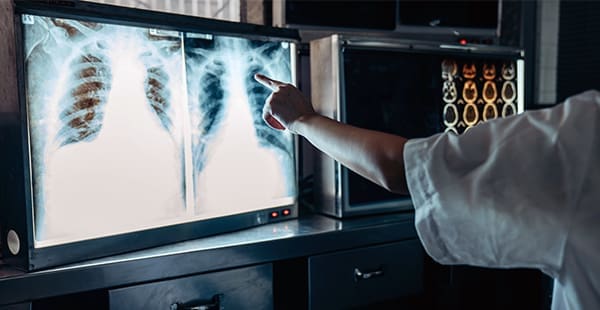
Asbestos and Lung Cancer
Asbestos is a known cause of lung cancer. One study attributed as much as 18% of lung cancer cases to occupational asbestos exposure. Cancer may develop after a person inhales asbestos and its fibers become lodged in the lung tissue. Symptoms, prognosis and treatment options are the same as for any non-asbestos-related lung cancer.
- Types: The two main types of asbestos-related lung cancer are non-small cell lung cancer (NSCLC) and small cell lung cancer (SCLC).
- How it’s caused: Inhaled asbestos fibers may become stuck in the lung tissue, which can cause asbestos lung cancer to develop.
- Common symptoms: Asbestos lung cancer symptoms include chest pain, shortness of breath and coughing.
- Latency: Symptoms and diagnosis often occur decades after exposure with a typical latency period of 10 – 30 years.
- Life expectancy: Lung cancer patients have a median survival of 9 months, although many live for years after diagnosis.
- Number of cases: Approximately 2,000 – 3,200 people die from asbestos lung cancer each year in the United States.
If you suspect you may have been exposed to asbestos, you can talk to a doctor. A healthcare professional can help you watch for signs of asbestos lung cancer. Identifying an asbestos disease early may help improve prognosis.
Types of Asbestos Lung Cancer
Asbestos exposure may lead to different types of lung cancer. The two main types differ in cancer cell size. They are called small cell lung cancer (SCLC) and non-small cell lung cancer (NSCLC). Between 80% and 85% of all lung cancers are NSCLC.
Each type has different recommended therapies. This means the type of lung cancer affects treatment plans and prognoses. Patients who receive some form of treatment generally live longer than those who do not.
Patients may hear lung cancer referred to as asbestos lung cancer or one of the names referencing cell size. “Asbestos lung cancer” describes the cause of the cancer. “SCLC” and “NSCLC” both describe the cancer cell types in the tumor.
Small Cell Lung Cancer (SCLC)
SCLC is a type of lung cancer composed of smaller cells than NSCLC. It usually starts in the air passages in the lungs (bronchi) and tends to grow and spread faster than NSCLC. Because it grows quickly, SCLC often responds well to chemotherapy.
Non-Small Cell Lung Cancer (NSCLC)
NSCLC is a type of lung cancer composed of larger cells than SCLC. Several NSCLC subtypes exist. Subtypes include adenocarcinoma, squamous cell carcinoma and large cell carcinoma. These subtypes start in different lung cells. The grouping under “NSCLC” reflects similar cell size, prognoses and treatments.

How Does Asbestos Cause Lung Cancer?
Over time, asbestos may cause lung cancer to develop in three steps. First, a person inhales or ingests asbestos fibers. Second, fibers become lodged in the lung tissue. Finally, fibers may cause inflammation and damage to the tissue, potentially leading to asbestos lung cancer.
Although questions remain about this process, it is well established that asbestos can cause lung cancer.
Asbestos may also cause other cancers like mesothelioma. This cancer can occur when asbestos fibers become lodged in the lining around the lungs (pleura) or abdomen (peritoneum).
Latency Period
Asbestos lung cancer may develop more than 10 years after exposure. The time between asbestos exposure and diagnosis is called the latency period. Asbestos diseases, like lung cancer and mesothelioma, often have long latency periods.
A doctor can provide periodic checks to watch for signs of asbestos disease. Early diagnosis may allow for better lung cancer treatment options and improve outcomes.
How Might You Have Been Exposed to Asbestos?
Asbestos exposure may occur in many ways. The mineral was popular in products and manufacturing processes for much of the 20th century. It can still be found in homes, schools and commercial buildings.
People often do not know when or where they experienced asbestos exposure. Not knowing the source of exposure does not affect treatment options.
Asbestos Exposure at Work
Many people have faced exposure while working at asbestos jobsites. Doctors have diagnosed asbestos diseases in some people who experienced only small exposures. However, frequent, heavy exposure associated with asbestos jobs can increase the likelihood of developing an asbestos disease.
Many industries used asbestos until the 1980s, when the mineral’s dangers became common knowledge. Occupations historically linked to asbestos exposure include auto mechanics, insulators and oil refinery workers.
Many workers still face potential asbestos exposure today. For example, construction workers may come into contact with asbestos materials in old buildings. Many states have regulations designed to protect workers with jobs where asbestos may be present.
Doctors may attribute lung cancer to asbestos exposure if patients have specific characteristics or conditions, including:
- Asbestos fibers in the lungs
- Asbestosis
- Thickened tissue in the lung lining (pleural plaques)
A doctor does not need to determine if asbestos caused a person’s lung cancer to treat it. Determining the cause of cancer is relevant if a person seeks compensation from an asbestos company to help pay for treatment and other expenses.
Risk Factors for Asbestos Lung Cancer
Risk factors for asbestos lung cancer include smoking and exposure to certain minerals. Risk factors are different from causes. The cause of asbestos lung cancer is asbestos exposure. Risk factors may increase the chance of developing cancer after encountering asbestos.
According to the National Cancer Institute (NCI), the best way to prevent lung cancer is to not smoke tobacco. Smokers are approximately 20 times more likely than non-smokers to develop lung cancer.
Exposures to the following substances may increase a person’s risk of developing lung cancer:
- Air pollution
- Diesel exhaust
- Heavy metals like arsenic, cadmium and nickel
- Radiation
- Silica
- Tar and soot
- Tobacco smoke, including secondhand smoke
Researchers have also identified elements that might increase a person’s risk of lung cancer. Potential risk factors include high meat consumption, genetics and HIV infection. Habit changes, exposure avoidance and certain medicines may reduce lung cancer risks. People can talk to their doctors about managing risk factors.
Both asbestos exposure and smoking can cause lung cancer. People who smoke and have experienced asbestos exposure may have an increased risk of lung cancer. One study looked at three groups of people:
- Smokers
- Smokers with a history of asbestos exposure
- Non-smokers with a history of asbestos exposure
The smokers with a history of asbestos exposure had 4 times the lung cancer risk compared with the other groups.

Common Symptoms of Asbestos-Related Lung Cancer
Symptoms of asbestos lung cancer may include chest pain, shortness of breath and a persistent cough. It is also possible for some people to have no symptoms. Patients exposed to asbestos can ask their doctor to provide periodic screenings for asymptomatic asbestos-related lung cancer.
The symptoms of asbestos lung cancer are the same as other lung cancers and include:
- Bloody phlegm
- Chest pain
- Fatigue
- Hoarseness
- Loss of appetite
- Persistent cough
- Shortness of breath
- Swelling in the face or neck
- Trouble swallowing
- Unexplained weight loss
- Wheezing
The above are not necessarily signs of asbestos lung cancer. Other conditions can cause fatigue, coughing or any other listed symptom. A doctor’s diagnosis is the only way to determine if you have lung cancer.
Diagnosis of Asbestos-Related Lung Cancer
Doctors can give a conclusive diagnosis of asbestos lung cancer only after performing a biopsy. A biopsy collects tissues or fluids that can be tested for cancer. Healthcare providers may perform other tests leading up to a biopsy, including X-rays and CT scans. These additional tests can screen for abnormalities in the lungs.
Asbestos Lung Cancer Biopsy
A biopsy is a medical procedure that helps diagnose asbestos lung cancer. During the procedure, doctors collect a tissue or fluid sample. This sample is then sent to a lab, where a pathologist tests it for cancer cells.
Doctors may use different biopsy procedures to get a sample. For example, doctors may take a fluid sample using a needle. Patients may hear this procedure called thoracentesis (pleurocentesis). Thoracentesis may also be used to remove excess fluid buildup in the lungs.
Asbestos Lung Cancer Screening Tests
Doctors may perform several tests to diagnose asbestos-related lung cancer. In addition to a biopsy, the common diagnostic methods below help confirm the diagnosis and decide on the best course of treatment for patients.

A chest X-ray takes a picture of the upper body. It can identify abnormalities and help rule out certain conditions.

A CT scan is a series of X-rays that creates a three-dimensional image of the body. It provides a higher level of detail than an isolated X-ray image. CT scans may be able to identify tumor cells that do not appear on a regular X-ray.

A doctor may send tissue, blood or urine samples to a lab for analysis.

Physical exams can test for lumps, sounds and other potential signs of cancer. A doctor may also ask about family history, smoking history and other topics to help determine the next steps toward a diagnosis.
In the United States, low-dose computed tomography (LDCT) screening is recommended for adults at high risk for lung cancer based primarily on their age and smoking history. Asbestos exposure alone is not currently a screening requirement for a low-dose CT scan. However, doctors may consider a patient's asbestos exposure history along with other risk factors, such as smoking, when deciding if this screening is appropriate.
A 2026 study from Occupational and Environmental Medicine found that adding asbestos exposure to lung cancer risk assessments may help identify more people who could benefit from earlier screening. Researchers say looking beyond smoking history alone could improve screening decisions.
Asbestos Lung Cancer Treatment
Doctors may treat asbestos lung cancer with a combination of therapies, including surgery, chemotherapy and immunotherapy. Combining different treatments to help improve survival is called multimodal therapy. Doctors can determine the best course of treatment based on an individual’s unique diagnosis.
Eligible patients may undergo surgery to remove lung cancer tissue. Doctors may consider surgery for early-stage lung cancer patients.
Doctors may apply chemotherapy in a number of ways to kill fast-growing lung cancer cells. Stage and type of lung cancer inform which chemotherapies may benefit patients.
Immunotherapy helps the body’s immune system attack cancer cells. Several checkpoint inhibitors, a type of immunotherapy, are established lung cancer treatments.
Radiation therapy is often combined with chemotherapy to target areas with lung cancer tumors. Doctors may recommend it for any lung cancer stage.
Individual treatment plans depend on patient health, cancer stage, type of lung cancer and other factors. An asbestos lung disease specialist can determine the optimal treatment plan for your unique situation.
 Did You Know?
Some treatments for asbestos lung cancer are not covered by insurance.
Treatment for asbestos lung cancer can become a financial burden.
Did You Know?
Some treatments for asbestos lung cancer are not covered by insurance.
Treatment for asbestos lung cancer can become a financial burden.
Prognosis and Survival for Asbestos-Related Lung Cancer
Asbestos lung cancer patients have a median survival of 9 months, although many live for years after diagnosis. Factors affecting prognosis include cancer stage at diagnosis, type of cancer (SCLC or NSCLC) and patient health. Advances in screening and treatment continue to improve outcomes for many patients.
One way to measure survival is by the percentage of lung cancer patients who are alive a certain amount of time after diagnosis.
| Cancer extent at diagnosis | Non-small cell lung cancer | Small cell lung cancer |
|---|---|---|
| Localized | 65% | 30% |
| Regional | 37% | 18% |
| Distant | 9% | 3% |
| Source: American Cancer Society | ||
Note: Asbestos lung cancer is clinically indistinguishable from other lung cancers. Survival rates shown are for all forms of lung cancer, including those unrelated to asbestos.
An individual’s prognosis describes how a doctor expects their cancer to progress based on a number of factors. Some patients live longer than expected after diagnosis. As advancements in screening and treatments continue, survival may further improve for people with asbestos-related diseases.
Decreasing Lung Cancer Risks
People can take steps to decrease the risk of asbestos lung cancer. Doctors, other experts and various tools can assist in managing cancer risk factors. For example, quitting smoking lowers the risk of lung cancer. Quitting aids ranging from support groups to medical therapies are available.
Other than quitting smoking, people may consider the following actions:
- Avoid secondhand smoke: Secondhand tobacco smoke is a risk factor for lung cancer. Many states have enacted smoke-free indoor air laws to help prevent secondhand smoke inhalation. If you live in a state without these laws, you can advocate for your legislature to adopt a comprehensive ban.
- Avoid workplace carcinogens: People who work around certain cancer-causing agents should limit exposures as much as possible. Radioactive materials, inhaled chemicals and diesel exhaust can all increase the risk of lung cancer.
- Test home for asbestos: The Centers for Disease Control and Prevention (CDC) has guidance for what to do if you suspect asbestos in the home. It is important not to disturb or try to identify these materials. Accredited professionals should handle any asbestos testing and removal.
Some evidence also suggests eating a healthy diet rich in fruits and vegetables may help protect against lung cancer. Doctors can help you find a dietitian, access resources to help you quit smoking and answer any questions you may have about managing your lung cancer risk.
Common Questions About Asbestos and Lung Cancer
What’s the difference between mesothelioma and asbestos lung cancer?
Do all people who are exposed to asbestos get lung cancer or mesothelioma?
How are asbestosis and lung cancer related?
Should people exposed to asbestos get screened for lung cancer even if they never smoked?
Asbestos exposure raises the risk of lung cancer, even in people who have never smoked. However, current U.S. guidelines do not recommend routine lung cancer screening based on asbestos exposure alone.
Anyone with a history of significant asbestos exposure should tell their doctor. After reviewing the amount and length of exposure, age, family history, existing lung disease and other risk factors, they can determine whether lung cancer screening or other monitoring is appropriate.
What financial options are available for asbestos-related lung cancer patients?
Patients diagnosed with asbestos-related lung cancer may have financial options to help cover medical bills, lost wages and other expenses. Depending on their history of asbestos exposure, legal compensation from companies that manufactured or used asbestos-containing products may be an option.
An experienced asbestos attorney can help determine if you or a loved one qualify for filing an asbestos lung cancer lawsuit or an asbestos trust fund claim.
Sources
American Cancer Society - Lung Cancer Survival Rates; 6/27/2025
National Cancer Institute - Non-Small Cell Lung Cancer Treatment (PDQ®)–Patient Version; 5/16/2025
National Cancer Institute - Lung Cancer Prevention (PDQ®)–Patient Version; 3/11/2025
American Cancer Society - Can Lung Cancer Be Prevented?; 1/29/2024
National Cancer Institute - Asbestos Exposure and Cancer Risk; 5/20/2021
National Library of Medicine - Recent advances in the management of lung cancer; 4/1/2018
National Library of Medicine - Risk factors for lung cancer worldwide; 9/4/2016
Free Mesothelioma Treatment Guide

Dr. Francis Perry Wilson is the Director of the Clinical and Translational Research Accelerator at the Yale University School of Medicine. He specializes in nephrology and clinical research.

Amy Zappone brings nearly two decades of experience in education and research-based communication. At Mesothelioma.com, she translates complex topics into understandable resources that help patients and families make informed decisions.