Thoracentesis for Mesothelioma

Thoracentesis, also known as pleurocentesis, is a minimally invasive procedure that removes fluid buildup around the lungs. It can ease pleural mesothelioma symptoms such as shortness of breath. Patients may be able to go home the same day.
Learn More About Thoracentesis in Our Free Mesothelioma Guide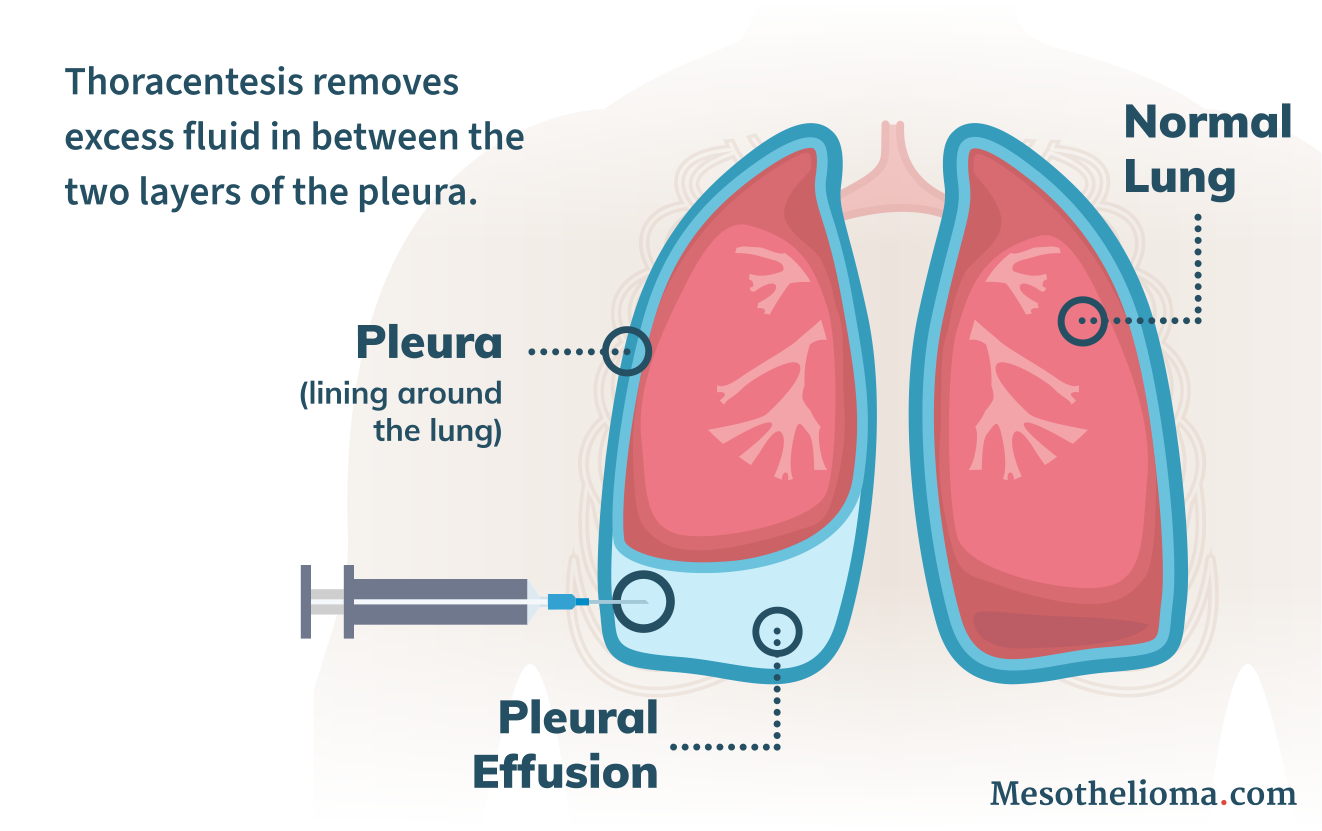
What Is Thoracentesis (Pleurocentesis)?
Thoracentesis, also called pleurocentesis, is a minimally invasive procedure that drains fluid from the pleural space. The pleural space (pleural cavity) is the space between the two layers of the pleura. The pleura is the double-layered membrane surrounding the lungs.
The pleural space typically holds a small amount of pleural fluid. Pleural fluid allows the lungs to expand and contract smoothly. However, disease or illness can increase the amount of pleural fluid, creating a condition called pleural effusion.
Pleural effusion can compress the lung and make it hard to breathe. Thoracentesis drains the extra fluid, which can give the lung room to expand again.
- Purpose: Thoracentesis drains fluid from around the lungs with a thin needle. Doctors use it to ease breathing and to test the fluid for cancer cells.
- Safety: Serious complications from thoracentesis are rare. In a 12-year study published in Thorax, a collapsed lung followed 0.61% of 9,320 procedures performed by an experienced team.
- Repeat procedures: Fluid often builds up again after thoracentesis. In a 2018 study of 988 patients with advanced cancer, 30% needed another procedure for returning fluid within 15 days.
- Longer-term fluid control: For fluid that keeps coming back after thoracentesis, the American Society of Clinical Oncology (ASCO) 2025 guidelines list pleurodesis or an indwelling pleural catheter (IPC) as options for patients who cannot have major tumor surgery.
Thoracentesis does not treat the cancer itself. It removes the excess fluid that pleural mesothelioma can cause.
How Does Thoracentesis Treat Mesothelioma Symptoms?
Thoracentesis can relieve symptoms of pleural effusion, a common complication of pleural mesothelioma. Mesothelioma patients with pleural effusion often have trouble breathing because the fluid presses on the lung.
Removing the fluid can make breathing easier, but the fluid often comes back. In cases of recurrent pleural effusion, mesothelioma doctors may recommend pleurodesis. Pleurodesis seals the pleural space by making its two layers stick together, so fluid is less likely to build up again.
An indwelling pleural catheter (IPC), also called a tunneled pleural catheter, is another option for fluid that keeps coming back. Doctors place a thin, flexible tube into the pleural space and tunnel part of it under the skin. One end stays outside the body so patients or caregivers can drain the fluid at home.
According to the ASCO 2025 guidelines, people who cannot have surgery to remove as much of the tumor as possible may benefit from procedures that ease symptoms. This may be because of their overall health, other medical problems, or how far the cancer has spread. Options include an IPC or a less invasive surgery. This surgery removes part of the pleura, seals the pleural space with pleurodesis, or does both.
ASCO does not recommend IPCs for patients who can still have surgery to remove the tumor. In these patients, cancer cells may spread along the catheter and grow into the chest wall.



The Thoracentesis Procedure
Doctors may perform thoracentesis on an outpatient basis or during a hospital stay. The choice depends on the patient’s health and needs.
Thoracentesis usually takes 10 – 15 minutes. However, the procedure may take longer if there is a lot of fluid in the pleural space. The amount of fluid removed during thoracentesis varies from patient to patient. In a 12-year study of 9,320 procedures, removing more than 1.5 liters was associated with a higher risk of collapsed lung.
The procedure may include the following steps:
- The patient may require oxygen during the procedure. If so, the patient may receive a nasal tube or face mask for oxygen.
- The patient usually sits on the edge of a bed and leans forward onto a table. Patients who cannot sit up may lie on their side instead.
- A health care provider will identify the best spot for the needle, often using ultrasound.
- The health care provider will clean the skin with an antimicrobial fluid.
- The health care provider will inject a numbing medicine (local anesthetic) under the skin. This may sting for a few seconds.
- Once the area is numb, the health care provider will use a hollow needle to reach the pleural space. The patient may feel some pressure where the needle is inserted.
- Depending on the amount of fluid, the health care provider will use a syringe or a tube to drain the fluid.
- If necessary, the health care provider may replace the needle with a temporary flexible tube (catheter) to continue draining fluid. The catheter may stay in place for one to two days. If so, the patient stays in the hospital until it is removed.
- Once enough fluid has drained, the health care provider will remove the needle and/or tube. The fluid may be sent to a lab for cytology (a check of the cells under a microscope) and other tests. These tests can help doctors look for mesothelioma, but they can miss it. A tissue biopsy is often needed to confirm the diagnosis.
- The health care provider may also order imaging tests such as a chest X-ray or computed tomography (CT) scan. These tests can check for complications such as a collapsed lung.
Thoracentesis Side Effects and Risks
Thoracentesis is generally safe. Serious complications are rare. In a 12-year study of 9,320 procedures performed by an experienced team at Cedars-Sinai Medical Center, a collapsed lung followed 0.61% of procedures. Bleeding followed 0.18%.
Possible side effects and complications of thoracentesis include:
- Bleeding
- Collapsed lung (pneumothorax)
- Coughing
- Fainting
- Fluid in the lung after it re-expands (re-expansion pulmonary edema)
- Infection
- Pain or discomfort
- Rarely, cancer cells spreading along the needle path (tumor seeding)
- Rarely, injury to the liver or spleen
Some patient factors may increase the risk of thoracentesis complications. For example, a 2017 study looked at 3,067 thoracentesis procedures in an emergency department. Underweight patients were about five times more likely to have a collapsed lung (pneumothorax). Underweight means a body mass index (BMI) below 18.5. For a person who is 5 feet 4 inches tall, that is a weight under about 108 pounds.
How the procedure is done also matters. In the Cedars-Sinai study, procedures that needed more than one needle stick had a higher rate of pneumothorax. In a 2013 study of 61,261 hospital thoracentesis procedures, ultrasound guidance was linked to a 19% lower risk of pneumothorax. In that study, patients who had a collapsed lung stayed in the hospital about 1.5 days longer.
Learn About Financial Assistance Available for Treatment Costs Learn more with our free information packet Get Help Now
Thoracentesis Recovery
During and right after the procedure, the care team will monitor the patient’s vital signs, including blood pressure, heart rate, and breathing. Patients having outpatient thoracentesis can go home once the care team determines it is safe to leave.
Patients should plan to have someone drive them home. Most people return to work within a few days. People with physically demanding jobs may need more time off.
Patients should avoid air travel until their doctor says it is safe.
The care team will explain any limits on physical activity after thoracentesis. They will also review signs of serious problems to watch for, such as fever, chest pain, sudden shortness of breath, and coughing up blood.
Patients should call their doctor right away if any of these signs appear. Patients with severe trouble breathing or sudden chest pain should call 911. For any other concerns in the weeks after the procedure, patients should contact their doctor.
Benefits and Advantages of Thoracentesis
Thoracentesis can provide several benefits, including symptom relief. The following benefits have been reported for thoracentesis:
- Doctors can use thoracentesis as a palliative treatment to ease symptoms.
- Many patients have less shortness of breath (dyspnea) after thoracentesis.
- The fluid removed can be tested for cancer cells.
- Patients can have repeat thoracentesis if fluid comes back.
- Patients may be able to go home the same day.
In a 2024 study of 104 patients with recurring pleural effusion, 53% had a meaningful drop in breathlessness right after drainage. Patients who were very short of breath beforehand and whose fluid was fully drained were most likely to feel better.
Fluid also tends to return. In a 2018 study of 988 patients with advanced cancer, 30% needed another procedure for returning fluid within 15 days. By 90 days, 48% had needed one.
After thoracentesis, patients may also consider additional treatment options. For instance, some carefully selected pleural mesothelioma patients may have a pleurectomy/decortication (P/D). This surgical treatment removes the pleura and aims to remove all visible tumors.
Thoracentesis Eligibility
Eligibility for thoracentesis depends on several factors, including the patient’s overall health. Thoracentesis may be an option for pleural mesothelioma patients who have pleural effusion.
However, certain factors may make thoracentesis riskier or unsafe for an individual. These factors include:
- Bleeding problems that cannot be corrected
- Skin infection where the needle would go
- Unusual chest wall anatomy
Taking blood thinners does not always rule out thoracentesis. A 2016 review found some patients may be able to have the procedure safely without stopping these medicines. Doctors decide this case by case. Patients should talk with their doctor before making any changes to their blood thinners.
A patient’s care team can determine whether thoracentesis is appropriate. A mesothelioma doctor can explain how it fits with other treatment options and help develop a personalized treatment plan.
Common Questions About Thoracentesis
Is thoracentesis the same as pleurocentesis?
Does thoracentesis hurt?
Does fluid come back after thoracentesis?
Does thoracentesis cure mesothelioma?
Sources
Cleveland Clinic - Thoracentesis; 5/22/2026
Kaiser Permanente - Thoracentesis; 1/21/2026
Merck Manuals - Thoracentesis; 11/1/2025
ASCO Publications - Treatment of Pleural Mesothelioma: ASCO Guideline Update; 3/10/2025
Johns Hopkins Medicine - Thoracentesis; 9/11/2024
Respirology - Risk factors for pleural effusion recurrence in patients with malignancy; 7/2/2018
Thorax - Thoracentesis outcomes: a 12-year experience; 2/1/2015
Free Mesothelioma Treatment Guide

Dr. Francis Perry Wilson is the Director of the Clinical and Translational Research Accelerator at the Yale University School of Medicine. He specializes in nephrology and clinical research.

Amy Zappone brings nearly two decades of experience in education and research-based communication. At Mesothelioma.com, she translates complex topics into understandable resources that help patients and families make informed decisions.