Mesothelioma Pleural Effusion

Pleural effusion, or fluid on the lungs, is a buildup of liquid in the lining around the lungs. It’s a common symptom of mesothelioma and other cancers. Effusion can cause breathlessness, chest pain and cough. It is diagnosed with imaging tests and biopsies. Treatment often starts with draining the fluid.
Learn About Pleural Effusion in Our Free Guide
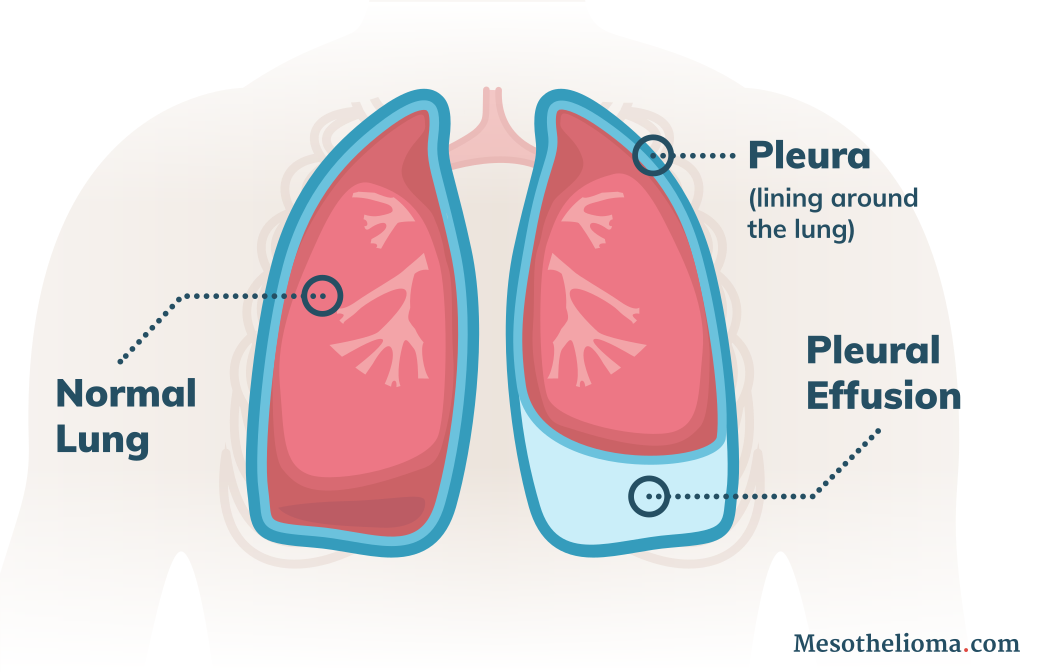
What Is Pleural Effusion?
Pleural effusion happens when extra fluid collects within the lining around the affected lung (the pleura). The pleura has two layers. In healthy people, the area between the layers (the pleural space) holds a small amount of fluid. This helps the layers slide smoothly when you breathe. Effusion occurs when fluid builds up beyond the normal amount.
Several conditions can trigger this buildup of excess pleural fluid, including mesothelioma. Common causes include heart failure, kidney disease and pneumonia. If enough fluid collects, it can press on the lung, making it difficult to breathe. Doctors may recommend draining the effusion to relieve this symptom.
- Benign pleural effusion
- Fluid around the lungs
- Fluid between the lungs and chest wall
- Fluid buildup on the lungs
- Fluid in the chest
- Hydrothorax
- Malignant pleural effusion
- Water on the lungs
What Is the Prognosis for Pleural Effusion?
Life expectancy with pleural effusion depends on its cause and patient factors. One-year survival rates for benign pleural effusions range from about 50% to 75%. For malignant pleural effusions, experts say patients live 1 – 2 years. But prognosis can vary depending on treatment choices and other factors.
Mesothelioma and Pleural Effusion
Pleural effusion is a common symptom of malignant pleural mesothelioma. Pleural mesothelioma develops in the lining around the lungs. It is caused by asbestos. The mineral fibers can irritate and inflame the area, causing cancer to develop over time.
Research suggests more than 95% of patients experience pleural effusion at some point. For many, it is the first noticeable sign of mesothelioma.
How Does Mesothelioma Cause Pleural Effusion?
Pleural mesothelioma triggers effusion by increasing pleural fluid production and slowing its drainage. Tumor cells draw extra liquid into the pleural space. Mesothelioma cells can also spread to and block flow in the lymph nodes. This slows lymphatic drainage, causing pleural fluid to collect.
Many other conditions can lead to pleural effusions. This means fluid buildup can be triggered in different ways depending on the root cause.
 Did You Know?
Mesothelioma is best diagnosed by a specialist due to the rarity of the disease.
Earlier diagnosis means that more aggressive treatments can be used, leading to a longer life expectancy.
Did You Know?
Mesothelioma is best diagnosed by a specialist due to the rarity of the disease.
Earlier diagnosis means that more aggressive treatments can be used, leading to a longer life expectancy.
What Causes Pleural Effusion?
Heart failure, cancer and pneumonia are the most common causes of pleural effusions. These illnesses trigger effusion by increasing pleural fluid, decreasing its drainage or both. Other conditions can also cause pleural effusions.
- Blood cell cancers
- Breast cancer
- Lung cancer
- Lymphoma
- Mesothelioma
- Ovarian cancer
- Asbestosis
- Cirrhosis (liver disease)
- Heart failure
- Pneumonia
- Pulmonary embolism (blood clot in the lung)
- Tuberculosis
What Is the Main Cause of Pleural Effusion?
Lung cancer is the most common cause of malignant pleural effusion. Congestive heart failure is the leading cause of benign pleural effusion. Together, these conditions account for a large share of diagnosed cases.
Types of Pleural Effusion
Pleural effusions are grouped in different ways. Doctors often describe them based on the cause (cancer vs. non-cancer) or by the type of fluid inside the pleura. These categories help guide diagnosis and treatment.
Malignant vs. Benign Effusions
Pleural effusions may be malignant or benign, depending on the cause. Malignant pleural effusions are caused by cancer, most commonly lung cancer. Benign pleural effusions are caused by illnesses that are not cancer, with congestive heart failure being the most common. Treatment options vary between the two effusion types.
Protein-Rich vs. Watery Effusions
Pleural effusions can also be categorized by the contents of the effusion fluid:
- Protein-rich: This type of effusion contains a lot of protein and may be called an exudative effusion. It may be caused by cancers or inflammatory conditions. Protein-rich effusions are common among mesothelioma patients.
- Watery: This type of effusion is considered protein-poor and may be called a transudative effusion. It may be caused by heart failure, cirrhosis or pulmonary embolisms.
Understanding the protein content of an effusion may help doctors pinpoint its cause. This information can also affect treatment options.
Asbestos-Related Pleural Effusion
Asbestos exposure may increase your risk of developing pleural effusion. Once inhaled, asbestos fibers can cause inflammation and illness, including effusions. In rare cases, exposure can cause benign asbestos pleural effusion (BAPE).
BAPE occurs when a patient has pleural effusion with no other cause except asbestos exposure. Patients with BAPE do not necessarily have mesothelioma but may develop it in the future.
Locate a Mesothelioma Cancer Center Near You Find the right fit for your situation Get Connected
Symptoms of Malignant Pleural Effusion
Pleural effusion commonly signals the presence of another condition. But the fluid buildup can cause its own symptoms. Pleural effusion symptoms include shortness of breath, chest pain, coughing and fatigue. Some patients may not have symptoms. In these cases, the effusion may be found incidentally.
Note: Malignant and benign pleural effusions may cause similar symptoms.
- Chest pain
- Dry cough
- Dyspnea (shortness of breath)
- Fatigue
- Fever
- Orthopnea (inability to breathe easily unless sitting up or standing)
Symptoms can range from mild to severe based on the amount of fluid in the pleural space. The greater the amount of fluid, the more noticeable symptoms may become.
How Is Pleural Effusion Diagnosed?
Doctors use several tests to investigate cases of suspected pleural effusion. Tests can include imaging scans like chest X-rays, ultrasound or CT scans. Doctors can also perform a physical exam.
To find the cause of pleural effusion, physicians may prescribe additional tests. For example, patients may undergo a biopsy to retrieve a sample of the effusion fluid. Technicians can analyze this fluid to help narrow down the underlying cause of fluid buildup.
Tests that can provide information on the cause of an effusion include:
These procedures may help doctors diagnose the root cause of pleural effusion and recommend an appropriate treatment.
Early Detection of Pleural Effusion Can Help Mesothelioma Patients
Early detection of pleural effusion may also lead to an early mesothelioma diagnosis.
Some patients with benign pleural effusion and past asbestos exposure may later develop pleural mesothelioma. In these cases, doctors can continue to monitor the patient for signs of mesothelioma. This may help with early diagnosis.
Earlier diagnosis generally comes with a more favorable mesothelioma prognosis. But life expectancy also depends on a patient’s cell type, age, overall health and other factors.
How Is Pleural Effusion Treated?
Pleural effusion treatments target the root cause. Doctors may treat effusions from heart failure with diuretics. Antibiotics treat infection-related effusions. Malignant pleural effusions are often treated by draining the fluid. Some approaches also aim to prevent future effusions.
Doctors treat pleural effusions in mesothelioma patients with short- or long-term solutions. Short-term approaches entail one-time drainage of excess fluid. Long-term options allow for repeated fluid drainage or seek to prevent future buildup.
Patients can receive these treatments alongside others, like immunotherapy or palliative care.
Mesothelioma Pleural Effusion Treatment Options
Pleural Drain / Pleural Catheter
- Type: Long-term, repeat drainage
- Overview: A doctor places a catheter in the pleural cavity. The catheter remains in place, allowing drainage as necessary.
Pleurectomy/Decortication (P/D)
- Type: Long-term, effusion preventive
- Overview: P/D surgery removes tumors and the lining around the lung. Without the lining, fluid can’t collect in that space.
Pleurocentesis (Thoracentesis)
- Type: Short-term, one-time drainage
- Overview: A doctor uses a long, hollow needle to remove the effusion fluid. Pleurocentesis can reduce pressure on the lung and help improve symptoms like breathlessness.
Pleurodesis
- Type: Long-term, effusion preventive
- Overview: After draining the effusion, doctors help the two layers of the pleura stick to each other. Pleurodesis surgery closes the pleural space to prevent fluid buildup.
Pleuroperitoneal Shunt
- Type: Long-term, repeat drainage
- Overview: Doctors place a tube connecting the abdomen to the pleural space. The tube channels effusion fluid out of the pleural space, allowing it to be absorbed in the belly.
Video-Assisted Thoracoscopic Surgery (VATS)
- Type: Short- or long-term
- Overview: This minimally invasive approach uses cameras to guide pleural fluid drainage. Doctors may also use VATS for pleurodesis procedures.
Like all medical treatments, each option comes with its own risks and benefits. Patients should discuss these factors with a mesothelioma specialist. The doctor can explain which choices best fit an individual patient.
Can Medical Talc for Pleurodesis Cause Mesothelioma?
Pleurodesis procedures cause the two layers of the pleura to stick to each other. Doctors commonly apply talc within the pleura to achieve this. The talc triggers irritation and scarring, essentially gluing the inner and outer pleura to each other.
Why Some Patients Worry About Talc
Patients may worry about this procedure, as talc has been linked to mesothelioma. Experts say this link stems from asbestos contamination. Talc naturally occurs in the same areas as asbestos. Without rigorous processing, talcum powders may still contain asbestos.
Safety of Medical Talc
Medical talc is regulated as a drug and is subject to stringent quality controls. Only three talc products have approval for pleurodesis usage. Each is labeled as asbestos-free.
How to Confirm Your Talc Is Safe
You can ask your doctor to share the drug label for any talc that will be used in your procedure. Reading the label and confirming the talc is free of asbestos may help give you peace of mind.
Have a Question About Pleural Effusions? Ask experienced mesothelioma advocate Jennifer Lucarelli Ask a Question
Common Questions About Pleural Effusion
Who is more likely to get pleural effusion?
What type of cancer causes fluid in the lungs?
Is pleural effusion curable?
What is the best treatment for pleural effusion?
Sources
American Cancer Society. Palliative Procedures for Malignant Mesothelioma.
Bertoli E, De Carlo E, Bortolot M, Stanzione B, Del Conte A, Spina M, et al. Targeted therapy in mesotheliomas: uphill all the way. Cancers (Basel). 2024 May 22;16(11):1971.
Dick IM, Lee YCG, Cheah HM, Miranda A, Robinson BWS, Creaney J. Profile of soluble factors in pleural effusions predict prognosis in mesothelioma. Cancer Biomark. 2022;33(1):159–69.
Ferreiro L, Toubes ME, Rodríguez-Núñez N, Valdés L. Asbestos and benign pleural diseases: a narrative review. Breathe (Sheff). 2025 Apr;21(2):240236.
Fjaellegaard K, Ahmadzai S, Porcel JM, Mei F, Shaw JA, Bodtger U. Pleural fluid biomarkers to predict response to pleurodesis or indwelling pleural catheter for malignant pleural effusion: still a long way to go. Respir Res. 2025 Aug 20;26(1):259.
Hansen PS, Graversen M, Detlefsen S, Mortensen MB. Review on treatment of pleural metastasis and malignant pleural effusion with Pressurized IntraThoracic Aerosol Chemotherapy (Pitac). Pleura Peritoneum. 2024 Jun;9(2):47–53.
Harding WC, Halawa AR, Aiche MM, Zafar B, Ali HJR, Bashoura L, et al. Pleural effusion: shedding light on pleural disease beyond infection and malignancy. Medicina (Kaunas). 2025 Mar 3;61(3):443.
National Cancer Institute. Cardiopulmonary Syndromes (PDQ®)–Patient Version.
Neilly MDJ, Pearson J, Thu AW, MacRae C, Blyth KG. Contemporary management of mesothelioma. Breathe (Sheff). 2024 Jun;20(2):230175.
Petersen JK, Fjaellegaard K, Rasmussen DB, Alstrup G, Høegholm A, Sidhu JS, et al. Patient-reported outcome measures in patients with and without non-expandable lung secondary to malignant pleural effusion-a single-centre observational study. Diagnostics (Basel). 2024 Jun 3;14(11):1176.
Qureshi M, Thapa B, Muruganandan S. A narrative review-management of malignant pleural effusion related to malignant pleural mesothelioma. Heart Lung Circ. 2023 May;32(5):587–95.
Rath AK, Pothal S, Bharadwaj P. Medical thoracoscopy in malignant pleural effusion. Cureus. 2025 Jun;17(6):e85707.
Roca E, Aujayeb A, Astoul P. Diagnosis of pleural mesothelioma: is everything solved at the present time? Curr Oncol. 2024 Aug 27;31(9):4968–83.
Sorino C, Feller-Kopman D, Mei F, Mondoni M, Agati S, Marchetti G, et al. Chest tubes and pleural drainage: history and current status in pleural disease management. J Clin Med. 2024 Oct 23;13(21):6331.
Sorino C, Mondoni M, Marchetti G, Agati S, Inchingolo R, Mei F, et al. Pleural mesothelioma: advances in blood and pleural biomarkers. J Clin Med. 2023 Nov 9;12(22):7006.
Temel U, Derdiyok O. Driver mutations and malignant pleural effusion in non-small cell lung cancer. BMC Med Genomics. 2025 Jul 1;18(1):112.
Wang H, Yang R, Liu D, Li W. The presence of pleural effusion is an independent prognostic factor in patients with malignant pleural mesothelioma. Sci Rep. 2025 Jan 2;15(1):392.
Yousuf A, Virk H, Cassar J, Samarasinghe H, ElSawy D, Mohammad S, et al. P13 Patient survival with malignant pleural effusions (Mpe): a retrospective cohort study looking at LENT and clinical PROMISE score categories and survival. Thorax. 2023 Nov 1;78(Suppl 4):A113–4.
Free Mesothelioma Treatment Guide

Katy Moncivais, Ph.D., has more than 15 years of experience as a medical communicator. As the Medical Editor at Mesothelioma.com, she ensures our pages and posts present accurate, helpful information.

 Medically
Reviewed by
James Stevenson, MD
Thoracic Medical Oncologist
Medically
Reviewed by
James Stevenson, MD
Thoracic Medical Oncologist
Dr. James Stevenson is a Board-Certified Medical Oncologist. He specializes in treating mesothelioma and lung cancer and practices at the Cleveland Clinic in Cleveland, Ohio.