
Asbestos Plaster

From the 1920s to the 1970s, many plaster products contained asbestos. They were used in homes, schools and other structures. Asbestos exposure can cause mesothelioma and other cancers. Asbestos plaster poses health risks for residents, students and the public.
Learn More About Asbestos-Containing Products
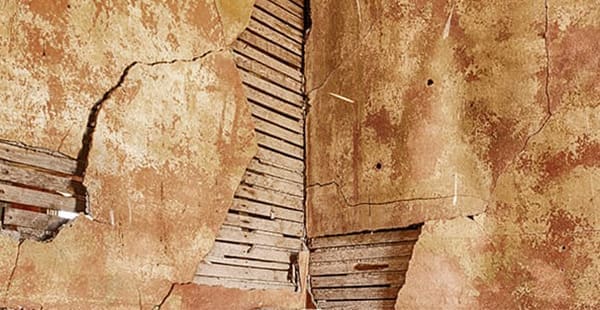
Why Was Asbestos Used in Plaster?
Manufacturers included asbestos in plaster products for decades. They added the mineral to enhance fire resistance, insulation and durability. Builders used asbestos plasters in interior walls, decorative moldings and exterior walls. For the exterior walls, they used stucco, which is a specific type of plaster with a rougher texture.
Asbestos Plaster History at a Glance
- Other Names: Acoustic plaster, cement plaster, decorative plaster, fire-resistant plaster, gypsum plaster, lime plaster, plaster base layer, plaster cast, plaster of paris, render, stucco
- Years of Manufacture: 1920s – 1970s
- Places Used: Ceilings, decorative moldings, interior and exterior walls
- Asbestos Use Banned: No
- Noteworthy Brands:The Flintkote Company, Georgia-Pacific Corporation, National Gypsum Company, W.R. Grace
Dangers of Asbestos Plaster
Asbestos plaster poses health risks for people from all walks of life. It was used in many homes, schools and churches. When intact, this material may not cause asbestos exposure. But if disturbed or demolished, the activity can release dangerous asbestos fibers into the air.
For example, one study found asbestos ceiling plaster could cause mesothelioma. The study analyzed the lung tissue of a teacher’s aide with pleural mesothelioma. The aide had worked for many years in a building that contained acoustic ceiling plaster. Researchers found the same type of asbestos fibers in the aide’s lung tissue and the ceiling plaster. They concluded the ceiling plaster was the likely cause of the aide’s mesothelioma.
Connect With a Top Mesothelioma Doctor Find a mesothelioma specialist near you Get Connected
List of Asbestos Plaster Products
In the past, asbestos was included in many types of building materials. Manufacturers added the mineral to plaster to boost fire resistance and durability. Since many walls and ceilings were covered in plaster, these properties were seen as beneficial.
| Product Name | Start Year | End Year |
|---|---|---|
| Georgia-Pacific Acoustical Plaster | 1950 | 1974 |
| Georgia-Pacific Lite Acoustical Plaster | 1958 | 1964 |
| Georgia-Pacific Patching Plaster | 1956 | 1976 |
| Keene Uni-Coustic | 1963 | 1971 |
| National Gypsum Gold Bond Acoustical Plaster | 1949 | 1968 |
| National Gypsum Gold Bond Fire-Shield Plaster | 1958 | 1970 |
| National Gypsum Gold Bond High Humidity Acoustical Plaster | 1952 | 1956 |
| National Gypsum Gold Bond Macoustic Smooth Finish | 1935 | 1943 |
| National Gypsum Gold Bond Patching Plaster | 1933 | 1950 |
| National Gypsum Gold Bond Perfo-Lyte Acoustical Plaster | 1955 | 1972 |
| National Gypsum Gold Bond Spray-On Acoustical Plaster | 1955 | 1956 |
| National Gypsum Gold Bond Sprayolite Acoustical Plaster | 1956 | 1968 |
| National Gypsum Thermacoustic | 1949 | 1961 |
| Synkoloid Plastibond | 1950 | 1976 |
| Synkoloid Synko Patch Rite Patching Plaster | ||
| Synkoloid Synko Plaster of Paris | ||
| United States Gypsum Audicote Acoustical Plaster | 1955 | 1973 |
| United States Gypsum Cement Plaster Regular | 1943 | 1947 |
| United States Gypsum Firecode Plaster | 1959 | 1964 |
| United States Gypsum Hi-Lite Acoustical Plaster | 1950 | 1975 |
| United States Gypsum Imperial Gypsum Plaster | 1940 | 1970 |
| United States Gypsum Red Top Cement Plaster | 1920 | 1958 |
| United States Gypsum Red Top Gypsum Plaster | 1920 | 1958 |
| United States Gypsum Structo-Lite Perlited Gypsum Plaster | 1975 | |
| W.R. Grace Zonolite Acoustical Plaster | 1945 | 1972 |
| W.R. Grace Zonolite Zono-Coustic | 1959 | 1973 |
Asbestos plasters are no longer manufactured or sold in the United States. But in the past, several asbestos companies produced plasters that contained the dangerous mineral. These products are not banned. Manufacturers may have stopped making asbestos plasters to avoid future litigation.
 Did You Know?
Corporate documents show that asbestos companies knew the products they made were dangerous.
Speak with a lawyer today about filing a mesothelioma claim against these irresponsible companies.
Did You Know?
Corporate documents show that asbestos companies knew the products they made were dangerous.
Speak with a lawyer today about filing a mesothelioma claim against these irresponsible companies.
Who Is at Risk of Asbestos Exposure From Plaster?
Many different types of people encountered asbestos plasters, facing exposure risks. Construction workers who mixed, applied or repaired plaster may have touched or inhaled asbestos. Teachers, students and school staff could have been exposed by plaster ceilings or walls.
Some church buildings used asbestos plasters for noise reduction in common areas. Churchgoers and staff who spent time in these areas could have been exposed to asbestos. Workers who manufactured plaster also faced occupational asbestos exposure.
- Bricklayers
- Carpenters
- Construction workers
- Contractors
- Demolition crews
- Drywall tapers
- Electricians
- HVAC workers
- Industrial Workers
- Insulators
- Maintenance workers
- Masons
- Painters
- Pipefitters
- Plasterers
- Plumbers
- Sawyers
- Teachers
Homeowners who repair or remove asbestos plaster could release asbestos into the air. The fibers pose serious health risks for do-it-yourselfers and others in the home. Anyone who finds potential asbestos-containing materials should not handle them. Instead, they should hire asbestos testing and removal professionals. These specialists can safely remove any asbestos materials.
People exposed to asbestos plaster may develop illnesses or asbestos cancers as a result, and treatment can be costly. But asbestos victims have options for pursuing compensation, including mesothelioma lawsuits. Anyone injured by asbestos plaster should speak with a mesothelioma lawyer. The lawyer can explain the options and which may be best for an individual’s case.
Sources
Inspectapedia. Asbestos Content in Plaster.
Inspectapedia. Plaster Ingredients & Properties.
Inspectapedia. Plaster Types & Methods in Buildings.
Roggli VL, Longo WE. Mineral fiber content of lung tissue in patients with environmental exposures: household contacts vs. building occupants. Ann N Y Acad Sci. 1991 Dec 31;643:511–8.
RPF Environmental Testing & Consulting Services. How to Identify Asbestos Plaster Walls: What Does Asbestos Look Like in Walls?
The Spruce. Lath and Plaster Walls: Basics and Construction.
Legal Rights for Mesothelioma Victims

Tara Strand specializes in writing content about mesothelioma and asbestos. She focuses on topics like mesothelioma awareness, research, treatment, asbestos trust funds and other advocacy efforts.

 Legally
Reviewed by
Jennifer Lucarelli
Mesothelioma Lawyer and Legal Advisor
Legally
Reviewed by
Jennifer Lucarelli
Mesothelioma Lawyer and Legal Advisor
For more than two decades, Jennifer Lucarelli has served as Legal Advisor at Mesothelioma.com. She has advocated for more than 1,000 asbestos victims, securing millions in settlements and helping them access quality medical care.