Checkpoint Inhibitors for Mesothelioma

Checkpoint inhibitors use a patient’s immune system to fight cancer. Opdivo®, Yervoy® and Keytruda® are all approved for treating pleural mesothelioma. Survival is about 18 months with Opdivo + Yervoy. Common side effects include fatigue and rash.
Learn About Checkpoint Inhibitors for Mesothelioma in Our Free Guide
How Immune Checkpoint Inhibitors Treat Mesothelioma
Checkpoint inhibitors are a form of immunotherapy that can fight mesothelioma. Without these mesothelioma drugs, cancer cells can convince the immune system to leave them alone. But with checkpoint inhibitors, cancer cells lose their ability to hide from the immune system. This allows immune cells to attack mesothelioma cells. In essence, checkpoint inhibitors turn a patient’s immune system into a cancer-fighting agent.
Several checkpoint inhibitors have U.S. Food and Drug Administration (FDA) approval. However, only three are currently approved for mesothelioma. Opdivo® (nivolumab), Yervoy® (ipilimumab) and Keytruda® (pembrolizumab) have FDA approval for the treatment of inoperable pleural mesothelioma.
Inoperable mesothelioma cases may also be called unresectable. Pleural patients often get diagnosed with stage 3 or stage 4 mesothelioma. Due in part to the late stage of disease, these patients often do not qualify for surgery. Doctors may recommend immunotherapy with checkpoint inhibitors instead of surgery.
Checkpoint inhibitor therapy has already improved mesothelioma prognosis for some patients. Several of these drugs have helped mesothelioma patients, including some that are still considered experimental for mesothelioma treatment.
Types of Checkpoint Inhibitors Used in Mesothelioma Cancer
Researchers have investigated several checkpoint inhibitors for mesothelioma. Some have gained FDA approval for mesothelioma or other cancers. Others are still in development.
Checkpoint Inhibitors for Mesothelioma
Brand name: Imfinzi®
Generic name: Durvalumab
Targeted checkpoint: PD-1/PD-L1
Approval status: Still in development
Brand name: Imjudo®
Generic name: Tremelimumab
Targeted checkpoint: CTLA-4
Approval status: FDA approved for multiple cancers
Brand name: Keytruda®
Generic name: Pembrolizumab
Targeted checkpoint: PD-1/PD-L1
Approval status: FDA approved for multiple cancers
Brand name: Opdivo®
Generic name: Nivolumab
Targeted checkpoint: PD-1/PD-L1
Approval status: FDA approved for multiple cancers
Brand name: Tecentriq®
Generic name: Atezolizumab
Targeted checkpoint: PD-1/PD-L1
Approval status: FDA approved for multiple cancers
Brand name: Yervoy®
Generic name: Ipilimumab
Targeted checkpoint: CTLA-4
Approval status: FDA approved for multiple cancers
Opdivo, Yervoy and Keytruda are the only checkpoint inhibitors approved for treatment of inoperable pleural mesothelioma. Opdivo + Yervoy have approval as a combination only, not as individual drugs or monotherapy. Keytruda is approved as a combination with pemetrexed and platinum chemotherapy.
On its own, Keytruda is also approved for solid tumors falling into the TMB-H category. TMB-H stands for tumor mutational burden-high. TMB-H designation means a tumor has a large number of genetic mistakes. Some mesothelioma tumors may fall into this category. This may be determined during the mesothelioma diagnosis process.
How Do Immune Checkpoint Inhibitors Work?
Checkpoint inhibitors block safeguards in the body’s defense system called immune checkpoints. These checkpoints usually keep immune cells from attacking healthy cells. But cancer cells can also use these checkpoints to avoid being targeted by the immune system.
Checkpoint inhibitor drugs block checkpoints. Cancer cells cannot use blocked checkpoints to hide from immune cells. As such, checkpoint inhibitors let immune cells fight mesothelioma.
In mesothelioma treatment, a healthcare professional injects one or more checkpoint inhibitors into a patient’s blood. This allows the drugs to circulate and block checkpoints throughout the body.
The Checkpoint Inhibitor Treatment Process
Checkpoint inhibitor therapy can vary because of the drugs used and/or the type of cancer treated. For mesothelioma patients, checkpoint inhibitors are administered intravenously (IV). This means the drugs go directly into the bloodstream through IV infusion.
For example, checkpoint inhibitor treatment with Opdivo and Yervoy follows these general steps:
- First infusion: The patient receives Opdivo over a period of about 30 minutes. Once Opdivo finishes infusing, the patient receives Yervoy. A Yervoy infusion takes about 30 minutes.
- Second infusion: Three weeks after the first infusion, the patient receives an Opdivo infusion. This takes about 30 minutes. The patient does not receive Yervoy.
- Third infusion: Three weeks after the second infusion, the patient receives Opdivo and Yervoy. This step follows the same basic process as the first infusion.
- Fourth infusion: Three weeks after the second infusion, the patient receives an Opdivo infusion. This step follows the same basic process as the second infusion.
Three weeks after the fourth infusion, patients may start another round of therapy. This cycle can be repeated for up to two years as long as it remains safe and effective for the patient. In a study, about half of mesothelioma patients received at least six months of checkpoint inhibitor treatment.
Some patients may undergo multimodal treatment with checkpoint inhibitors followed by chemotherapy. If it consists of cisplatin and pemetrexed, the Yervoy label recommends chemotherapy infusion after Opdivo and Yervoy.
Additional checkpoint inhibitors may gain FDA approval for mesothelioma in the future. The order, timing and administration of other checkpoint inhibitors may differ from the details above. Treatment plans may also vary to accommodate each patient’s individual circumstances.
Patients can discuss the treatment process with their care teams. This may provide a better idea of what the individual patient might experience.
Understanding How Immune Checkpoints Work With and Without Cancer
Immune checkpoints function through a sort of handshake. A specific protein on a healthy cell must “shake hands” with a specific protein on a T cell (a type of immune cell). The handshake tells the T cell to ignore the other cell.
The PD-1/PD-L1 checkpoint can demonstrate the handshake-style interaction of immune checkpoints.
In a cancer-free person:
- Healthy cells have a protein called PD-L1.
- T cells have a protein called PD-1. PD-1 may also be called a receptor protein.
- When healthy cells bump into T cells, PD-1 and PD-L1 “shake hands.”
- This handshake tells the T cell not to attack the healthy cell.
Although this handshake protects healthy cells, cancer cells can also display PD-L1. As such, cancer cells can execute the PD-1/PD-L1 handshake. This tricks immune cells into leaving them alone. PD-1/PD-L1 checkpoint inhibitors rob cancer cells of this cloaking mechanism.
How Do Checkpoint Inhibitors Block Immune Checkpoints?
Most checkpoint inhibitors are proteins called antibodies. Antibodies constitute an important part of the natural immune response. They can recognize, stick to and block their targets. Checkpoint inhibitors are antibodies designed to target immune checkpoints.
Scientists often refer to antibodies using the antigen they target. For example, an anti-PD-1 antibody recognizes the PD-1 protein on T cells. Opdivo is an anti-PD-1 antibody, making it a PD-1/PD-L1 checkpoint inhibitor. Yervoy is an anti-CTLA-4 antibody, making it a CTLA-4 checkpoint inhibitor.
Which Cancers Do Checkpoint Inhibitors Treat?
The FDA has approved checkpoint inhibitors for the treatment of at least 15 types of cancer.
FDA-approved indications include:
- Bladder cancer
- Breast cancer
- Cervical cancer
- Head and neck cancer
- Hodgkin lymphoma
- Liver cancer
- Lung cancer
- Mesothelioma
- Renal cell carcinoma
- Skin cancer
- Stomach cancer
Survival After Checkpoint Inhibitor Treatment for Mesothelioma
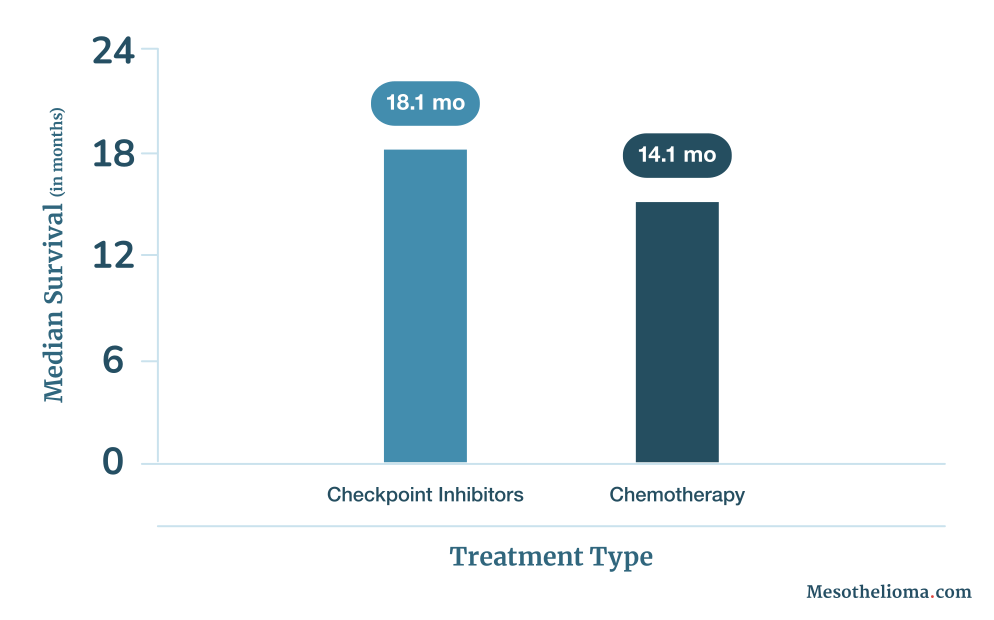
Life expectancy for mesothelioma patients treated with checkpoint inhibitors is about 18 months. Survival can depend on several factors including mesothelioma type, stage at diagnosis and patient health.
Current survival information on these drugs comes largely from pleural mesothelioma studies. It is unclear if peritoneal mesothelioma patients would have similar survival. At least one clinical study is currently investigating that topic.



Side Effects of Mesothelioma Checkpoint Inhibitor Therapy
Like most cancer therapies, checkpoint inhibitors can cause various side effects. Common checkpoint inhibitor side effects include diarrhea, fatigue and skin rash. Checkpoint inhibitor side effects often differ from those of other cancer treatments.
- How common are they? Clinical study results show more than half of mesothelioma patients have some form of side effect from checkpoint inhibitor treatment.
- How serious are they? Of mesothelioma patients receiving Opdivo and Yervoy, 23% had a side effect serious enough to stop treatment. About 1 out of 100 clinical study patients experienced a fatal adverse reaction.
- Are they more serious than chemotherapy side effects? Experts say checkpoint inhibitors are less toxic and easier to take than most chemotherapy drugs.
Some patients may experience side effects from the immune system’s reaction to these drugs. Such reactions are called immune-related adverse events (irAEs).
irAEs may include inflammation of various tissues or organs. Common irAEs include skin irritation (dermatitis) and thyroid inflammation (thyroiditis). According to medical literature, doctors have several options for handling irAEs, including:
- Corticosteroids: A standard approach to irAEs involves treatment with prednisone, a corticosteroid. The patient may take prednisone until their irAE resolves.
- Immunosuppressants: Patients may take immunosuppressive drugs to help manage some irAEs. Immunosuppressive drugs inhibit the immune system.
- Pausing or stopping checkpoint inhibitor therapy: An oncologist may recommend pausing treatment until the reaction fades. If the reaction is severe enough, the doctor may recommend stopping treatment.
Overall, irAEs are relatively common with checkpoint inhibitors. However, data indicates treatment for these side effects does not interfere with efficacy. This means checkpoint inhibitors can still work for patients who receive treatment for irAEs.
Risk Factors for Checkpoint Inhibitor Side Effects
Several elements may affect a patient’s risk of checkpoint inhibitor side effects, including:
- Age: Older patients may have a higher risk of checkpoint inhibitor side effects. This risk may stem from age-related changes to the immune system.
- Single-agent versus combination therapy: Patients’ risk of side effects may be higher when treated with multiple checkpoint inhibitors versus one.
- Type of checkpoint inhibitor: In general, drugs blocking the CTLA-4 checkpoint lead to more frequent side effects than those targeting PD-1/PD-L1.
It may seem as though checkpoint inhibitors come with an abundance of risks. But clinical data indicates the benefits of these antitumor drugs outweigh the risks.
Mesothelioma Checkpoint Inhibitor Benefits
Checkpoint inhibitors offer an array of benefits for mesothelioma patients, including:
- Compatibility with other treatments: Patients receiving checkpoint inhibitors have also undergone other mesothelioma treatments. This may be important, as combination therapies tend to have the best prognoses in mesothelioma.
- Improved quality of life: Compared to chemotherapy patients, checkpoint inhibitor patients tend to have better quality of life.
- Improved survival: In a study, checkpoint inhibitors extended mesothelioma survival by about 30% versus chemotherapy.
- Longer-term tumor control: In some cancers, tumor control achieved by checkpoint inhibitors may continue after therapy stops.
Patient experiences with checkpoint inhibitors can vary. Any mesothelioma patient considering checkpoint inhibitor therapy should discuss the benefits with a physician. A mesothelioma doctor can help the patient understand how these benefits may apply to their situation.
Questions About Mesothelioma Checkpoint Inhibitors? Ask experienced mesothelioma advocate Jennifer Lucarelli Ask a Question
Eligibility for Mesothelioma Checkpoint Inhibitor Treatment
Eligibility for checkpoint inhibitor treatment depends on multiple factors. In general, mesothelioma patients who do not qualify for surgery may be eligible for checkpoint inhibitor treatment.
According to experts, Opdivo+Yervoy is a preferred systemic therapy for inoperable pleural mesothelioma. Any patient interested in this therapy should discuss their eligibility with a mesothelioma expert. The doctor can help the patient understand why they may or may not qualify for this treatment. Specialists can also advise which treatment might be best for patients who do not qualify for this therapy.
Mesothelioma Checkpoint Inhibitor Clinical Trials and Results
Researchers have studied checkpoint inhibitors in several mesothelioma clinical trials.
CheckMate 743: Opdivo and Yervoy in Pleural Mesothelioma
The CheckMate 743 trial investigated Opdivo and Yervoy as a first-line therapy for mesothelioma. It compared Opdivo and Yervoy to traditional chemotherapy. Opdivo and Yervoy patients had a median survival of about 18 months. Chemotherapy patients had a median survival of about 14 months.
These results earned FDA approval for Opdivo and Yervoy in pleural mesothelioma.
CAR T Cell + Keytruda Clinical Trial
A phase I clinical trial investigated Keytruda with another immunotherapy called CAR T cells. The trial treated pleural mesothelioma patients who had already received treatment. The Keytruda and CAR T cells constituted a second-line treatment.
CAR T-cell therapy is a new approach to cancer treatment. Doctors use a patient’s own immune cells to create cancer-fighting cells called CAR T cells. Once they have enough, doctors give the CAR T cells back to the patient. The CAR T cells can then identify and attack cancer cells.
Patients treated with Keytruda and CAR T cells had a median overall survival of 23.9 months. In earlier studies, second-line treatment of pleural mesothelioma achieved a median survival of about 8 months. As such, Keytruda and CAR T cells may have improved survival by more than a year versus other therapies.
KEYNOTE-028: Keytruda in Pleural Mesothelioma
The KEYNOTE-028 clinical trial investigated Keytruda as a second-line mesothelioma treatment. Study patients had pleural mesothelioma. Before enrolling, patients either received chemotherapy or were deemed ineligible for standard treatment.
Patients treated with Keytruda had a median survival of 18 months.
KEYNOTE-483: Keytruda and Chemo in Pleural Mesothelioma
The KEYNOTE-483 trial found that adding Keytruda to chemotherapy improved survival for pleural mesothelioma patients. This trial was instrumental in the FDA’s approval of Keytruda with chemotherapy.
Ongoing/Upcoming Clinical Trials
Researchers are still studying new ways of using checkpoint inhibitors for mesothelioma. Upcoming trials plan to investigate new checkpoint inhibitor drugs. Some are also exploring new ways to use existing checkpoint inhibitors. Ongoing checkpoint inhibitor trials for mesothelioma include:
- Imfinzi in pleural mesothelioma: Patients with inoperable pleural mesothelioma will receive standard chemotherapy. Study patients will also receive Imfinzi, a PD-L1 inhibitor, after chemotherapy. This study, called the DREAM3R trial, is expected to run through December 2025.
- Opdivo and Yervoy in peritoneal mesothelioma: Peritoneal mesothelioma patients will receive Opdivo and Yervoy. These checkpoint inhibitors will be administered after surgery and chemotherapy. This study is expected to run through June 2025.
Common Questions About Checkpoint Inhibitors for Mesothelioma
What is a checkpoint inhibitor?
Are checkpoint inhibitors monoclonal antibodies?
How are immune checkpoint inhibitors administered?
How do immune checkpoint inhibitor toxicities occur?
Sources
Alley EW, Lopez J, et al. Clinical safety and activity of pembrolizumab in patients with malignant pleural mesothelioma (KEYNOTE-028): preliminary results from a non-randomised, open-label, phase 1b trial. The Lancet Oncology. May 2017;18(5):623-630. doi: 10.1016/S1470-2045(17)30169-9
Baas P, Scherpereel A, et al. First-line nivolumab plus ipilimumab in unresectable malignant pleural mesothelioma (CheckMate 743): a multicentre, randomised, open-label, phase 3 trial. The Lancet. January 2021;397(10272):375-386. doi: 10.1016/S0140-6736(20)32714-8
Bertrand A, Kostine M, et al. Immune related adverse events associated with anti-CTLA-4 antibodies: systematic review and meta-analysis. BMC Medicine. September 2015;13:211. doi: 10.1186/s12916-015-0455-8
Bethesda (MD): National Institute of Diabetes and Digestive and Kidney Diseases. LiverTox: Clinical and Research Information on Drug-Induced Liver Injury: Durvalumab. Updated June 2022.
Bristol Myers Squibb. Getting an Infusion. Updated August 2022.
Bristol Myers Squibb. How Does OPDIVO® Work With My Immune System? Updated August 2022.
Bristol-Myers Squibb. Mechanism of Action. Updated June 2018.
Calabrò L, Morra A, et al. Tremelimumab combined with durvalumab in patients with mesothelioma (NIBIT-MESO-1): an open-label, non-randomised, phase 2 study. The Lancet Respiratory Medicine. June 2018;6(6):451-460. doi: 10.1016/S2213-2600(18)30151-6
Calabrò L, Rossi G, et al. Tremelimumab plus durvalumab retreatment and 4-year outcomes in patients with mesothelioma: a follow-up of the open label, non-randomised, phase 2 NIBIT-MESO-1 study. The Lancet Respiratory Medicine. September 2021;9(9):969-976. doi: 10.1016/S2213-2600(21)00043-6
Cappelli LC, Brahmer JR, et al. Clinical presentation of immune checkpoint inhibitor-induced inflammatory arthritis differs by immunotherapy regimen. Seminars in Arthritis and Rheumatology. December 2018;48(3):553-557. doi: 10.1016/j.semarthrit.2018.02.011
Elias AW, Kasi PM, et al. The Feasibility and Safety of Surgery in Patients Receiving Immune Checkpoint Inhibitors: A Retrospective Study. Frontiers in Oncology. June 2017;7:121. doi: 10.3389/fonc.2017.00121
Fong L and Small EJ. Anti-cytotoxic T-lymphocyte antigen-4 antibody: the first in an emerging class of immunomodulatory antibodies for cancer treatment. Journal of Clinical Oncology. November 2008;26(32):5275-5283. doi: 10.1200/JCO.2008.17.8954
Guo L, Zhang H, et al. Nivolumab as Programmed Death-1 (PD-1) Inhibitor for Targeted Immunotherapy in Tumor. Journal of Cancer. February 2017;8(3):410-416. doi: 10.7150/jca.17144
Kindler HL, Ismaila N, et al. Treatment of Malignant Pleural Mesothelioma: American Society of Clinical Oncology Clinical Practice Guideline. Journal of Clinical Oncology. May 2018;36(13):1343-1373. doi: 10.1200/JCO.2017.76.6394
Mayo Clinic. Nivolumab (Intravenous Route). Updated August 2022.
Memorial Sloan Kettering Cancer Center. Immune Checkpoint Inhibitor Cancer Treatment.
National Cancer Institute. Immune Checkpoint Inhibitors. Updated April 2022.
Palmieri DJ and Carlino MS. Immune Checkpoint Inhibitor Toxicity. Current Oncology Reports. July 2018;20(9):72. doi: 10.1007/s11912-018-0718-6
Peters S. First-line nivolumab (NIVO) plus ipilimumab (IPI) vs chemotherapy (chemo) in patients (pts) with unresectable malignant pleural mesothelioma (MPM): 3-year update from CheckMate 743. Annals of Oncology. September 2021;32(suppl_5):S1283-S1346. doi: 10.1016/j.annonc.2021.08.2146
Rusch VW, Giroux D, et al. Initial Analysis of the International Association For the Study of Lung Cancer Mesothelioma Database. Journal of Thoracic Oncology. November 2012;7(11):1631-1639. doi: 10.1097/JTO.0b013e31826915f1
Scherpereel A, Antonia S, et al. First-line nivolumab plus ipilimumab versus chemotherapy for the treatment of unresectable malignant pleural mesothelioma: patient-reported outcomes in CheckMate 743. Lung Cancer. May 2022;167:8-16. doi: 10.1016/j.lungcan.2022.03.012
Scherpereel A, Mazieres J, et al. Nivolumab or nivolumab plus ipilimumab in patients with relapsed malignant pleural mesothelioma (IFCT-1501 MAPS2): a multicentre, open-label, randomised, non-comparative, phase 2 trial. The Lancet Oncology. February 2019;20(2):239-253. doi: 10.1016/S1470-2045(18)30765-4
Tsao A. A Trial of Neoadjuvant Cisplatin-Pemetrexed With Atezolizumab in Combination and Maintenance for Resectable Pleural Mesothelioma. Presented September 2021. World Conference on Lung Cancer.
U.S. Food and Drug Administration. Highlights of Prescribing Information: Tecentriq® (Atezolizumab) Injection, for Intravenous Use. Updated May 2020.
U.S. Food and Drug Administration. Highlights of Prescribing Information: Yervoy™ (Pembrolizumab) Injection, for Intravenous Use. Updated March 2011.
Voigt SL, Raman V, et al. The Role of Neoadjuvant Chemotherapy in Patients With Resectable Malignant Pleural Mesothelioma-An Institutional and National Analysis. Journal of the National Cancer Institute. November 2020;112(11):1118-1127. doi: 10.1093/jnci/djaa002
Weder W, Kestenholz P, et al. Neoadjuvant chemotherapy followed by extrapleural pneumonectomy in malignant pleural mesothelioma. Journal of Clinical Oncology. September 2004;22(17):3451-3457. doi: 10.1200/JCO.2004.10.071
Weinmann SC and Pisetsky DS. Mechanisms of immune-related adverse events during the treatment of cancer with immune checkpoint inhibitors. Rheumatology (Oxford). December 2019;58(Suppl_7):vii59-vii67. doi: 10.1093/rheumatology/kez308
Free Mesothelioma Treatment Guide

Katy Moncivais, Ph.D., has more than 15 years of experience as a medical communicator. As the Medical Editor at Mesothelioma.com, she ensures our pages and posts present accurate, helpful information.

 Medically
Reviewed by
Francis Perry Wilson, MD
Senior Medical Advisor
Medically
Reviewed by
Francis Perry Wilson, MD
Senior Medical Advisor
Dr. Francis Perry Wilson is the Director of the Clinical and Translational Research Accelerator at the Yale University School of Medicine. He specializes in nephrology and clinical research.