Chemotherapy Statistics

Statistics show chemotherapy advances have improved patient outcomes like life expectancy and survival. Chemotherapy does this by killing cancer cells. Doctors may use it as a first-line treatment for many different cancers. Continued cancer research may find other chemo drugs that help patients.
Learn About Chemotherapy Statistics and More
Chemotherapy Treatment and Use Statistics
Chemotherapy is a cancer treatment that uses chemicals to kill cancer cells. These drugs affect cells as they divide, slowing tumor growth. Doctors can administer the treatment in different ways:
- Depending on the type of cancer, patients may take chemo drugs in pill form.
- Healthcare professionals may also recommend systemic chemo. With this form of cancer therapy, the drugs go into an intravenous line (IV) and circulate through the body.
- Another option is a targeted treatment, such as heated intraperitoneal chemotherapy (HIPEC). This treatment delivers chemo drugs directly to the affected area of the body.
Quick Facts About Chemotherapy Statistics
- Nearly 25% of cancer patients receive chemotherapy during a given year.
- Compared to forgoing treatment, chemotherapy can double survival for some pleural mesothelioma patients.
- Some of the most common chemotherapy drugs are doxorubicin, cisplatin and cyclophosphamide.
- The most common systemic chemotherapy regimen for mesothelioma consists of Alimta® (pemetrexed) with cisplatin or carboplatin.
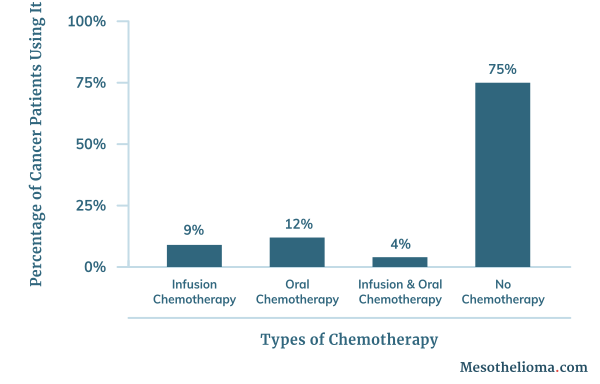
Statistics show 25% of cancer patients receive chemo each year in the United States. Of that 25%, the delivery method varies.
Chemotherapy Use by Cancer Type
Chemotherapy is one of the most common first-line cancer treatments. This means it is often the first treatment given in cancer cases.
Chemo drugs may be given with other types of therapy, too. When chemo is combined with another treatment, like surgery or radiotherapy, it is called a multimodal treatment. How doctors give chemo to patients depends on the type of cancer and each patient’s specific case.
Mesothelioma Cancer Chemotherapy Use Statistics
Mesothelioma is a type of cancer that may be treated with chemotherapy. This rare cancer affects the thin lining surrounding some organs. It may develop in the lining around the lungs, the abdominal cavity, the heart or the testes. Mesothelioma statistics show roughly 3,000 new cases and 2,500 deaths per year in the United States.
Over the years, doctors and researchers have done significant work to improve mesothelioma treatment options. Mesothelioma chemotherapy and immunotherapy drugs are common systemic treatments. Statistically, systemic treatments are more common than other treatments for mesothelioma.
Learn More About Chemotherapy Drugs for Mesothelioma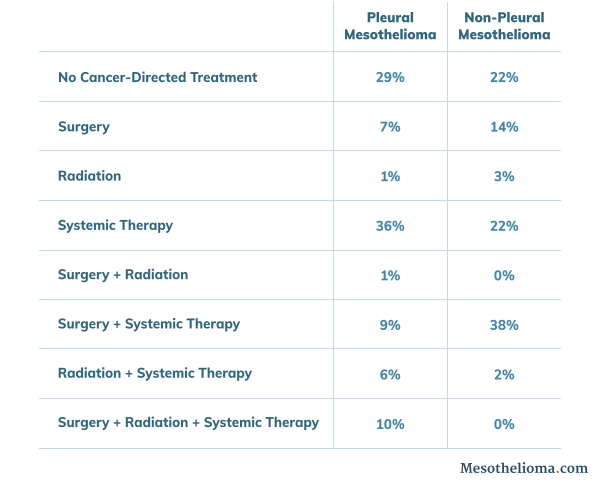
Note: Systemic treatment may include chemotherapy or immunotherapy treatments.
Non-Small Cell Lung Cancer Chemotherapy Use Statistics
NSCLC is a slow-growing cancer originating in the lung tissue. It is the most common type of lung cancer in the United States, with more than 190,000 new cases expected yearly.
Doctors treat NSCLC with chemotherapy, radiation therapy, surgery or a combination of these treatments. Statistics show using chemotherapy for NSCLC is more common in late-stage cases.
Learn More About Chemotherapy Drugs for NSCLC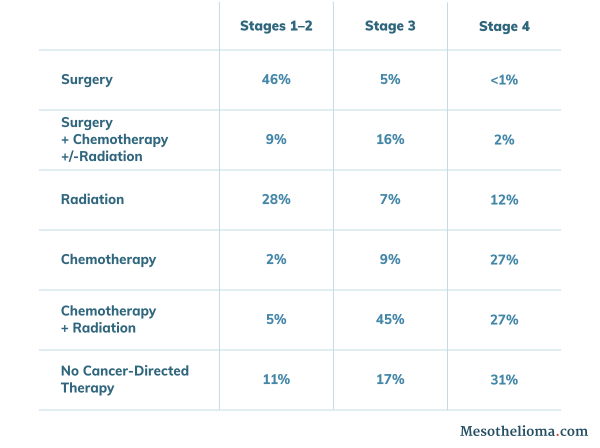
Chemotherapy Prognosis and Survival Rates
Studies show chemotherapy may extend life expectancy and survival rates for some patients. However, extending life expectancy depends on many factors. For example, the cancer type and stage may affect life expectancy.
How Effective Is Chemotherapy?
Chemotherapy may be an effective treatment option for many patients. For example, one study looked at stage 4 breast cancer patients treated with chemo, hormone therapy and surgery. They had a median survival of about 53 months. That means about half of them lived longer than 4.5 years.
Some research has compared the survival rates of people who received chemo to those who did not. One study investigated this difference in breast cancer patients. Those who received chemo had a 1-year survival rate of 51%. Patients who did not receive chemo had a 1-year survival rate of 38%.
In studies, chemo has extended cancer survival when combined with other treatments. For example, HIPEC is a targeted chemo treatment following surgery. Studies in patients with peritoneal mesothelioma show those who receive HIPEC had a median survival of 4.2 years. In other studies, patients treated with IV chemo had a median survival of about 1 year.
Chemotherapy Survival for Mesothelioma
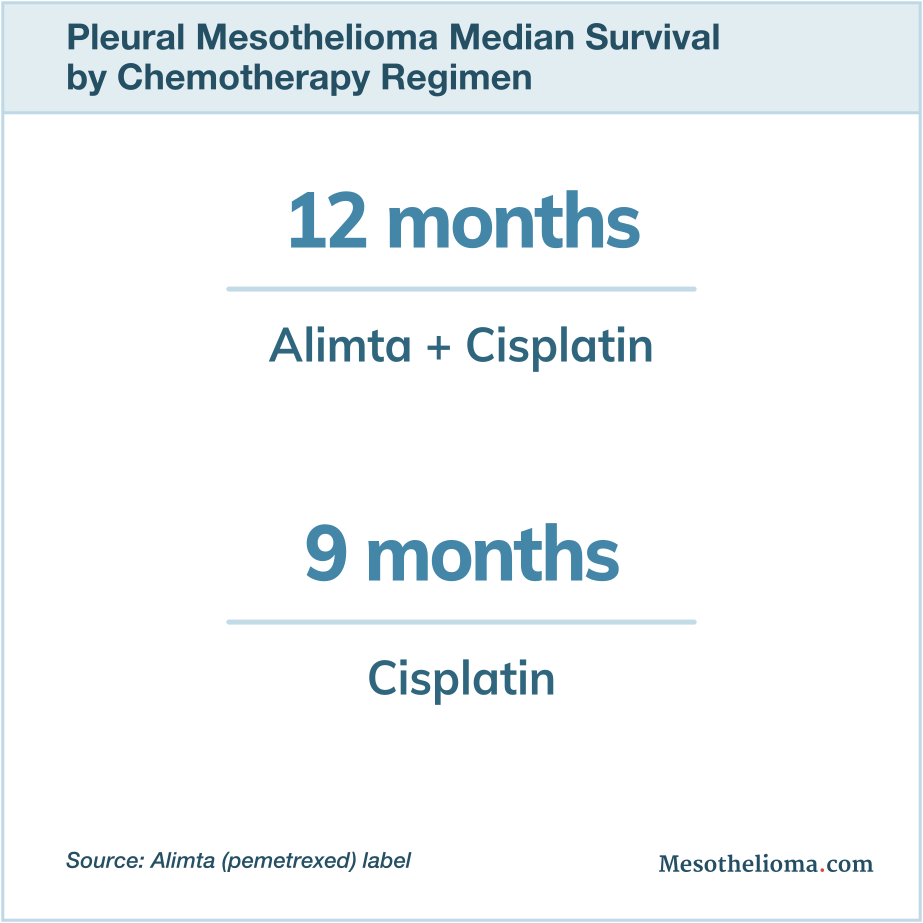
Research shows chemotherapy can have an impact on mesothelioma survival rates. Typically, the mesothelioma prognosis without treatment is about six months. However, certain chemotherapy combinations may extend survival. For example, the median survival for pleural mesothelioma patients treated with Alimta® (pemetrexed) and cisplatin is about 12 months, compared to 9 months for those who receive cisplatin alone.
Chemotherapy Survival for Non-Small Cell Lung Cancer
Patients with NSCLC may benefit from chemotherapy. Additionally, research shows various combinations of chemo drugs may affect prognosis differently. For example, the data below shows the median survival for several different types of lung cancer and chemo drugs, like Alimta® (pemetrexed).
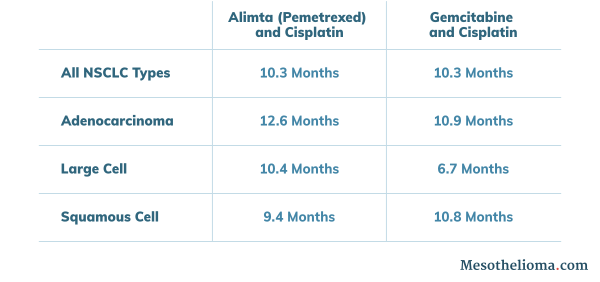

Standard Chemotherapy Drugs by Cancer Type
Some chemotherapy drugs are better suited to treat certain cancers. Researchers have tested and refined these drugs through years of work. The National Comprehensive Cancer Network (NCCN) provides guidelines on which drugs to use for different cancers.
The following table shows some of the NCCN guidelines for some common cancers.
- Pemetrexed + cisplatin or carboplatin with or without Avastin® (bevacizumab)
- Carboplatin and paclitaxel alongside radiation
- Carboplatin or cisplatin and pemetrexed alongside radiation
- Carboplatin or cisplatin with paclitaxel, gemcitabine or pemetrexed
- Cisplatin and etoposide alongside radiation
- Cisplatin + gemcitabine or docetaxel
- Cisplatin + pemetrexed
Continued research is critical for finding new and improved treatments for cancers. With additional research, doctors may discover more viable therapies.
How Has Chemotherapy Improved?
Research through clinical trials has advanced chemotherapy treatments. As doctors conduct studies, they find how effective drugs are against different cancers. Mesothelioma, for example, has benefited from drugs approved to treat different cancers.
One drug the U.S. Food and Drug Administration (FDA) approved to treat other cancers is Navelbine (vinorelbine). The FDA approved Navelbine to treat NSCLC. However, doctors use it to treat some cases of pleural mesothelioma. This is called off-label usage, which is a common medical practice.
Another example is gemcitabine. The FDA approved gemcitabine to treat some cancers. These include some forms of breast cancer, ovarian cancer, NSCLC and pancreatic cancer. The NCCN recommends it for some cases of pleural and peritoneal mesothelioma.



Chemotherapy Costs
Chemotherapy costs can depend on many factors. Some of those factors include the drug type, length of time taking it and insurance coverage.
This chart shows examples of what an insurance company may pay for certain treatments. The costs provided here are from 2016. Prices for the current year may be higher based on inflation.
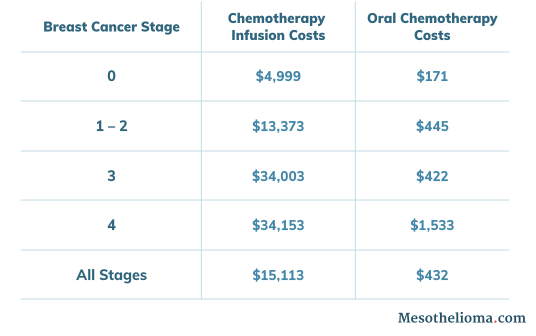
These costs are the amounts paid by insurance providers. Patients may have had more out-of-pocket costs related to these services. Some studies show the cost of cancer treatment can become a financial burden. For victims of an asbestos-related disease, compensation options may be available.
Some studies also analyzed the cost of mesothelioma treatment. These costs may depend on the mesothelioma stage and location. For example, a doctor may recommend a six-cycle regimen of chemotherapy drugs. Research in 2017 showed if the doctor used Alimta and cisplatin, the costs totaled nearly $39,000. With inflation, the same regimen may cost substantially more in later years.
Costs of Treating Chemotherapy Side Effects
Patients may know about chemotherapy side effects and have concerns about them. Side effects vary depending on the type of chemo drugs a patient receives and the type of cancer. Fortunately, doctors have ways to help manage these side effects.
Depending on the side effects, doctors can recommend ways to manage them. For example, doctors may prescribe medications to relieve some side effects. The table below lists the costs for medicines used to manage common side effects.
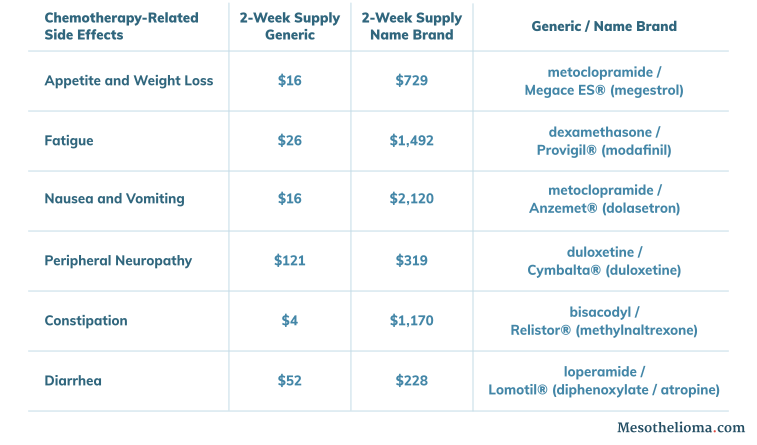
Patients receiving cancer care should speak with their doctors about any side effects. If new side effects appear or existing side effects change, a doctor may be able to help.
- Changes to appetite
- Chemo brain
- Constipation
- Diarrhea
- Dry skin
- Easy bruising and bleeding
- Fatigue
- Hair loss
- Infection
- Kidney and bladder problems
- Low red blood cell counts (anemia)
- Mood changes
- Nausea
- Nerve problems, like numbness, pain and tingling
- Sexual dysfunction and fertility problems
- Sores or pain in mouth or throat or on the tongue, making swallowing difficult
- Vomiting
- Weight gain or loss
Common Questions About Mesothelioma Chemotherapy
What are the chances of getting cancer after chemotherapy?
Can chemotherapy cause other cancers?
Studies show some chemotherapy drugs may increase the risks of certain second cancers. Factors impacting this risk include the drug dose, intensity and treatment length. Chemo drugs tied to an elevated risk of second cancers include:
- Busulfan
- Carboplatin
- Carmustine
- Chlorambucil
- Cisplatin
- Cyclophosphamide
- Etoposide
- Lomustine
- Mechlorethamine
- Melphalan
- Mitoxantrone
- Teniposide
Is chemotherapy the best treatment for cancer?
Does chemotherapy reduce life expectancy?
Note: This page contains statistics gleaned from large groups of patients. These statistics cannot forecast a single patient’s cancer experience or the success of any given treatment. Patients should discuss all cancer screening and treatment decisions with an experienced oncologist.
Sources
American Cancer Society. Chemotherapy Side Effects.
American Cancer Society. Getting IV or Injectable Chemotherapy.
American Cancer Society. Getting Oral or Topical Chemotherapy.
American Cancer Society. Initial Treatment of Prostate Cancer, by Stage and Risk Group.
American Cancer Society. Key Statistics for Lung Cancer.
American Cancer Society. What Is Prostate Cancer?
Blumen H, Fitch K, Polkus V. Comparison of treatment costs for breast cancer, by tumor stage and type of service. Am Health Drug Benefits. 2016 Feb;9(1):23–32.
Cancer Research UK. Survival for breast cancer.
Centers for Disease Control and Prevention. Breast Cancer Basics.
Centers for Disease Control and Prevention. Treatment of Breast Cancer.
Centers for Disease Control and Prevention. U.S. Cancer Statistics Prostate Cancer Stat Bite.
Cleveland Clinic. Non-Small Cell Lung Cancer.
Drugs.com. How does chemotherapy affect the cell cycle?
Freedland SJ, Sandin R, Sah J, Emir B, Mu Q, Ratiu A, et al. Treatment patterns and survival in metastatic castration-sensitive prostate cancer in the US Veterans Health Administration. Cancer Med. 2021 Dec;10(23):8570–80.
Gravis G, Boher JM, Joly F, Soulié M, Albiges L, Priou F, et al. Androgen deprivation therapy (Adt) plus docetaxel versus adt alone in metastatic non castrate prostate cancer: impact of metastatic burden and long-term survival analysis of the randomized phase 3 getug-afu15 trial. Eur Urol. 2016 Aug;70(2):256–62.
Gupta A, Nshuti L, Grewal US, Sedhom R, Check DK, Parsons HM, et al. Financial burden of drugs prescribed for cancer-associated symptoms. JCO Oncol Pract. 2022 Feb;18(2):140–7.
Lane WO, Thomas SM, Blitzblau RC, Plichta JK, Rosenberger LH, Fayanju OM, et al. Surgical resection of the primary tumor in women with de novo stage iv breast cancer: contemporary practice patterns and survival analysis. Ann Surg. 2019 Mar;269(3):537–44.
Mayo Clinic. Cancer treatment.
Mayo Clinic. Chemotherapy.
Miller KD, Nogueira L, Devasia T, Mariotto AB, Yabroff KR, Jemal A, et al. Cancer treatment and survivorship statistics, 2022. CA Cancer J Clin. 2022 Sep;72(5):409–36.
Milliman Inc. Parity for Oral and Intravenous/Injected Cancer Drugs.
Neugut AI, Prigerson HG. Curative, life-extending, and palliative chemotherapy: new outcomes need new names. Oncologist. 2017 Aug;22(8):883–5.
Youssef I, Lee A, Kukunoor S, Taiwo E, Luhrs CA, Schreiber D. Patterns of care and survival of metastatic metaplastic breast cancer patients. Cureus. 2020 Sep 9;12(9):e10339.
Free Mesothelioma Treatment Guide
Dr. Francis Perry Wilson is the Director of the Clinical and Translational Research Accelerator at the Yale University School of Medicine. He specializes in nephrology and clinical research.

Katy Moncivais, PhD, has more than 15 years of experience as a medical communicator. As the Medical Editor at Mesothelioma.com, she ensures our pages and posts present accurate, helpful information.