Testicular Mesothelioma

Testicular mesothelioma is a cancer linked to asbestos exposure. It forms in the lining of the testicles. Symptoms include swelling of the scrotum and hernia-like masses in the groin. Prognosis is favorable compared to other mesothelioma types. Median survival is around 6 years with treatment.
Learn More About Testicular Mesothelioma
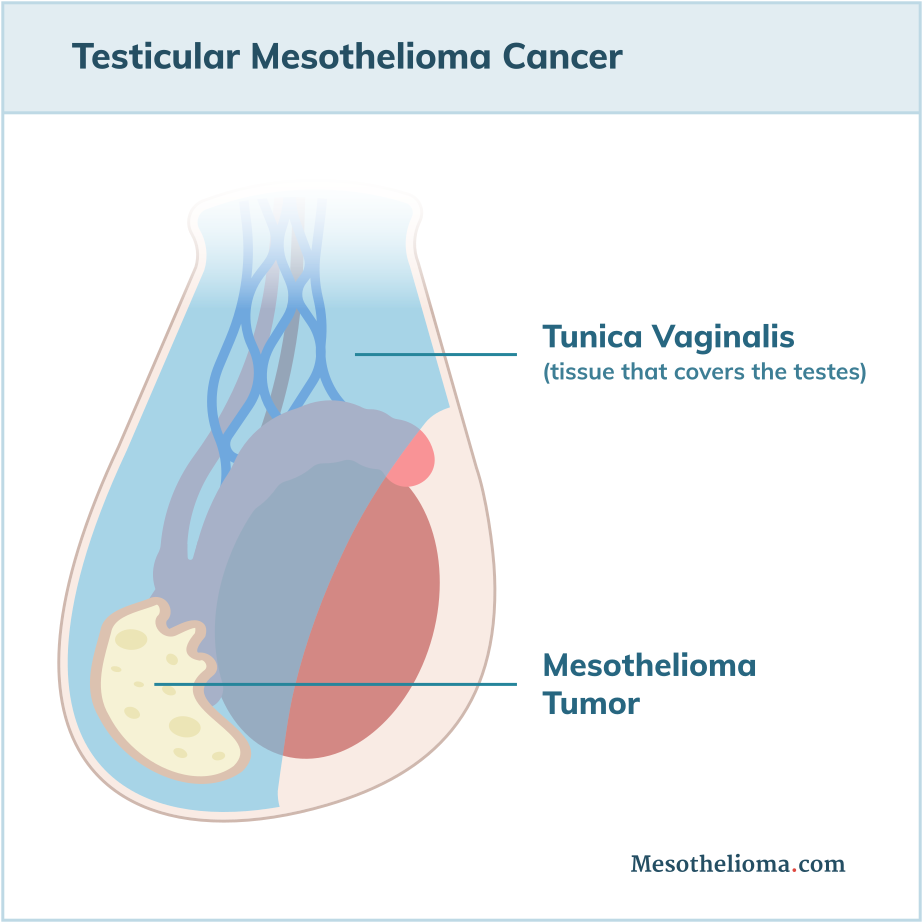
What Is Testicular Mesothelioma?
Testicular mesothelioma is among the rarest forms of malignant mesothelioma cancer. This form accounts for less than 1% of cases and is linked to asbestos exposure. Testicular mesothelioma forms in the tunica vaginalis membrane that surrounds the testis. According to data, the median age at diagnosis of testicular mesothelioma is 60 years.
Testicular Mesothelioma Quick Facts
- As of 2022, fewer than 300 cases of testicular mesothelioma had been reported in medical literature.
- Cases are commonly diagnosed early enough to allow aggressive treatment, such as surgery.
- Cases occur more often among men between 55 and 75 years of age.
- Common symptoms include swelling of the scrotum and nearby tissues.
Medical literature has reported only a few hundred cases of testicular mesothelioma. It is difficult to study and develop treatments for this cancer because it is so rare. As such, testicular mesothelioma does not yet have standard treatment options. But doctors may use therapies considered standard for other types of mesothelioma.
This strategy has proven effective thus far. Testicular mesothelioma patients live around 6 years with treatment.
Patients may hear testicular mesothelioma referred to as any of the following:
- Malignant genital mesothelioma
- Malignant mesothelioma of the tunica vaginalis testis
- Malignant paratesticular mesothelioma
- Mesothelioma in the testicles
- Testicular mesothelioma cancer



Survival & Prognosis for Testicular Mesothelioma
Several factors can impact testicular mesothelioma prognosis. Among the factors are stage at diagnosis, treatment approach and patient health. Survival is about 6 years with treatment. This is favorable compared to a general mesothelioma prognosis.
In one recent study, 98% of patients underwent surgical treatment. That study had a median survival of more than 6 years. Earlier studies of testicular mesothelioma patients reported median survival of about 2 years. This 3-year survival improvement may highlight the importance of treatment.
- Median Survival: ~6 years
- 5-Year Survival Rate: 58%
- 10-Year Survival Rate: 45%
*Survival information includes patients who underwent surgical treatment.
Source: Urology
Routine monitoring for recurrence may also contribute to long-term survival. Periodic scans may help doctors catch recurrent tumors early. This could allow multiple treatment options, potentially improving survival.
Testicular Mesothelioma Symptoms
Testicular mesothelioma may cause generally painless symptoms, including scrotal swelling. In one study, more than half of patients experienced hydrocele. Hydrocele occurs when an abnormal amount of fluid collects around the testicle.
Several forms of mesothelioma cause symptoms associated with fluid retention, such as hydrocele. For example, pleural mesothelioma can cause fluid to collect around the lungs. Peritoneal mesothelioma can lead to fluid retention in the abdomen. Patients experiencing any abnormal fluid retention should discuss it with a doctor.
- Enlargement of the scrotum (scrotal swelling)
- Hydrocele (abnormal fluid retention around the testicle)
- Inguinal mass (a mass that may mimic an inguinal hernia)
- Solid scrotal mass (paratesticular mass)
- Spermatocele (a fluid-filled area in the tube that transports sperm out of the testicle)
Several other conditions may cause symptoms like those of testicular mesothelioma. This can complicate diagnosis. Patients who suspect they have testicular mesothelioma should talk to their physician. Patients with a known history of asbestos exposure should also speak with a doctor. Doctors can help monitor patients and watch for signs of asbestos-related conditions.
 Did You Know?
There are only 3,000 mesothelioma cases per year in the U.S. Many doctors have little or no experience with this rare cancer.
It is imperative to consult with an experienced mesothelioma specialist to ensure you or your loved one receives the best treatment plan possible.
Did You Know?
There are only 3,000 mesothelioma cases per year in the U.S. Many doctors have little or no experience with this rare cancer.
It is imperative to consult with an experienced mesothelioma specialist to ensure you or your loved one receives the best treatment plan possible.
Testicular Mesothelioma Diagnosis
Testicular mesothelioma diagnosis may involve several steps. In some cases, doctors surgically remove and test potential tumor tissue. If a doctor suspects testicular mesothelioma, they generally order diagnostic tests. These tests may include:
- CT scan: This imaging test takes X-rays from different angles and turns them into a 3-dimensional image. It is also called a computed tomography scan.
- Immunohistochemistry testing: This form of testing looks for specific markers on biopsy tissue samples. It can help doctors diagnose many diseases, including testicular mesothelioma.
- Tissue biopsy: This diagnostic test involves removing suspected tumor tissue for analysis.
- Ultrasound: This imaging technique uses sound waves to examine tissues inside the body. It may help doctors visualize tumors or swelling caused by testicular mesothelioma.
It is possible to misdiagnose testicular mesothelioma. This may be because its symptoms are nonspecific. Some research suggests most cases are diagnosed only after surgery. Experts say immunohistochemistry testing is required to get a definitive diagnosis.
Testicular mesothelioma cases have been misdiagnosed as the following conditions:
- Benign adenomatoid mesothelioma
- Epididymitis (inflammation of the epididymis, which is the tube that carries sperm from the testicle)
However, doctors may fail to order the correct testing panel, even after surgery. Patients who know they were exposed to asbestos should tell their physician about it. This information can help doctors order appropriate tests to confirm or rule out a mesothelioma diagnosis.
Testicular Mesothelioma Stages
Doctors sometimes include staging as part of the diagnostic process. Determining the stage of cancer helps physicians evaluate if and how much it has spread. This information can help determine the optimal treatment approach.
Doctors may use a modified testicular cancer staging system called the TNM system. This system determines stage according to these key factors:
- T: This factor accounts for the size and extent of the main tumor.
- N: This factor accounts for any spread to nearby lymph nodes.
- M: This factor accounts for any distant spread of cancer (metastasis) to areas such as the bones or liver.
Diagnostic test results can help doctors assign values to each factor. They can determine the patient’s stage after tallying the values of the three factors. In some cases, doctors may only use one factor from the TNM system.
In one study, more than half of testicular mesothelioma diagnoses occurred at or before the T2 stage. T1 and T2 are the earliest mesothelioma stages, and early stages generally have a better prognosis. Staging does not determine prognosis. But doctors may use staging to help determine the best treatment approach. Earlier diagnosis may allow for more treatment options.
Testicular Mesothelioma Treatment
Testicular mesothelioma does not yet have clear treatment guidelines because it is so rare. Surgery appears to be the most common and effective treatment for testicular mesothelioma. After surgery, some patients may undergo additional treatments. For instance, doctors may recommend chemotherapy, immunotherapy or radiation therapy.
Dr. Raffit Hassan is a Senior Investigator at the National Institutes of Health. He works in the Thoracic and Gastrointestinal Malignancies Branch. He has done research on immunotherapy for mesothelioma.
Dr. Hassan co-authored a study profiling seven cases of testicular mesothelioma in the United States. Dr. Hassan and clinical researchers like him play an important role in the lives of mesothelioma patients. Clinical research helps discover new treatments for mesothelioma. Research also helps improve quality of life for patients fighting this rare cancer.
Radical Orchiectomy for Testicular Mesothelioma
Radical orchiectomy surgery is the most commonly reported treatment for testicular mesothelioma. It removes a testicle and its spermatic cord.
Surgical procedures may vary between doctors and cancer centers. Radical orchiectomy generally involves the following steps:
- The surgeon makes a small incision in the groin, just above the pubic bone.
- The surgeon locates the spermatic cord attached to the affected testicle.
- The affected testicle and its spermatic cord are removed.
- The physician closes the incision.
After surgery, some patients may opt to have a testicular prosthesis. This prosthesis can stand in for the removed testicle.
Complications in radical orchiectomy patients may include hernia, nerve injury and hematoma. In these cases, the hematoma refers to bleeding into the scrotum.
This procedure may be more effective at preventing testicular mesothelioma from returning. Research suggests this cancer may recur in more than half of patients. This makes radical orchiectomy an effective treatment that may improve long-term survival.
Other Testicular Mesothelioma Treatment Options
Case reports show doctors have tried non-surgical treatments for testicular mesothelioma. These treatments include radiation therapy and chemotherapy.
Doctors do not have enough data to show the impact of these treatments after surgery. But the lack of data is no reason to be discouraged. Testicular mesothelioma survival rates are still relatively favorable.
With any treatment approach, testicular mesothelioma patients may benefit from palliative treatment. Palliative care helps patients manage treatment side effects and maintain quality of life. Palliative care can occur at any point in a patient’s cancer journey.
Treatment for Recurrent Testicular Mesothelioma
Experts do not yet agree on how likely it is that testicular mesothelioma will return. Recurrence rates range from 11% to 50% in medical studies. However, radical orchiectomy may fight recurrence better than other treatments. Research suggests its recurrence rate is less than one-third that of other treatments.
Treatment for recurrent testicular mesothelioma may depend on various factors. For instance, prior treatment and cancer stage at recurrence may impact treatment. An oncologist can develop a treatment plan based on the patient’s individual case.
How Does Asbestos Cause Testicular Mesothelioma?
Scientists studying testicular mesothelioma and its causes face unusual challenges. Their research has not yet shown how the cancer develops after a person is exposed to asbestos.
Some case reports include patients with confirmed exposure to asbestos fibers. One testicular mesothelioma case occurred in a man who used asbestos-contaminated talcum powder. Other forms of mesothelioma have also been linked to talcum powder.
Experts believe the percentage of testicular mesothelioma patients who experienced asbestos exposure may be higher than official estimates. They attribute this to the difficulty in tracing all potential asbestos exposures for a given patient.
Scientists do not yet know how asbestos fibers get to the tunica vaginalis. But once there, the fibers may cause cancer to develop similar to the way pleural mesothelioma develops. In general, that process includes the following:
- Asbestos fibers lodge inside the body and cause inflammation.
- The fibers trigger processes that damage genetic material inside cells.
Over time, these changes may lead to the development of mesothelioma.
Additional time and research may help scientists better understand testicular mesothelioma. Greater understanding of this cancer could lead to more treatments and improved prognosis.
Questions About Testicular Mesothelioma? Ask experienced mesothelioma advocate Jennifer Lucarelli Ask a Question
Common Questions About Testicular Mesothelioma
Is testicular mesothelioma curable?
Can asbestos cause testicular cancer?
What is the life expectancy of someone with testicular mesothelioma?
Sources
Akin Y, Bassorgun I, Basara I, Yucel S. Malignant mesothelioma of tunica vaginalis: an extremely rare case presenting without risk factors. Singapore Med J. 2015 Mar;56(3):e53-55.
Al-Qahtani M, Morris B, Dawood S, Onerheim R. Malignant mesothelioma of the tunica vaginalis. Can J Urol. 2007 Apr;14(2):3514–7.
An JY, Kim D, Tanakchi S, Semerjian AM, Thomas A, Boyle SL, et al. Clinical features and outcomes of tunica vaginalis mesothelioma: a case series from the national institutes of health. Clin Genitourin Cancer. 2017 Oct;15(5):e871–5.
Candura SM, Canto A, Amatu A, Gerardini M, Stella G, Mensi M, et al. Malignant mesothelioma of the tunica vaginalis testis in a petrochemical worker exposed to asbestos. Anticancer Res. 2008;28(2B):1365–8.
Chekol SS, Sun CC. Malignant mesothelioma of the tunica vaginalis testis: diagnostic studies and differential diagnosis. Arch Pathol Lab Med. 2012 Jan;136(1):113–7.
Drevinskaite M, Patasius A, Kevlicius L, Mickys U, Smailyte G. Malignant mesothelioma of the tunica vaginalis testis: a rare case and review of literature. BMC Cancer. 2020 Feb 27;20(1):162.
Emory TS, Maddox JC, Kradin RL. Malignant mesothelioma following repeated exposures to cosmetic talc: A case series of 75 patients. Am J Ind Med. 2020 Jun;63(6):484–9.
Erdogan S, Acikalin A, Zeren H, Gonlusen G, Zorludemir S, Izol V. Well-differentiated papillary mesothelioma of the tunica vaginalis: a case study and review of the literature. Korean J Pathol. 2014 Jun;48(3):225–8.
Hai B, Yang Y, Xiao Y, Li B, Chen C. Diagnosis and prognosis of malignant mesothelioma of the tunica vaginalis testis. Can Urol Assoc J. 2012 Dec;6(6):E238-241.
Hannappel TD, DeVries MJ, Hansen NJ. Imaging appearance of cystic and solid mesothelioma of the tunica vaginalis. Radiol Case Rep. 2020 Jul;15(7):809–11.
Hocking AJ, Thomas EM, Prabhakaran S, Jolley A, Woods SL, Soeberg MJ, et al. Molecular characterization of testicular mesothelioma and the role of asbestos as a causative factor. Arch Pathol Lab Med. 2023 Dec 1;147(12):1446–50.
Im S, Yoo JM, Cho U. Well-differentiated papillary mesothelial tumor of the scrotum with suspicious invasion. Diagnostics (Basel). 2024 Jan 11;14(2):169.
Johns Hopkins Medicine. Radical Orchiectomy.
Khandeparkar SGS, Pinto RGW. Histopathological spectrum of tumor and tumor-like lesions of the paratestis in a tertiary care hospital. Oman Med J. 2015 Nov 10;30(6):461–8.
Mezei G, Chang ET, Mowat FS, Moolgavkar SH. Epidemiology of mesothelioma of the pericardium and tunica vaginalis testis. Ann Epidemiol. 2017 May;27(5):348-359.e11.
Nazar T, Gopalakrishnabhaktan A, Tashrifwala FAA, Sathish A, Dave T. Testicular mesothelioma disguised as hydrocele: a case report. J Med Case Rep. 2024 Feb 27;18(1):114.
Nazemi A, Nassiri N, Pearce S, Daneshmand S. Testicular mesothelioma: an analysis of epidemiology, patient outcomes, and prognostic factors. Urology. 2019 Apr;126:140–4.
Plas E, Riedl CR, Pflüger H. Malignant mesothelioma of the tunica vaginalis testis: review of the literature and assessment of prognostic parameters. Cancer. 1998 Dec 15;83(12):2437–46.
Priyadarshi N, Bhat S, Paul F, Shetty S. Malignant mesothelioma of testis: a report of three cases and review of literature. Medical Journal of Dr DY Patil University. 2018 Feb;11(1):60.
Ramirez Sevilla C, Admella Salvador C, Feliu Canaleta J, Llopis Manzanera J, Barranco Sanz MA, Romero Martin JA, et al. Two case reports of benign testicular mesothelioma and review of the literature. Case Rep Oncol Med. 2017;2017:5419635.
Sheng B, Zhang YP, Wei HH, Ma M, Nan X. Primary adenomatoid tumor of the testis: report of a case and review of literature. Int J Clin Exp Pathol. 2015;8(5):5914–8.
Zhang N, Fu N, Peng S, Luo X. Malignant mesothelioma of the tunica vaginalis testis: A case report and literature review. Mol Clin Oncol. 2017 Dec;7(6):1053–6.
Free Mesothelioma Treatment Guide

Katy Moncivais, Ph.D., has more than 15 years of experience as a medical communicator. As the Medical Editor at Mesothelioma.com, she ensures our pages and posts present accurate, helpful information.

Tara Strand specializes in writing content about mesothelioma and asbestos. She focuses on topics like mesothelioma awareness, research, treatment, asbestos trust funds and other advocacy efforts.