Asbestos in the Home

Asbestos was used in many homes built before the 1980s. Older homes may still have asbestos materials like flooring, ceiling tiles or insulation. This puts residents at risk for mesothelioma. Homeowners can take measures to try to avoid asbestos exposure and, if needed, have asbestos safely removed.
Learn More About Asbestos Exposure in the Home
Why Is Asbestos in the Home Dangerous?
Asbestos materials in the home can pose a danger to residents. Over time, asbestos-containing products can become worn or damaged. Disturbing these materials can cause microscopic asbestos fibers to become airborne. Anyone in the home may inhale or ingest the airborne fibers.
Asbestos exposure is linked to several diseases, including malignant mesothelioma. Specific conditions that exposure to asbestos may cause include:
Taking steps to avoid asbestos exposure, at home or on a jobsite, can help lower the risk of asbestos-related diseases.
When Was Asbestos Used in Homes?
Asbestos was commonly used in thousands of products and home construction materials before the 1980s. From the 1930s to the 1970s, building materials, vinyl goods and other products contained asbestos. Regulations in the 1970s and 1980s limited asbestos use in new products.
Older homes built before the 1980s may be more likely to have asbestos. But stockpiles of asbestos materials may have found their way into homes until the 1990s.
According to the U.S. Environmental Protection Agency (EPA), more than 30 million tons of asbestos was used between 1900 and 1980. Some of these past uses are still in materials and products people may come into contact with today.
 Did You Know?
Asbestos exposure is still responsible for thousands of deaths each year.
Victims of asbestos exposure who have been diagnosed with mesothelioma may be eligible for financial compensation.
Did You Know?
Asbestos exposure is still responsible for thousands of deaths each year.
Victims of asbestos exposure who have been diagnosed with mesothelioma may be eligible for financial compensation.
Where to Find Asbestos in Old Homes
Asbestos-containing materials may be found in most areas of older homes. From the 1930s through the 1970s, asbestos construction materials were widespread. The mineral was popular for its durability, heat resistance and chemical resistance.
Common asbestos-containing materials found in the home include:
- Asbestos rope/sheets
- Boiler insulation
- Ceiling tiles
- Cement roofing
- Cement sheets
- Drywall
- Duct/pipe insulation
- Furnaces
- Joint compound
- Millboard
- Rollboard
- Roof shingles
- Roofing felt
- Siding shingles
- Vermiculite attic insulation
- Vinyl floor tiles
- Vinyl sheet flooring
The varied uses of asbestos before the 1980s put many people in danger of asbestos exposure in their homes. Older mobile homes and apartments may also contain asbestos construction materials.
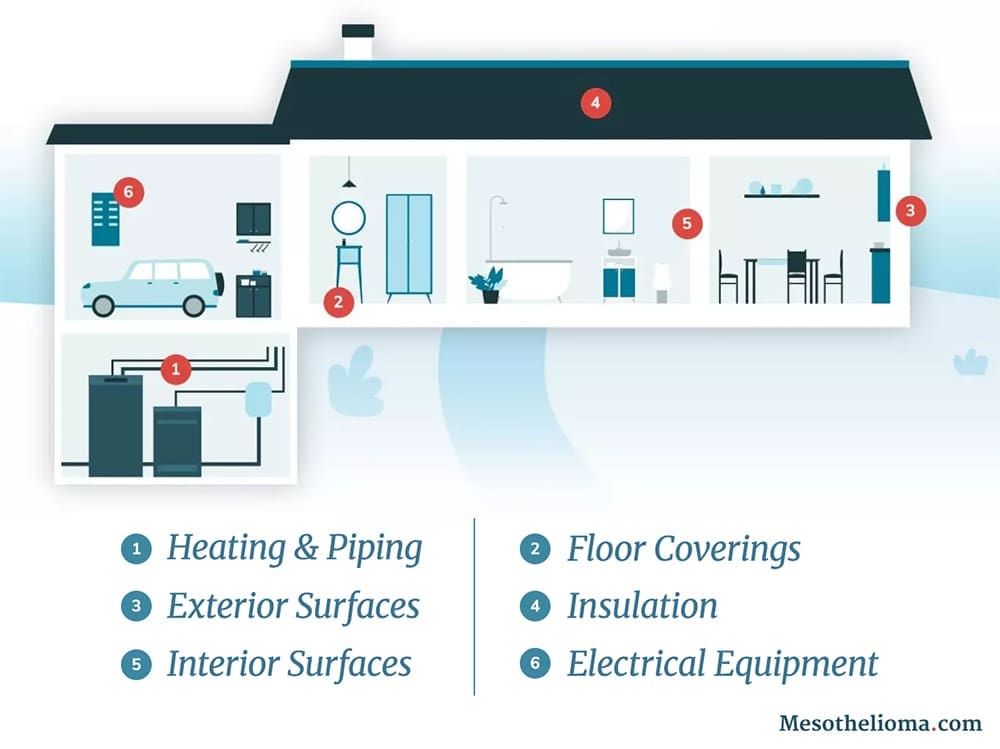
- Air duct coverings, door gaskets, oil and coal furnaces, piping insulation, steam and hot water pipes (coated with asbestos material)
- Vinyl floor tiles (including backing on vinyl sheet flooring and asbestos), walls and floors around wood-burning stoves (protected with asbestos paper)
- Cement asbestos roofing, cement asbestos siding shingles, window putty
- Loose blown-in/batt insulation, vermiculite insulation
- Patching compounds on wall and ceiling joints, sprayed-on or troweled-on popcorn ceilings, textured paint
- Backing for switchboard panels, electrical switches and receptacle boxes, fuse boxes, liners for recessed lighting, older lamp socket collars, old fashioned “knob & tube” wiring
How to Identify Asbestos in the Home
Identifying asbestos-containing materials with the naked eye is difficult. However, people can look for potential signs of asbestos in homes.
Homes built before the 1980s likely have asbestos in them. For instance, if these homes have popcorn ceilings or vinyl flooring, they may contain asbestos. A simple rule is the newer a home is, the less likely it has asbestos materials. Homes built before the 1980s are likely to contain the mineral somewhere.
In any case, homeowners should never touch any suspected asbestos in their house. Instead, a trained asbestos professional should inspect and manage potential asbestos. Proper handling of the mineral can help avoid asbestos exposure.
Visual Clues to Help Identify Asbestos in Houses
Homeowners may find visual clues for recognizing asbestos in their homes. They won’t be able to see asbestos itself because the mineral consists of microscopic fibers. However, the age of the building and the presence of certain materials may suggest that asbestos is in the home.
Another complication to visually finding asbestos is the different types of asbestos that may have been used. These asbestos types can vary in color and appearance. But asbestos-containing products may not have visible asbestos fibers. In many cases, asbestos was used as a component in the product, making it impossible to see asbestos fibers. Still, what are some visual signs of asbestos in a house?
The texture applied to walls and ceilings, that was then painted over, often contained asbestos. Popcorn ceilings were popular between 1945 and the early 1990s. Homeowners should assume all popcorn ceilings from this period contain asbestos.
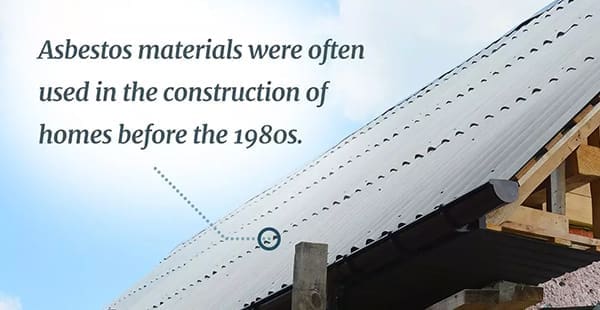
Asbestos causes dimpling in certain product surfaces. Products that may show dimpling include shingles, roofing materials or pipe insulation. Dimpling may often mean the material has asbestos and should be tested by an asbestos professional.
Homeowners should remember that asbestos is a microscopic fiber that becomes airborne after being disturbed. If homeowners suspect potential asbestos in their home, they should hire professionals to inspect materials and recommend next steps.
Check Leftover Materials for Labels Identifying Asbestos
Leftover materials stored in a house may have asbestos in them. Product packaging may help identify if they contain asbestos.
For example, spare vinyl floor tiles may have a stamp on the box or the back of the tiles stating they contain asbestos. These products came in a variety of shapes and sizes, and not all were made with asbestos. A date included on the packaging may also indicate that they were manufactured during the height of asbestos use (1930s – 1970s).
Handling any leftover materials may carry asbestos exposure risks. Homeowners should only inspect the outside of the packaging for a label. If there are no packages, it is best to assume any flooring or other construction materials installed before 1980 contain the mineral. Homeowners should treat these materials with caution.
While visual clues like labels can suggest the presence of asbestos in the home, it is not a foolproof method to identify asbestos. Only asbestos abatement professionals can properly test for asbestos and safely handle any asbestos materials.
Questions About Asbestos Exposure in the Home and Mesothelioma? Ask experienced mesothelioma advocate Jennifer Lucarelli Ask a Question
How Do I Know if My House Has Asbestos?
Asbestos testing is the only way to definitively know if asbestos is present. Hiring an asbestos abatement professional is the safest way to test for asbestos. Anyone who owns or plans to buy a house built before the 1980s may want to have a home asbestos test performed, especially if they plan to remodel.
A licensed asbestos inspector can test for asbestos while minimizing the risk of exposure. They will also recommend next steps for addressing any asbestos in the home. Options may include leaving it undisturbed, removing it or encapsulating it. Encapsulating asbestos involves keeping it in place and sealing it with a protective barrier.
Home asbestos test kits are available but they are not recommended or safe. Homeowners could expose themselves and anyone in the home by using home asbestos tests. Many experts recommend leaving asbestos testing to the professionals. They have the needed training to safely test for asbestos and handle next steps, like removal, to prevent exposure.
How Much Does Professional Asbestos Testing Cost?
The cost of professional asbestos testing varies. The number of samples needed, type of testing completed on the samples and part of the country can all impact cost. According to data from Essel Environment, the national average for basic asbestos testing is $600.
Comprehensive home asbestos testing will cost more, but it is more in-depth. Comprehensive asbestos tests include:
- Air quality testing
- Asbestos Hazard Emergency Response Act (AHERA) inspection
- Initial test and sampling
- Full inspection after asbestos is detected
Homeowners may consider having asbestos testing done before conducting any renovations or home projects. The cost of comprehensive testing may be worth the peace of mind for knowing that dangerous exposure could be avoided.
Comprehensive testing costs can vary depending on location. These examples can help homeowners understand the cost variations.
- Location: Los Angeles, California
- Average Cost: $2,668
- Location: Austin, Texas
- Average Cost: $2,420
- Location: New York State
- Average Cost: $3,534
Source:HowMuch.net
How Does Asbestos Exposure Occur in Houses?
Asbestos exposure at home may happen whenever asbestos-containing materials are disturbed or damaged. This can happen through normal wear and tear or as a result of renovations.
Other common ways for asbestos products to be disturbed include:
- A fire or natural disaster
- Flooding or water damage
- Maintenance projects
Asbestos exposure can occur anywhere in the house.
Common places where asbestos is found in homes include:
- Attics
- Basements
- Ceilings
- Crawl spaces
- Floors
- Roofs
- Walls
According to one study, an estimated 20% of mesothelioma diagnoses are caused by non-occupational asbestos exposure. These types of exposures can happen in the home or the natural environment.
Asbestos in Attics
Attic insulation is a common location for asbestos in houses. Vermiculite attic insulation is a specific and notorious type of insulation that may contain asbestos. Vermiculite insulation looks like small pebbles on the floor of the attic. Vermiculite attic insulation, such as Zonolite insulation, has well-documented ties to asbestos contamination.
The EPA suggests up to 70% of the vermiculite sold in the United States between 1919 and 1990 came from Libby, Montana. Much of it may have been contaminated with asbestos.
If a home has vermiculite insulation, homeowners should be careful not to disturb it. They should call an asbestos abatement professional to handle asbestos testing and removal. Because so much of the vermiculite came from Libby, homeowners should assume any vermiculite insulation contains asbestos.
Asbestos in Walls of Homes
Homes built before the 1980s may have wallboards and textures that contain asbestos. Wallboards go by many different names, like drywall, gypsum board or sheetrock. During the manufacturing process, asbestos was mixed with other materials and sandwiched between two sheets of paper. Asbestos in walls can be disturbed when drilling through them or if the outer paper is damaged.
Asbestos cement sheets were also sometimes used for interior walls. On the outside of older homes, these sheets were used for roofing and siding. Over time, these materials can start wearing out, exposing residents to asbestos.
If a homeowner wants to remodel or needs to do maintenance, they should take precautions before starting on any work in homes built before the 1980s. A licensed asbestos abatement company should first perform a professional asbestos home test.
Asbestos in Popcorn Ceilings and Vinyl Tiles
Popcorn ceilings and vinyl tile floors were popular starting in the 1940s. Both, however, may have asbestos in them.
Builders liked popcorn ceilings because they could hide imperfections and provided acoustical insulation. These types of ceilings could have 1% – 10% asbestos content. As they age and break down, pieces can flake off and become airborne.
Vinyl tiles provide an easy-to-maintain floor option. They come in a variety of colors and patterns. During the manufacturing process, the vinyl may have been fused with asbestos. The adhesive used to glue the tile down may also have asbestos. If homeowners renovate or repair flooring themselves, they face exposure risks.
An asbestos abatement professional will be able to test for asbestos and safely remove contaminated materials.
- Asbestos was commonly used as an insulator.
- Pipe insulation is a common place where asbestos can be found in older homes.
- Homeowners should not remove or replace pipe insulation on their own in homes built before the 1980s.
- Asbestos was often used in friction materials, such as car brakes, made before the 1980s.
- Brakes or other car parts from this period should not be repaired in home garages.
- Some foreign car parts may also still contain asbestos and should be handled by a mechanic.

What to Do if You Have Asbestos in Your Home
If a homeowner believes their home has asbestos materials, they should contact an asbestos abatement company to conduct a professional home asbestos test. If the home has asbestos, the homeowner may need to hire a contractor to remove it.
In general, asbestos materials are considered relatively safe when they are in good condition and there are no signs of damage. If the material is damaged or worn, a professional may suggest removing or encapsulating the product.
At no point should a homeowner attempt to remove asbestos on their own.
According to the Occupational Safety and Health Administration (OSHA), there is no safe level of asbestos exposure. Improper asbestos handling could release fibers into the air, creating a health hazard.
Asbestos Safety Dos and Don’ts
Asbestos in homes can be very dangerous if disturbed or damaged. Homeowners should take certain steps if they suspect their homes have asbestos.
- Do avoid damaging asbestos-containing materials.
- Do keep away from asbestos-containing materials.
- Do talk to the home inspector and realtor about any known asbestos materials before buying a home.
- Do hire asbestos abatement professionals to complete all asbestos testing, removal or encapsulation of materials.
- Do have a home inspected before demolition to ensure all hazardous materials are handled properly.
- Don’t sand, saw, scrape, drill or otherwise disturb asbestos-containing materials.
- Don’t use a vacuum or broom to clean disturbed asbestos materials.
- Don’t attempt to collect samples of suspected asbestos-containing materials for testing.
- Don’t have asbestos-containing materials removed by professionals unless encapsulation is impossible.
- Don’t throw asbestos-containing materials in your regular trash.
Why You Shouldn’t Use an Asbestos Home Test Kit
Asbestos materials are dangerous any time fibers are airborne. Home asbestos tests performed by homeowners may pose a greater health hazard than undisturbed asbestos.
At-home asbestos test kits can put homeowners and their families at risk of dangerous exposure. To collect samples for testing, the suspected hazardous materials must be disturbed. This can cause fibers to become airborne. As such, homeowners are encouraged to avoid at-home asbestos test kits.
If homeowners use an at-home asbestos test kit, they should follow specific safety guidelines.
At first, home asbestos test kits may seem more economical than hiring a professional. But the costs of asbestos-related diseases are far greater.
Minimizing Asbestos Exposure Risks in the Home
Taking steps to minimize asbestos exposure risks at home is the best course of action homeowners can take to protect themselves and their families.
Homeowners should not attempt to remove asbestos from their homes on their own. Without proper handling and safety precautions, removing asbestos can cause exposure and lead to illness. It is important to hire a trained professional, so the asbestos materials can be handled and disposed of properly.
Many cities and states have regulations in place for the proper disposal of asbestos and materials containing asbestos. It is important to understand these asbestos regulations to protect anyone in the home, workers and neighbors from exposure.
Federal regulations have reduced the amount of asbestos used in construction and manufacturing. In 1973, the United States used more than 800,000 tons of asbestos, compared to only a few hundred tons today. In 2024, the EPA finalized a chrysotile asbestos ban. However, there is still no full ban on asbestos.
Reducing asbestos use has helped, but homeowners are still at risk. It is imperative for homeowners to understand:
- How to protect themselves and others should they come into contact with asbestos
- What common products may contain the mineral
- Where asbestos-containing materials are most likely to be found
The EPA’s National Emission Standards for Hazardous Air Pollutants (NESHAP) help protect air quality and reduce health risks presented by various contaminants, such as asbestos. These regulations create safety standards for many home projects, including renovations. NESHAP also covers asbestos waste transportation and disposal.
The U.S. Consumer Product Safety Commission also has several bans in place related to certain asbestos-containing materials, such as artificial ashes and embers found in gas fireplaces. The asbestos in artificial ashes and embers glowed red when heated to give the fake logs the illusion of burning. Both were banned in 1978.
Asbestos in the home can be serious. Asbestos regulations are an important part of safety.
What to Do if You Think You Have Been Exposed to Asbestos in the Home
Anyone who believes they have been exposed to asbestos while working on a project at home should consult their doctor. A doctor can help monitor for signs and symptoms of mesothelioma or other asbestos-related diseases.
Monitoring for mesothelioma may include regular imaging tests, such as X-rays or CT scans. Early detection may allow patients to have more treatment options, which may impact life expectancy.
Common Questions About Asbestos in the Home
How to tell if a house has asbestos?
Do home asbestos test kits work?
Sources
American Cancer Society. Can Malignant Mesothelioma Be Found Early?
Department of Health and Human Services National Toxicology Program. Asbestos.
Essel Environmental. How Much Does Asbestos Testing Cost?
Goldberg M, Luce D. The health impact of nonoccupational exposure to asbestos: what do we know? Eur J Cancer Prev. 2009 Nov;18(6):489–503.
HowMuch. How Much Does It Cost To Do Asbestos Inspection And Testing?
HowStuffWorks. How Drywall Works.
JSE Labs. 10 Things to Know About Asbestos in Drywall.
Summit Environmental. Are asbestos home testing kits reliable? – Q and A.
United States Consumer Product Safety Commission. Asbestos Ban Announced.
United States Consumer Product Safety Commission. Asbestos In The Home.
United States Environmental Protection Agency. Asbestos Fact Book.
United States Environmental Protection Agency. Asbestos National Emission Standards for Hazardous Air Pollutants (NESHAP).
United States Environmental Protection Agency. Biden-Harris Administration finalizes ban on ongoing uses of asbestos to protect people from cancer.
United States Environmental Protection Agency. EPA Actions to Protect the Public from Exposure to Asbestos.
United States Environmental Protection Agency. Protect Your Family from Asbestos-Contaminated Vermiculite Insulation.
United States Environmental Protection Agency. Protect Your Family from Exposures to Asbestos.
U.S. Geological Survey. Asbestos Statistics and Information.
Legal Rights for Mesothelioma Victims

Tara Strand specializes in writing content about mesothelioma and asbestos. She focuses on topics like mesothelioma awareness, research, treatment, asbestos trust funds and other advocacy efforts.

 Legally
Reviewed by
Jennifer Lucarelli
Mesothelioma Lawyer and Legal Advisor
Legally
Reviewed by
Jennifer Lucarelli
Mesothelioma Lawyer and Legal Advisor
For more than two decades, Jennifer Lucarelli has served as Legal Advisor at Mesothelioma.com. She has advocated for more than 1,000 asbestos victims, securing millions in settlements and helping them access quality medical care.