The 3 Most Common Treatments for Malignant Mesothelioma Cancer
Written by Katy Moncivais, PhD on October 9, 2024
Malignant mesothelioma is a rare asbestos cancer. As with any form of cancer, treatment is crucial for extending life expectancy. And data indicates specialty care may lead to better survival. Mesothelioma specialists are more aware of standard therapies and their benefits. So it’s possible patients have better, more effective treatment options with specialty care.
But how can mesothelioma patients know if they’ve been offered the best treatments? Mesothelioma experts have guidelines that outline the standard treatment options. And research shows which of those options are most common in the real world.
Find Other Mesothelioma Treatment Options HereIn general, specialists will discuss the potential risks and benefits of these therapies. If an oncologist leaves standard options out, you may want a second opinion. At the very least, you can ask the doctor why certain therapies were left out.
The 3 Most Common Mesothelioma Treatments
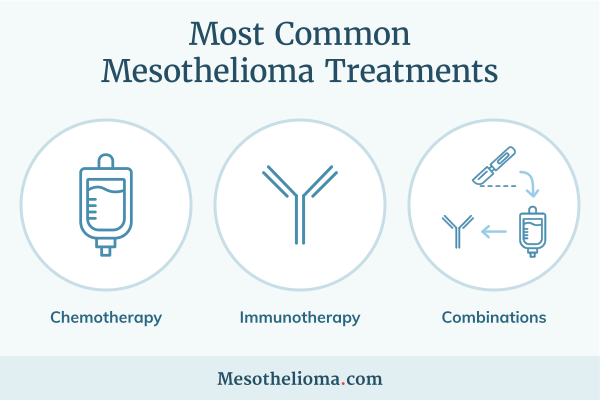
Malignant mesothelioma treatment varies based on patient goals and characteristics. In many cases, doctors recommend surgery-based combination therapies. This often means surgery and some form of chemotherapy. For inoperable cases, most patients receive chemo, immunotherapy or both.
1: Chemotherapy
Chemotherapy uses tumor-killing medicines to treat cancer. It comes in 2 basic forms: systemic and local. Mesothelioma patients with inoperable tumors often receive systemic chemo. Patients with operable tumors often undergo local chemo after surgery.
Systemic chemo usually involves the drug combo of Alimta® (pemetrexed) and cisplatin. But in some cases, doctors may recommend carboplatin instead of cisplatin.
Local chemo is usually part of a combination treatment plan. You can read more about that in the related section below. Research indicates both types of chemo can extend survival for mesothelioma patients.
Learn More About Chemotherapy for Mesothelioma2: Immunotherapy
Immunotherapies empower a patient’s immune system to fight cancer. Pleural mesothelioma patients with inoperable tumors often receive Opdivo® (nivolumab) and Yervoy® (ipilimumab). Both drugs are immune checkpoint inhibitors (ICIs). They help immune cells recognize and attack cancer cells.
Learn More About Immunotherapy for Mesothelioma3: Combination (Multimodal) Treatments
Many mesothelioma patients receive more than 1 type of therapy. This approach is called multimodal treatment. It may kill more tumor cells by attacking them with different methods.
Multimodal treatments can consist of any combination of the following:
Some patients and general oncologists may believe any Stage 3 or 4 tumor is inoperable. But this is not true. Stage 3 mesothelioma patients commonly receive surgery-based treatment. Only a mesothelioma specialist can determine if a specific case is operable or not.
The recommended combination depends on tumor location and other factors. Patients with inoperable tumors may undergo radiation followed by chemo or immunotherapy. Patients with operable tumors may have surgery followed by chemo and other treatments. Surgery-based approaches include:
- Pleural mesothelioma: This type of cancer forms in the lining around the lung (the pleura). Pleural cases may be treated with surgery and heated intrathoracic chemotherapy (HITHOC).
- Peritoneal mesothelioma: This type of cancer forms in the abdominal lining (the peritoneum). Peritoneal cases may be treated with surgery and heated intraperitoneal chemotherapy (HIPEC).
There are many different ways to combine mesothelioma treatments. A mesothelioma specialist can discuss which combination may work best for each patient.
Learn More About Multimodal Treatment for MesotheliomaWhat Does This Mean for Mesothelioma Patients?
Mesothelioma patients have many treatment options. Doctors should present these choices clearly and help you understand the potential risks and benefits of each. Palliative care is a helpful option for all stages of mesothelioma. But if an oncologist only offers palliative therapies, you may want to ask about other options or get a second opinion.


Sources
Amin W, Linkov F, Landsittel DP, Silverstein JC, Bashara W, Gaudioso C, et al. Factors influencing malignant mesothelioma survival: a retrospective review of the National Mesothelioma Virtual Bank cohort. F1000Res. 2018;7:1184.
ASCO: American Society of Clinical Oncology. Thoracic Cancer.
Enewold L, Sharon E, Thomas A. Patterns of care and survival among patients with malignant mesothelioma in the United States. Lung Cancer. 2017 Oct;112:102–8.
Kindler HL, Ismaila N, Armato SG, Bueno R, Hesdorffer M, Jahan T, et al. Treatment of malignant pleural mesothelioma: american society of clinical oncology clinical practice guideline. J Clin Oncol. 2018 May 1;36(13):1343–73.
Peters S, Scherpereel A, Cornelissen R, Oulkhouir Y, Greillier L, Kaplan MA, et al. First-line nivolumab plus ipilimumab versus chemotherapy in patients with unresectable malignant pleural mesothelioma: 3-year outcomes from CheckMate 743. Ann Oncol. 2022 May;33(5):488–99.
Free Mesothelioma Treatment Guide


Katy Moncivais, Ph.D., has more than 15 years of experience as a medical communicator. As the Medical Editor at Mesothelioma.com, she ensures our pages and posts present accurate, helpful information.