Intensity-Modulated Radiation Therapy (IMRT) for Mesothelioma

Intensity-modulated radiation therapy (IMRT) is an advanced type of radiation for cancer. It targets tumors more precisely than regular radiotherapy. IMRT can be part of a multimodal treatment for pleural mesothelioma. Doctors may use IMRT to kill cancer cells left behind by surgery or chemotherapy.
Learn About Mesothelioma Radiation in Our Free Guide
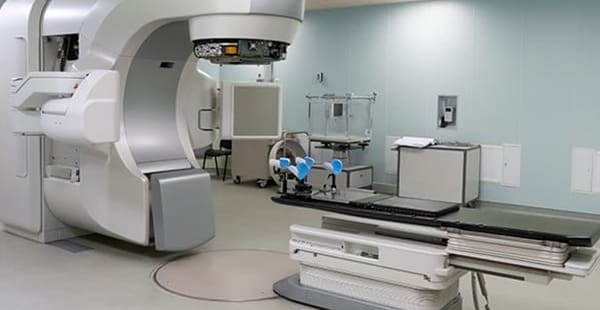
What Is IMRT?
Intensity-modulated radiation therapy (IMRT) is an advanced type of external beam radiation therapy (EBRT). EBRT is the most common type of radiation treatment used to fight cancer, including pleural mesothelioma. IMRT is often part of a multimodal treatment plan that includes other therapies like surgery.
IMRT uses a machine called a linear accelerator (LINAC) to send targeted beams of radiation into a patient’s body to damage and kill cancer cells.
Types of IMRT
Helical tomotherapy and Volumetric-Modulated Arc Therapy (VMAT) are the two primary subtypes of IMRT, which can address different needs.
- Helical tomotherapy: In this variation of IMRT, a large cylinder sends radiation beams into targeted tissue at regular intervals. The beams spiral around the patient, ensuring the radiation reaches all angles. This may be a better option for more complex or large tumors.
- VMAT: This newer variation of IMRT uses continuous radiation beams. Unlike traditional IMRT, the radiation machine does not need to be repositioned. Generally, this allows for shorter treatment sessions. It may also cut down on the amount of radiation patients need to be exposed to.
- Uses 2D imaging scans to send beams of radiation into tumors
- Can be planned quickly, so it is often used for urgent or emergency treatments
- Targets tumor tissue less precisely than IMRT
- Uses 3D imaging scans to send hundreds of beams of radiation of varying intensities into tumors
- Can take longer to plan than traditional 2D radiation
- Targets tumor tissue more precisely than traditional radiation
How Does IMRT Treat Mesothelioma?
IMRT uses high-energy X-ray beams generated by the LINAC machine to target cancerous cells and tumors in the body. It uses beams of different strengths to target malignant cells while minimizing damage to healthy tissues. IMRT may more precisely target cancer cells than traditional radiation. This may make it a good option for treating tumors close to delicate structures, like the spinal cord.
IMRT may be combined with other forms of therapy in a multimodal treatment plan for malignant pleural mesothelioma patients. IMRT is unlikely to be used to treat other types of mesothelioma, like peritoneal. Radiation therapy in general has not proven effective for non-pleural mesothelioma types.
IMRT Procedure
The IMRT procedure has three basic phases: preparation, treatment and recovery. The total process may take weeks or months.
- Preparation stage: Before the IMRT procedure, patients typically undergo imaging tests to plan the radiation sessions. The tests often involve a CT scan of the tumor area. Technicians then use image scans to conduct a treatment simulation session, or “sim.” The sim helps determine the patient’s positioning during treatment. Technicians may place dots on the body to help align the LINAC machine during treatment.
- Treatment stage: IMRT sessions typically last about 30 minutes. Sessions may be spread out over several days or weeks. The radiation technician administers the treatment from a separate room using the LINAC and observes the patient via video. The number of radiation treatments needed depends on patient factors like the severity and type of cancer.
- Recovery stage: Patients can often go home right after radiation treatments. Recovery time depends on multiple factors, including the total dose of radiation received, the number of sessions and the body part treated. Patients should discuss any side effects they experience from IMRT with their care teams.
Interested patients can talk with their oncologist or mesothelioma specialist about accessing IMRT. Patient eligibility may depend on several factors, including which facilities offer this treatment.
IMRT Clinical Trials
Some ongoing clinical trials focus on better understanding how IMRT may help treat pleural mesothelioma. One study aims to determine if IMRT, combined with surgery and chemotherapy, causes more or fewer side effects than traditional radiation treatment. Another study involves treatment with the immunotherapy drug Keytruda® and IMRT.
Researchers hope to learn how much radiation is safe for patients with inoperable pleural mesothelioma. Mesothelioma specialists can explain the potential risks and benefits of clinical trials. Interested patients should discuss trial options with their oncology teams.



What Are the Benefits and Disadvantages of IMRT?
Like most treatments, IMRT has both advantages and disadvantages. Most of the information researchers have comes from using IMRT to treat other types of cancer. The benefits of IMRT, which may also apply to mesothelioma patients, include:
- Less damage to healthy tissues: IMRT may cause less damage to nearby healthy tissues, resulting in fewer or less severe side effects for patients. It may also be a better option for treating tumors near important organs, like the brain.
- More effective dosing: IMRT can deliver higher, more effective doses of radiation to tumors than traditional radiation.
- Reduced treatment toxicity: IMRT may reduce treatment toxicity compared to the same dose of radiation administered with standard procedures.
There may be some disadvantages to undergoing IMRT therapy, too. Some downsides to IMRT treatment include:
- More time-consuming: IMRT treatments may take more time to plan out than traditional radiation. It also requires consistent, regular sessions with a dedicated team of healthcare providers.
- Side effects: IMRT treatments still have a risk of unpleasant and potentially serious side effects. Examples include appetite loss, fatigue and headaches. Doctors may be able to help ease some side effects.
Doctors can help determine what types of treatment may be the most beneficial for individual patients.
IMRT and Mesothelioma Survival
In studies, pleural mesothelioma patients treated with IMRT had median survivals ranging from about 18 to 43 months. The study patients underwent IMRT as part of a multimodal treatment plan. The average life expectancy for pleural mesothelioma is about 18 months. Clinical trials continue studying how IMRT may affect mesothelioma survival.
Questions About Mesothelioma IMRT? Ask experienced mesothelioma advocate Jennifer Lucarelli Ask a Question
What Are the Side Effects of IMRT?
Like all types of radiation treatment, IMRT may have side effects. Some of the more commonly reported side effects include fatigue, swelling or sensitivity at the treatment site and eating and digestive difficulties.
Severity and duration vary from patient to patient. Some people may only experience minimal effects that go away quickly. But IMRT does carry the risk of some more serious side effects. These are rare and may not appear until months or years after radiation treatment.
- Appetite loss
- Diarrhea
- Difficulty swallowing
- Digestive issues
- Eating problems
- Erectile dysfunction
- Fatigue
- Hair loss
- Headaches
- Lung inflammation
- Nausea
- Skin reactions
- Urinary or bladder issues
- Vomiting
Patients can discuss potential side effects of IMRT with their oncology teams. Doctors can explain which reactions may be more likely for each individual.
Common Questions About IMRT for Mesothelioma
What is the success rate of IMRT?
What cancers is IMRT used for?
IMRT has been part of successful multimodal treatment plans for a variety of cancer types, including lung cancer, prostate cancer and cancers of the head and neck.
Other cancer types treated with IMRT include:
- Breast cancer
- Cervical cancer
- Colon cancer
- Stomach cancer
- Uterine cancer
What are the disadvantages of IMRT?
What are the long-term effects of IMRT?
Long-term or late-appearing side effects from IMRT are rare but can be serious. In some cases, they may be permanent. Some possible long-term effects of IMRT are:
- Infertility
- Joint issues
- Lung problems
- Nervous system issues
- Secondary cancer
Sources
American College of Radiology. ACR–ARS PRACTICE PARAMETER FOR INTENSITY-MODULATED RADIATION THERAPY (IMRT).
Cancer Research UK. Intensity modulated radiotherapy (IMRT).
Cleveland Clinic. Intensity-Modulated Radiation Therapy (IMRT).
Cooperman Barnabas Medical Center. Intensity Modulated Radiation Therapy.
Du T, Xiao J, Qiu Z, Wu K. The effectiveness of intensity-modulated radiation therapy versus 2D-RT for the treatment of nasopharyngeal carcinoma: A systematic review and meta-analysis. PLoS One. 2019;14(7):e0219611.
Dumane VA, Rimner A, Yorke ED, Rosenzweig KE. Volumetric-modulated arc therapy for malignant pleural mesothelioma after pleurectomy/decortication. Appl Rad Oncol. 2016;5(4):28-37.
Harrabi SB, Koerber SA, Adeberg S, Katayama S, Herfarth K, Debus J, et al. Malignant pleural mesothelioma – Pleural cavity irradiation after decortication with helical tomotherapy. Rep Pract Oncol Radiother. 2017;22(5):402–7.
Imaging Technology News. VMAT vs. Tomotherapy.
Kimura T, Doi Y, Nakashima T, Imano N, Katsuta T, Takahashi S, et al. Clinical experience of volumetric modulated arc therapy for malignant pleural mesothelioma after extrapleural pneumonectomy. J Radiat Res. 2015 Mar;56(2):315–24.
Kindler HL, Ismaila N, Armato SG, Bueno R, Hesdorffer M, Jahan T, et al. Treatment of malignant pleural mesothelioma: american society of clinical oncology clinical practice guideline. J Clin Oncol. 2018 May 1;36(13):1343–73.
Knoll MA, Jagsi R, Rosenzweig K. Focal radiation therapy for cancer. JAMA Oncol. 2019 Mar 1;5(3):442.
Laughlin BS, Silva AC, Vora SA, Keole SR, Wong WW, Schild MH, et al. Long-term outcomes of prostate intensity-modulated radiation therapy incorporating a simultaneous intra-prostatic MRI-directed boost. Front Oncol. 2022;12:921465.
Lee HH, Chen CH, Luo KH, Chuang HY, Huang CJ, Cheng YK, et al. Five-year survival outcomes of intensity-modulated radiotherapy with simultaneous integrated boost (Imrt-sib) using forward IMRT or Tomotherapy for breast cancer. Sci Rep. 2020 Mar 9;10(1):4342.
Lee TT, Everett DL, Shu HKG, Jahan TM, Roach M, Speight JL, et al. Radical pleurectomy/decortication and intraoperative radiotherapy followed by conformal radiation with or without chemotherapy for malignant pleural mesothelioma. J Thorac Cardiovasc Surg. 2002 Dec;124(6):1183–9.
Matsuo Y, Shibuya K, Okubo K, Ueki N, Aoyama A, Sonobe M, et al. Long-term outcomes of intensity-modulated radiotherapy following extra-pleural pneumonectomy for malignant pleural mesothelioma. Acta Oncol. 2017 Jul;56(7):957–62.
Müdder T, Sarria GR, Henkenberens C, Holz J, Garbe S, Röhner F, et al. Dosimetric comparison between helical tomotherapy and volumetric modulated arc therapy in patients with malignant pleural mesothelioma. Clin Oncol (R Coll Radiol). 2022 Mar;34(3):164–71.
Rimner A, Zauderer MG, Gomez DR, Adusumilli PS, Parhar PK, Wu AJ, et al. Phase ii study of hemithoracic intensity-modulated pleural radiation therapy (Imprint) as part of lung-sparing multimodality therapy in patients with malignant pleural mesothelioma. J Clin Oncol. 2016 Aug 10;34(23):2761–8.
Thieke C, Nicolay NH, Sterzing F, Hoffmann H, Roeder F, Safi S, et al. Long-term results in malignant pleural mesothelioma treated with neoadjuvant chemotherapy, extrapleural pneumonectomy and intensity-modulated radiotherapy. Radiat Oncol. 2015 Dec 30;10:267.
Yeung R, McConnell Y, Warkentin H, Graham D, Warkentin B, Joseph K, et al. Intensity-modulated radiotherapy (Imrt) vs helical tomotherapy (Ht) in concurrent chemoradiotherapy (Crt) for patients with anal canal carcinoma (Acc): an analysis of dose distribution and toxicities. Radiat Oncol. 2015 Apr 17;10:92.
Free Mesothelioma Treatment Guide

Katy Moncivais, Ph.D., has more than 15 years of experience as a medical communicator. As the Medical Editor at Mesothelioma.com, she ensures our pages and posts present accurate, helpful information.

 Medically
Reviewed by
Francis Perry Wilson, MD
Senior Medical Advisor
Medically
Reviewed by
Francis Perry Wilson, MD
Senior Medical Advisor
Dr. Francis Perry Wilson is the Director of the Clinical and Translational Research Accelerator at the Yale University School of Medicine. He specializes in nephrology and clinical research.