FDA Withdraws Proposed Rule for Asbestos Testing of Cosmetic Products
Written by Tonya Nelson on June 3, 2026
- Federal law requires the FDA to create and enforce an asbestos testing rule for cosmetics.
- The FDA withdrew its proposed asbestos testing rule for cosmetics in December of 2025.
- Agency regulators have not signaled any timeline for issuing a new proposed rule.
- Cosmetics manufacturers currently have no requirement to test their products for asbestos prior to sale.
How Did We Get Here?
Congress passed the Modernization of Cosmetics Regulation Act (MoCRA) in 2022. It aims to improve the safety of cosmetic products sold and used in the United States. Part of the law addresses the problem of asbestos contamination in talcum powder products.
This issue is at the heart of ongoing litigation related to contaminated talc. Victims say they developed mesothelioma and other cancers because of asbestos in powder products. Based on evidence presented against Johnson & Johnson (J&J) in court, several juries have agreed.
MoCRA is designed to reduce this type of injury. It instructs the U.S. Food and Drug Administration (FDA) to enact regulations requiring manufacturers to test for asbestos in talc-based cosmetics. If asbestos were detected, companies could not legally sell the contaminated products.
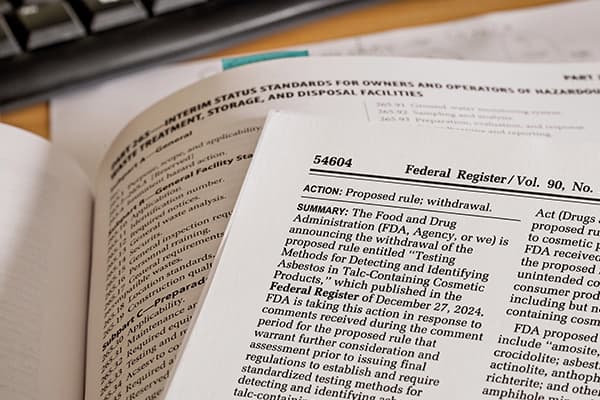
In December 2024, the agency proposed a rule to satisfy this MoCRA requirement: Testing Methods for Detecting and Identifying Asbestos in Talc-Containing Cosmetic Products. According to the rule, manufacturers would have to test each batch or lot of talc-containing cosmetics using 2 types of specialized microscopic testing. The FDA gave manufacturers several months to provide feedback on the proposed rule.
FDA Withdraws Proposed Asbestos Testing Rule for Cosmetics
Less than a year after it was proposed, the FDA withdrew the suggested asbestos testing rule. Regulators cited feedback that warranted "further consideration and assessment" in the withdrawal notice. Some commenters said the rule would have unintended consequences, like affecting medications that contain talc. Given its title, it is unclear why commenters believe the rule could be applied outside the realm of cosmetic products. The agency has provided very little additional context around its decision.
Critics Question the FDA's Actions
The Environmental Working Group (EWG) is an independent advocacy group focused on regulatory reform. According to EWG, the FDA's withdrawal of the proposed asbestos testing rule is "dangerous and irresponsible." The agency pledged to issue a new rule, but EWG's Senior Vice President of Government Affairs, Scott Faber, expressed doubts about this promise.
Without a rule in place, cosmetics manufacturers can essentially operate on the honor system. Customers have no assurance talc products have been tested for asbestos. And prominent brands have recalled cosmetics when they tested positive for asbestos after hitting shelves. This fact, alongside recent lawsuit wins against Johnson & Johnson, may drive buyers away from talc.
What Comes Next?
The withdrawal notice indicates regulators will move forward with issuing a new rule. It does not provide any kind of timeline for doing so. If the FDA seems sluggish in proposing a new rule, it may face lawsuits from groups like EWG. Given the rule was withdrawn nearly 6 months ago, legal challenges could materialize at any time.


Free Mesothelioma Treatment Guide