Many people know certain lifestyle factors can increase lung and respiratory health risks. For example, smokers have a higher risk of developing lung cancer than non-smokers. And people with a history of asbestos exposure are more likely to develop mesothelioma than those without one.
People may be less aware that scientists have identified foods that support healthy lungs. In studies, some nutrients helped protect against lung cancer and respiratory illness. Even individuals with risk factors, like a history of smoking, may benefit from a diet rich in lung-healthy foods.
To help raise awareness of these beneficial dietary choices, we compiled a list of foods that promote healthy lungs. We focused the list on things you can easily find in most grocery stores. And we included a bonus section of a few foods that might do the opposite of supporting healthy lungs.
Each food on the list has at least one of the qualifications below:
- The food or a substance it contains has been studied in people and linked to lung health benefits.
- The food or a substance it contains has demonstrated benefits in human laboratory cells.
Note: All dietary changes should be discussed with a licensed physician. Cancer patients especially should talk with their oncologists before adjusting nutrition. Doctors can help patients balance their health goals and unique nutritional needs.
- Description: A large tree nut
- Key nutrients: Fiber, vitamin E, magnesium, selenium
- Where to find it: In the bulk foods area
Analysis of nearly 70 medical studies linked selenium intake to a decreased risk of developing lung cancer. It also reduced breast and prostate cancer risks.
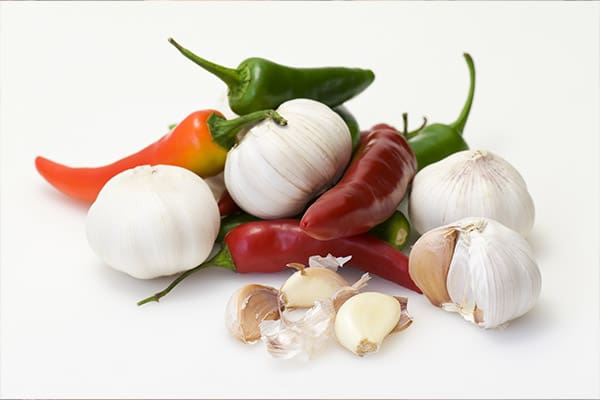
- Description: A small pepper known for its spicy flavor that may be yellow, green or red in color
- Key nutrients: Capsaicin, iron, magnesium, potassium, vitamin A, vitamin B, vitamin C
- Where to find it: In the produce aisle
In a laboratory, capsaicin stopped the first stage of lung cancer metastasis (spreading). Another study looked at more than 20,000 people who did or did not eat spicy foods. Those who ate more capsaicin-rich foods had a lower rate of deaths caused by respiratory diseases.
- Description: The seeds of the cacao tree, or the powder extracted from them, that are used to make chocolate
- Key nutrients: Calcium, fiber, flavonoids, magnesium, manganese, potassium, zinc
- Where to find it: In the baking aisle (cocoa powder) or in the bulk foods area (cocoa beans)
In a laboratory, cocoa products encouraged human lung cancer cells to die. So cocoa beans may exert protective effects against lung cancer. Another study looked at people who ate cocoa and chocolate. Those who ate chocolate a few times each week had a lower risk of heart disease. So cocoa may help lower the risk of heart disease-linked lung conditions.
- Description: The strong-smelling bulb of the Allium sativum plant
- Key nutrients: Calcium, fiber, manganese, phosphorous, vitamin B, vitamin C, zinc
- Where to find it: In the produce aisle
A study looked at garlic consumption among thousands of people. Those who ate raw garlic more than twice a week had a substantially lower risk of developing lung cancer. According to the study authors, garlic may help prevent lung cancer.
- Description: The root of a flowering plant that is used in cooking and herbal medicine
- Key nutrients: Calcium, fiber, folate, iron, magnesium, manganese, phosphorous, potassium, vitamin B, vitamin C, vitamin E, zinc
- Where to find it: In the produce or baking aisle
In a laboratory, ginger extracts relaxed human airway muscles. This muscle relaxation can help alleviate asthma symptoms. Researchers believe ginger extracts may assist traditional asthma treatments.
- Description: A liquid fat derived from whole olives
- Key nutrients: Iron, omega-3 and omega-6 fatty acids, vitamin E, vitamin K
- Where to find it: In the baking aisle near cooking sprays and oils
One study found people who consumed more vitamin E had a lower risk of dying from chronic obstructive pulmonary disease (COPD). Several studies have linked higher levels of vitamin E consumption to signs of healthy lungs.
- Description: A type of fish that lives in fresh or salt water and has pink-colored muscle
- Key nutrients: Niacin, pantothenic acid, phosphorous, protein, omega-3 fatty acids, selenium, thiamine, vitamin B
- Where to find it: At the fish counter or with frozen foods
One study looked at asthma cases in schoolchildren. Children who ate oily fish (like salmon) had fewer cases of asthma than those who did not. Another study analyzed COPD cases in adults. People who ate fish more than four times each week were less likely to develop COPD.
- Description: A bright yellow spice derived from the Curcuma longa plant that is commonly used in Traditional Chinese Medicine
- Key nutrients: Curcumin, fiber, iron, manganese, potassium, vitamin C
- Where to find it: In the produce aisle or with spices in the baking aisle
A study looked at about 80 patients with mild to moderate asthma. All patients received standard treatment, but some also took a daily curcumin supplement. Patients who took curcumin scored significantly better on a lung function test. In laboratory animals, data indicates curcumin can reduce lung inflammation.
- Description: A fermented-milk dairy product
- Key components: Calcium, healthy gut bacteria (probiotics), protein, vitamin B, vitamin D, zinc
- Where to find it: In the dairy aisle
One study looked at dietary fiber and yogurt consumption among nearly 1.5 million adults. People who often ate yogurt and fiber had a 30% reduced risk of lung cancer compared to those who ate them infrequently.
A Few Foods That May Not Support Healthy Lungs
People concerned with their lung health may also want to skip potentially harmful foods. Research indicates the foods or substances below may increase general cancer or lung cancer risks for some people.
- Alcohol: The World Health Organization recently classified alcohol as a Group 1 carcinogen. Experts say alcohol causes at least seven kinds of cancer, and there is no safe level of alcohol consumption.
- Beta-carotene: Carrots, pumpkins and other vegetables contain the antioxidant beta-carotene. Multiple studies have linked this nutrient to increased lung cancer risks for smokers and asbestos-exposed individuals. The American Lung Association recommends smokers not take any beta-carotene supplements. Smokers may want to discuss avoiding beta-carotene-rich foods with their doctors.
- Processed meat: Some data suggests eating processed meats could increase a person’s risk of lung cancer. One analysis looked at the diets and cancer diagnoses of more than 25,000 people. Those who frequently ate processed meats had a substantially higher risk of developing lung cancer.
- Red meat: Research indicates red meat consumption may increase a person’s risk of lung cancer. One study tracked the lung cancer diagnoses and dietary habits of more than 4,000 current or former smokers. Those who ate the most red meat had about 70% higher risk of lung cancer than those who ate the least.
What Does This Mean for Mesothelioma and Asbestos Lung Cancer Patients?
People with lung cancer or mesothelioma risk factors may want to discuss the information above with a doctor. Nutritional needs can vary significantly between individuals. For cancer or mesothelioma patients, an oncologist can discuss how certain foods may affect treatment or recovery. The doctor can also refer you to a dietitian who can design a personalized plan that includes lung-healthy foods.


Sources
Abidi A, Gupta S, et al. Evaluation of Efficacy of Curcumin as an Add-on therapy in Patients of Bronchial Asthma. Journal of Clinical and Diagnostic Research. August 2014;8(8):HC19-HC24. doi: 10.7860/JCDR/2014/9273.4705
Alpha-Tocopherol, Beta Carotene Cancer Prevention Study Group. The effect of vitamin E and beta carotene on the incidence of lung cancer and other cancers in male smokers. The New England Journal of Medicine. April 1994;330(15):1029-1035. doi: 10.1056/NEJM199404143301501
Bauer D, de Abreu JP, et al. Antioxidant Activity and Cytotoxicity Effect of Cocoa Beans Subjected to Different Processing Conditions in Human Lung Carcinoma Cells. Oxidative Medicine and Cellular Longevity. 2016;2016:7428515. doi: 10.1155/2016/7428515
Djoussé L, Hopkins PN, et al. Chocolate Consumption is Inversely Associated with Prevalent Coronary Heart Disease: The National Heart, Lung, and Blood Institute Family Heart Study. Clinical Nutrition. April 2011;30(2):182-187. doi: 10.1016/j.clnu.2010.08.005
Garcia-Larsen V, Thawer N, et al. Dietary Intake of Flavonoids and Ventilatory Function in European Adults: A GA²LEN Study. Nutrients. January 2018;10(1):95. doi: 10.3390/nu10010095
Gnagnarella P, Maisonneuve P, et al. Red meat, Mediterranean diet and lung cancer risk among heavy smokers in the COSMOS screening study. Annals of Oncology. October 2013;24(10):2606-2611. doi: 10.1093/annonc/mdt302
Goodman GE, Thornquist MD, et al. The Beta-Carotene and Retinol Efficacy Trial: incidence of lung cancer and cardiovascular disease mortality during 6-year follow-up after stopping beta-carotene and retinol supplements. Journal of the National Cancer Institute. December 2004;96(23):1743-1750. doi: 10.1093/jnci/djh320
Jin Z-Y, Wu M, et al. Raw garlic consumption as a protective factor for lung cancer, a population-based case-control study in a Chinese population. Cancer Prevention Research. July 2013;6(7):711-718. doi: 10.1158/1940-6207.CAPR-13-0015
Lv J, Qi L, et al. Consumption of spicy foods and total and cause specific mortality: population based cohort study. The BMJ. August 2015;35:h3942. doi: 10.1136/bmj.h3942
Omenn GS, Goodman GE, et al. Risk factors for lung cancer and for intervention effects in CARET, the Beta-Carotene and Retinol Efficacy Trial. Journal of the National Cancer Institute. November 1996;88(21):1550-1559. doi: 10.1093/jnci/88.21.1550
Saadeh D, Salameh P, et al. Prevalence and association of asthma and allergic sensitization with dietary factors in schoolchildren: data from the french six cities study. BMC Public Health. September 2015;15:993. doi: 10.1186/s12889-015-2320-2
Tsiligianni IG and van der Molen T. A systematic review of the role of vitamin insufficiencies and supplementation in COPD. Respiratory Research. December 2010;11(1):171. doi: 10.1186/1465-9921-11-171
Wu K, Liu L, et al. The relationship between processed meat, red meat, and risk of types of cancer: A Mendelian randomization study. Frontiers in Nutrition. September 2022;9:942155. doi: 10.3389/fnut.2022.942155
Free Mesothelioma Treatment Guide

Tara Strand specializes in writing content about mesothelioma and asbestos. She focuses on topics like mesothelioma awareness, research, treatment, asbestos trust funds and other advocacy efforts.