5 Things to Know About Popcorn Ceilings Before You Remodel
Written by Tonya Nelson on April 29, 2026
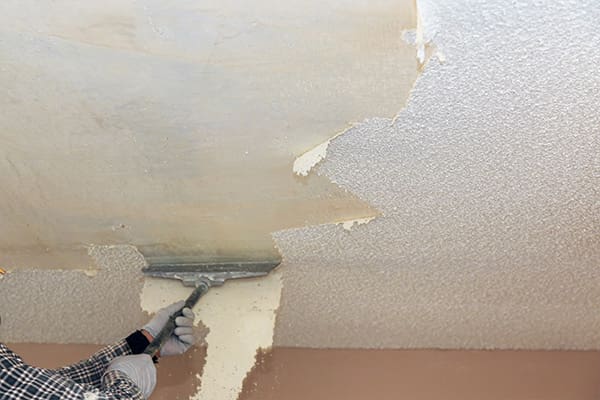
Many homeowners are removing popcorn ceilings during renovations. Changing design trends have made this once-popular texture seem outdated. These ceilings can even lower the value of a home.
Before remodeling, it’s critical for renovators to consider the potential risks of old popcorn ceilings. Asbestos is a dangerous mineral that can cause cancers like mesothelioma. Keep reading to learn which textured ceilings might have asbestos and what you can do about it.
1: You May Need a Pre-Renovation Inspection Before Remodeling
The first step in remodeling a textured ceiling is to figure out if it contains asbestos. The best approach is hiring a professional inspector to take and test a sample.
Renovators should assume popcorn ceilings installed before the mid-1990s contain asbestos. In the past, many companies added it into spray-on textures to boost heat resistance.
Homeowners and other renovators should not disturb untested textured ceilings. Asbestos professionals have the protective gear and training to more safely sample and test materials.
Collecting samples on your own puts you at risk of serious illnesses. Even a single exposure to asbestos may cause mesothelioma and other asbestos diseases. Leaving the sampling and testing to professionals is a much safer option.
2: Removal Process and Cost Depend on Inspection Outcome
The cost of removing a popcorn ceiling varies, depending on whether the inspector finds asbestos. If the sample tests positive for the mineral, renovators should hire professional abatement specialists to remove the ceiling.
Interior asbestos removal tends to cost around $9 – $20 per square foot. To give you an idea, the average living room in U.S. homes is about 216 square feet. Removing an asbestos popcorn ceiling in a room this size would cost about $2,000 – $4,000. The cost covers things like:
- Labor
- Materials
- Planning
- Safety gear
If an inspector doesn’t find asbestos, hiring non-abatement contractors may be cheaper. For example, they may not need to seal off the area or take other precautions. Homeowners can also remove asbestos-free popcorn ceilings themselves as a DIY project.
- Protecting the room: Scraping a ceiling is messy. Drop cloths, tarps and plastic sheeting can help protect the room and furniture from getting dirty.
- Removing fixtures: Removing fans, lights and other ceiling fixtures can make scraping easier. Before and after removing these, renovators should turn off electricity to the room.
- Using personal protective equipment (PPE): Even though the ceiling does not contain asbestos, using PPE is still important. Scraping can kick up dust and other fine particles you do not want to inhale. Experts suggest using an N95 mask or respirator.
- Spraying the ceiling: Scraping textured ceiling is easier wet than dry. A large sprayer can help distribute water across your ceiling.
- Scraping the ceiling: Renovators can use a wide putty knife or drywall taping knife to scrape the texture off.
- Priming and painting: Once scraped, you’ll probably be left with bare sheetrock. You can prime and paint the sheetrock to finish the job.
3: You Can Choose to Keep an Asbestos Popcorn Ceiling
If your popcorn ceiling contains asbestos, you may have the option to do nothing. Asbestos popcorn ceilings in good condition are generally considered safe. As long as the texture is intact and shows no signs of flaking or crumbling, you may choose to leave it as is. Or you might encapsulate the ceiling, which involves hiring a professional to treat it with a sealant.
Some people may want to remove the texture for reasons other than potential asbestos exposure. Popcorn ceilings have fallen out of fashion in the past few decades. People may want to remove this texture to get a different look before putting the house up for sale.
4: You Can Cover an Asbestos-Free Popcorn Ceiling
Another option for getting rid of a popcorn ceiling is to cover it up. For example, planked ceilings can be relatively easy to install over textured spray-on materials. Covering the ceiling may be cheaper than removing it.
Renovators have the option of planking over asbestos-free popcorn ceilings themselves. They can also hire contractors to perform this job.
5: You Can Embrace the Retro Spirit and Install a New Popcorn Ceiling
Asbestos-free popcorn ceilings are not dangerous, though they’re a less common style today. Some companies still sell this type of texture, just without the asbestos. Popcorn ceilings also provide practical benefits, including:
- Affordability: Textured sprays are relatively cheap and easy for DIYers to use.
- Flexibility: Popcorn ceilings can accommodate a certain amount of movement without cracks forming.
- Improved acoustics: Textured ceilings can help reduce ambient noise and echoes in a room. They can also help dampen sounds from, for example, upstairs neighbors.
- Simplicity: Popcorn ceilings are an easy way to cover up imperfections without doing a lot of drywall finishing.
So, if your current renovation plans involve adding popcorn ceilings, it can still be a helpful and budget-friendly option!


Free Mesothelioma Treatment Guide