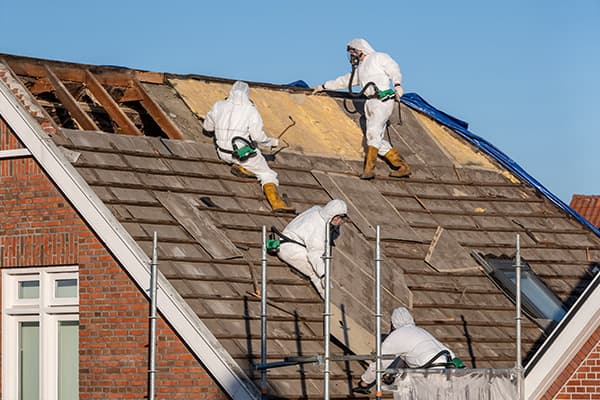
Legacy asbestos refers to asbestos-containing materials manufactured or installed decades ago. These materials still exist in many buildings, products and public spaces today. Regulations limit new asbestos use but do not require the removal of what was already in place.
This leaves asbestos in floor and ceiling tiles, insulation, pipe wrap and other building products, as well as commercial products circulating in secondary markets. People may still encounter it in everyday spaces like homes, workplaces and schools. Regulators say legacy asbestos is a source of ongoing asbestos exposure and illness.
Keep reading to learn 6 surprising facts about legacy asbestos.
1: Building Owners Can Legally Leave Legacy Asbestos in Place
Many people assume that construction rules and product bans require owners to remove asbestos from their buildings. In most cases, that did not happen. Rules in the United States mainly focused on stopping new uses. The regulations allowed existing asbestos materials to stay if they appeared undamaged. This policy left asbestos inside many older buildings across the country.
2: Most Asbestos Exposure Today Comes From Old Materials
Today, most exposures to asbestos come from materials installed decades ago. As early as the 1960s, research showed a clear link between asbestos and mesothelioma. Over the next few decades, public awareness grew, and many companies stopped using asbestos in new products. Even where some uses remained legal, asbestos became far less common.
Because of that shift, the main concern today is not new products. It is the asbestos already in place in older buildings and materials.
3: Your Eyes Can’t Tell if a Material Contains Asbestos
You can't tell if something contains asbestos just by looking at it. Asbestos fibers are microscopic. A floor tile or pipe wrap may look normal even if it contains asbestos. In some cases, product labels or records may help identify materials, but visual inspection alone is not reliable.
Before the 1980s, manufacturers added asbestos to many common building materials, including floor tiles, cement products, insulation, coatings and more. Many of these materials remain in use today.
4: Undisturbed Doesn’t Mean Harmless With Asbestos
Some people believe asbestos poses a risk only when someone disturbs it. But materials can weaken on their own over time. Water damage, vibration, heat and general wear can also break down materials. Once asbestos fibers escape, they can settle on surfaces and become airborne again during normal activity.
Asbestos fibers are too small to be seen with the naked eye. They can mix with dust and stay in the air for hours after a disturbance. Once airborne, asbestos can be inhaled by anyone in the area, putting them at risk of serious illnesses.
5: Legacy Asbestos Still Causes Cancer Today
Mesothelioma takes 10 – 50 years to develop. This latency period explains why new mesothelioma cases can occur long after heavy asbestos use declined. Older asbestos materials can still cause mesothelioma and other illnesses today. Workplaces, home repair projects and contaminated environments remain potential sources of exposure.
6: Workers and Families Face Ongoing Risk
Construction workers, building staff and renovation crews may work around older materials that contain asbestos. Regulations now require professionals to complete checks and use controlled work practices before major renovation or demolition. These steps can lower exposure risk.
But smaller projects and DIY renovations are not subject to regulations. Homeowners and others take on a risk with these smaller projects. You should hire an asbestos inspector to see if older products contain asbestos before starting a DIY renovation.
Maintenance, remodeling, cleanup and demolition work can disturb materials that contain asbestos. When this happens, fiber levels may rise indoors for a period of time, and people in the building may breathe in these fibers.
Family members can also face exposure if asbestos dust travels home on work clothes, shoes or tools. Researchers have found mesothelioma cases linked to this kind of household exposure, not just direct contact at job sites. This shows how asbestos can reach beyond the workplace to affect entire families and communities.


Sources
Laborers’ Health and Safety Fund of North America. EPA BANS ASBESTOS, YET LEGACY ASBESTOS REMAINS WIDESPREAD HEALTH THREAT.
Open Access Government. Legacy asbestos: An ongoing public health risk.
Spear T. Legacy Asbestos, the Third Wave of Asbestos Disease, and Implications for Domestic Exposure. MRAJ. 2021;9(8). doi:10.18103/mra.v9i8.2517
United States Environmental Protection Agency. Information for Owners and Managers of Buildings that Contain Asbestos.
United States Environmental Protection Agency. Risk Evaluation for Asbestos Part 2: Supplemental Evaluation Including Legacy Uses and Associated Disposals of Asbestos.
Free Mesothelioma Treatment Guide