Mesothelioma Trial Will Include Drug Tested for COVID-19
Written by Katy Moncivais, PhD on March 3, 2022
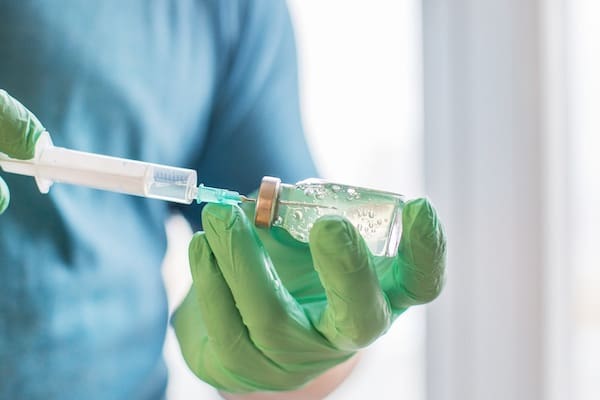
A proposed study plans to take a new approach to multimodal mesothelioma treatment. Researchers intend to treat mesothelioma patients with a combination of immunotherapy and a drug recently tested against COVID-19.
The two components are:
- Pembrolizumab (Keytruda®)
- A new drug called OT-101
OT-101 is an antisense drug developed by Oncotelic Therapeutics, Inc. Antisense drugs naturally bind to and block molecules used to make certain proteins. OT-101 has shown promise treating COVID-19 in early trials. It interferes with a cellular pathway used by both mesothelioma cells and the COVID-19 virus. The developers of OT-101 hope this combination will have better efficacy than Keytruda® alone.
The goal is to help [mesothelioma] patients live longer, better lives.
OT-101 Has Been Tested in Cancers and COVID-19
Oncotelic Therapeutics, Inc. is developing OT-101 as a treatment for cancer and some viruses. OT-101 blocks production of a protein called transforming growth factor beta two (TGF-β2). TGF-β2 may help cancer cells and viruses evade the immune system. Blocking this protein may allow healthy immune cells to attack cancer cells.
According to company officials, OT-101 has achieved “good efficacy” in early clinical trials. These trials have investigated the drug in at least two types of patients:
- Individuals diagnosed with COVID-19
- Patients with solid tumors (similar to mesothelioma)
Trial Results: OT-101 for Glioblastoma
In one trial, researchers studied 0T-101 against glioblastoma, a challenging form of brain and spinal cancer. About 25% of patients receiving OT-101 experienced a response to treatment. This means their tumors decreased in size or disappeared. About 9% of patients also saw no signs of tumor growth or progression for six months or longer.
OT-101 is also called trabedersen.
Some study patients also experienced prolonged survival. About 33% of OT-101-treated patients achieved a median survival of 3.5 years. This represents a 3-year improvement versus standard chemotherapy treatment.
Trial Results: OT-101 for COVID-19
OT-101 also performed well against COVID-19. Researchers treated all patients with standard treatment. Patients also received either OT-101 or a placebo. The OT-101 patients had a mortality rate about 75% lower than the placebo patients.
A placebo is an inactive substance, sometimes described as a “sugar pill.” Researchers use placebos to keep patients from knowing which treatment they received. This makes it easier to understand the true effects of a new drug.
Dr. Vuong Trieu, CEO and Chairman of Oncotelic, called the results “gratifying.” Dr. Trieu also alluded to future development of OT-101 as a treatment for other respiratory illnesses, including the flu.
COVID-19 and Cancers Like Mesothelioma Exploit Similar Pathways
In these early clinical trials, OT-101 demonstrated efficacy against cancer and COVID-19. It is relatively uncommon for a drug to have such broad applications. However, OT-101 has a property that sets it apart from other drugs.
OT-101 blocks an important protein (TGF-β2) implicated in both conditions. Tumor cells and the COVID-19 virus use TGF-β2 to avoid the immune system. By blocking the protein, OT-101 allows the immune system to attack infected cells more effectively.
Blocking TGF-β2 may also allow immune cells to recognize and attack cancer cells. This might make existing cancer treatments, such as immunotherapy, more effective.
OT-101 / Keytruda® Combination Provides New Approach to Enhancing Immunotherapy
OT-101 has achieved promising early results in treating solid tumors. The newly announced trial plan will determine if these results apply to mesothelioma. It may be the first mesothelioma trial ever to investigate a TGF-β2-blocking drug in combination with immunotherapy.
The immunotherapy component, pembrolizumab (Keytruda®), has already been tested in mesothelioma. As a single pleural mesothelioma treatment, Keytruda® did not extend survival versus chemotherapy.
However, Keytruda® has shown promise coupled with CAR T-cell therapy. Mesothelioma patients who received both treatments achieved a median survival of about two years. This approach extended survival by more than a year compared to earlier treatments.
Clinical trials accomplish several things, including:
- Developing new methods for detection and diagnosis of cancer
- Telling doctors which new treatments are safe and effective
- Helping improve quality of life for cancer patients
By participating in clinical trials, patients add their cancer experiences to the scientific record. In doing so, they help improve treatment and quality of life for future patients. Ultimately, clinical trials help us all make progress in the fight against cancer.
It is too soon to tell whether OT-101 and Keytruda® will achieve similar or better efficacy compared to Keytruda® and CAR T cells. The proposed clinical trial will help researchers study this question.
The study proposal was submitted for approval in December 2021. At the time of publication, no clinical trial records indicating approval yet exist. The study plan and protocol may still be in development.
Clinical trials like this one provide expanded treatment options for many mesothelioma patients. Those interested in treatment with OT-101 and Keytruda® should discuss options with a mesothelioma doctor. The doctor can help determine the best treatment approach.


Sources
Ferreira-Gomes M, Kruglov A, et al. SARS-CoV-2 in severe COVID-19 induces a TGF-β-dominated chronic immune response that does not target itself. Nature Communications. March 2021;12(1):1961. doi: 10.1038/s41467-021-22210-3
National Cancer Institute. What Are Clinical Trials?. November 2021.
Oncotelic. Oncotelic’s Dr. Anthony Maida to Present at 2nd Annual TGF-β for Immuno-Oncology Drug Development Summit in January 2022. December 2021.
Oncotelic. Oncotelic Initiates Phase 2 Trial Evaluating OT-101 in Combination with KEYTRUDA® for Mesothelioma. December 2021.
Oncotelic. Oncotelic Presenting at BiotechGate Digital Partnering. January 2022.
Popat S, Curioni-Fontecedro A, et al. A multicentre randomised phase III trial comparing pembrolizumab versus single-agent chemotherapy for advanced pre-treated malignant pleural mesothelioma: the European Thoracic Oncology Platform (ETOP 9-15) PROMISE-meso trial. Annals of Oncology. December 2020;31(12):1734-1745. doi: 10.1016/j.annonc.2020.09.009
Stupp R, Wong ET, et al. NovoTTF-100A versus physician’s choice chemotherapy in recurrent glioblastoma: a randomised phase III trial of a novel treatment modality. European Journal of Cancer. September 2012;48(14):2192-202. doi: 10.1016/j.ejca.2012.04.011
Uckun FM, Qazi S, et al. Recurrent or Refractory High-Grade Gliomas Treated by Convection-Enhanced Delivery of a TGFβ2-Targeting RNA Therapeutic: A Post-Hoc Analysis with Long-Term Follow-Up. Cancers (Basel). December 2019;11(12):1892. doi: 10.3390/cancers11121892
Free Mesothelioma Treatment Guide

Katy Moncivais, Ph.D., has more than 15 years of experience as a medical communicator. As the Medical Editor at Mesothelioma.com, she ensures our pages and posts present accurate, helpful information.