Medical Marijuana

Medical marijuana has helped many cancer patients with nausea and vomiting. It generally comes from the Cannabis plant. But some people use hemp products with the same active ingredients as those in Cannabis. Mesothelioma patients may use these products to help with symptoms and side effects.
Learn About Mesothelioma Treatments in Our Free Guide
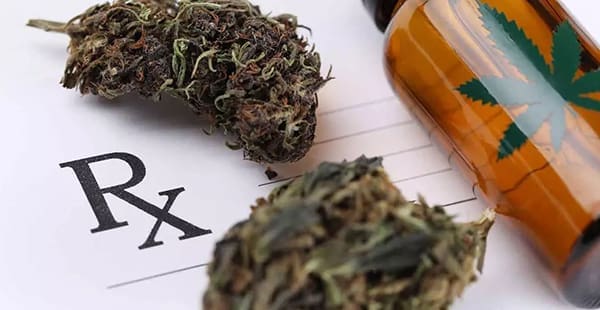
What Is Medical Marijuana?
Marijuana comes from the Cannabis plant. It goes by many names, including grass, hash, weed, ganja and dozens more. When people use Cannabis to treat health conditions, it is known as medical marijuana. Cancer patients may use it to relieve nausea, vomiting or pain.
The effects of marijuana stem from substances known as cannabinoids. Among these, delta-9-tetrahydrocannabinol (THC) and cannabidiol (CBD) have been well-studied. They can be found in prescription and over-the-counter products.
Medical marijuana comes in many forms, including:
- Creams: Topical lotions for use on the skin
- Dried Cannabis: Leaves and buds for teas, joints or vaporizing
- Edibles: Candies, baked goods, etc.
- Oils: Liquids for vaping, vaporizing or mixing into foods and drinks
- Pills: Tablets or gelcaps
- Sprays: Fluids for placing under the tongue or on the gums
Mesothelioma patients often experience shortness of breath, so they may prefer edible or topical medical marijuana over inhalable forms. But regulators encourage caution because you can easily take a higher dose than intended.
Paying close attention to the amount of THC in edibles may help. Experts say a dose of 2.5 to 5 milligrams works well for the average patient. Alternatively, you could ask your doctor about prescription forms of medical marijuana. These medications come in predictable, controlled doses.
FDA-Approved Forms of Medical Marijuana
The U.S. Food and Drug Administration (FDA) has approved four Cannabis-based medications:
| Drug | Approved to Treat |
| Cesamet® (nabilone) |
|
| Epidiolex® (cannabidiol) |
|
| Marinol® (dronabinol) |
|
| Syndros® (dronabinol) |
|
Other Cannabis-based drugs are still in development. So these options may expand as new study results come out.
How Do You Get Medical Marijuana?
To get medical marijuana, you need to first decide on the format. You can get FDA-approved Cannabis-based drugs in any state with a prescription from your doctor. For other medical marijuana products, the process is more complex because of the legal landscape.
Federal law bars the use of the entire Cannabis plant or parts of it. But the use of hemp, which also contains CBD and THC, is legal as long as it has less than a certain level of THC. Many products people know as medical marijuana actually come from the hemp plant.
Some states have also legalized FDA-unapproved medical products from the Cannabis plant. In these areas, patients often have to obtain a medical marijuana card. This card verifies that a person has a legitimate health-related need for medical marijuana.
The process for obtaining a card varies from state to state. But several websites offer nationwide help to patients seeking a medical marijuana card. You can use one of these websites or ask your doctor for guidance with this process. They can also provide help in choosing a dispensary and specific products.
How Can Medical Marijuana Help Mesothelioma Patients?
Mesothelioma patients might consider medical marijuana as a complementary treatment. It may help ease their cancer symptoms and some treatment side effects. Potential benefits of medical marijuana include:
- Decreasing pain
- Easing nausea
- Reducing or stopping vomiting
Some patients may also experience reduced anxiety and improved sleep. But research into these potential benefits is still in the early stages. A mesothelioma specialist can explain if and how medical marijuana can help you. The doctor can also review possible side effects and how to manage them.
Risks of Medical Marijuana
Medical marijuana can also come with unwanted side effects, including:
- Allergic reactions
- Changes in balance
- Confusion
- Dizziness
- Dry mouth
- Fainting
- Fast heart rate
- Fatigue or sleepiness
- Feeling “high”
- Hallucinations
- High blood pressure
- Increases in risky behavior
- Issues with focus and concentration
- Lightheadedness
- Loss of coordination (clumsiness)
- Low blood pressure
- Memory issues
- Mood disturbances
- Nausea
- Paranoid feelings
- Vomiting
- Worsening of brain fog or chemo brain
These are just the possible downsides of medical marijuana, and each person’s experience is unique. Despite these potential side effects, thousands of patients use medical marijuana each year.
Questions About Alternative Mesothelioma Treatments? Ask experienced mesothelioma advocate Jennifer Lucarelli Ask a Question
Medical Marijuana Clinical Studies
Scientists have studied marijuana as an herbal medicine for hundreds of years. Currently, research is focused on three main areas:
- Managing symptoms of cancer and side effects of its treatment
- Preventing or killing cancer cells
- Treating neurodegenerative conditions
Key studies in these areas include:
- 2025: CBD allowed breast cancer patients to continue an important treatment protocol. It helped by decreasing muscle and bone pain linked to an important drug.
- 2025: CBD alone or with exercise helped improve quality of life for cancer survivors with peripheral neuropathy.
- 2018: In a small study, a CBD/THC spray helped reduce overactive bladder symptoms in multiple sclerosis patients.
ClinicalTrials.gov currently lists more than 150 clinical studies investigating Cannabis for medicinal purposes. No current research indicates Cannabis alone is an effective treatment for cancer. But some data suggests it may interfere with certain cancer drugs. Check with your oncologist before adding any THC or CBD products to your cancer care plan.
 Did You Know?
Some effective treatments are available for mesothelioma that insurance does not cover.
Financial assistance is available to mesothelioma patients.
Did You Know?
Some effective treatments are available for mesothelioma that insurance does not cover.
Financial assistance is available to mesothelioma patients.
Questions to Ask Your Doctor
Medical marijuana has helped many cancer patients, but that doesn’t mean it’s right for everyone. You can discuss its benefits and risks with your oncologist. The questions below can help guide that conversation.
- Is medical marijuana legal in this state for my condition?
- Do I need to fill out or file any paperwork to use medical marijuana?
- How can medical marijuana specifically help me?
- Which side effects could I experience, and are there ways to avoid or minimize them?
- Could medical marijuana interfere with my treatment or other medications?
- Which form and dose of medical marijuana is best for me?
- Should I stop any regular activities while using medical marijuana?
- What are my options if medical marijuana doesn’t work?

Is Medical Marijuana Legal?
Under federal law, Cannabis is classified as a Schedule I substance. This means authorities believe it has a high potential for dependency but no legitimate medical use. So Cannabis cannot be legally prescribed, held or sold under federal law. FDA-approved Cannabis-based drugs are not the same as illegal Cannabis. And hemp with less than 0.3% THC by weight was legalized in the 2018 Farm Bill.
Despite federal law, most U.S. states and territories have legalized medical marijuana. The map below shows the legality status of state Cannabis programs.
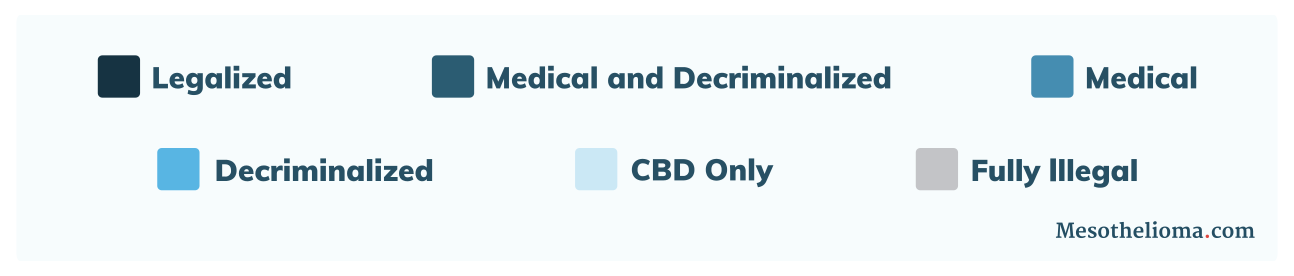
Last Updated: January 2026
Note: State status reflects current laws at the time of update, not pending legislation or future dates upon which marijuana becomes available medicinally or recreationally.
As the laws are fast-changing, you can view an updated map through the National Conference of State Legislators.
Common Questions About Medical Marijuana
How can people use medical marijuana if it’s illegal under federal law?
Can medical marijuana interact with my usual medications?
Which strain and type of medical marijuana is best for me?
Sources
Breastcancer.org. Medical Cannabis.
CancerCare. Medical Marijuana and Cancer.
Earlybird. Full Spectrum CBD Tincture.
ElSohly MA, Majumdar CG, Chandra S, Radwan MM. A 10-year trend in cannabis potency (2013-2022) in different geographical regions of the United States of America. Front Public Health. 2024;12:1442522.
Fleege NMG, Miller EA, Kidwell KM, Zacharias ZR, Houtman J, Scheu K, et al. Pilot study of cannabidiol for treatment of aromatase inhibitor-associated musculoskeletal symptoms in breast cancer. Cancer Med. 2025 Aug;14(15):e71117.
Liu EY, McCall KL, Piper BJ. Pronounced state-level disparities in prescription of cannabinoids to medicaid patients. Med Cannabis Cannabinoids. 2023;6(1):58–65.
National Cancer Institute. Cannabis and Cannabinoids (PDQ®)–Health Professional Version.
National Cancer Institute. Cannabis and Cannabinoids (PDQ®)–Patient Version.
The University of Sydney. History of cannabis.
U.S. Food and Drug Administration. Cesamet® (nabilone).
U.S. Food and Drug Administration. HIGHLIGHTS OF PRESCRIBING INFORMATION EPIDIOLEX.
U.S. Food and Drug Administration. HIGHLIGHTS OF PRESCRIBING INFORMATION MARINOL.
U.S. Food and Drug Administration. HIGHLIGHTS OF PRESCRIBING INFORMATION SYNDROS.
United States Drug Enforcement Administration. Marijuana.
Vigano M, Kubal S, Habib S, Samarani S, Kasvis P, Koudieh N, et al. Cannabidiol and multi-modal exercise for chemotherapy-induced peripheral neuropathy in cancer survivors. Support Care Cancer. 2025 Jun 4;33(7):534.
Voicu V, Brehar FM, Toader C, Covache-Busuioc RA, Corlatescu AD, Bordeianu A, et al. Cannabinoids in medicine: a multifaceted exploration of types, therapeutic applications, and emerging opportunities in neurodegenerative diseases and cancer therapy. Biomolecules. 2023 Sep 14;13(9):1388.
Free Mesothelioma Treatment Guide

Katy Moncivais, PhD, has more than 15 years of experience as a medical communicator. As the Medical Editor at Mesothelioma.com, she ensures our pages and posts present accurate, helpful information.