How Common Is Asbestos in Makeup? New Data on Talc-Based Cosmetics
Written by Tara Strand on June 5, 2026
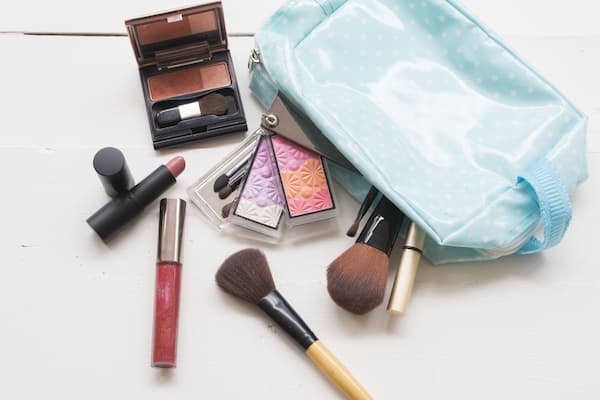
Every day, millions of Americans apply powder-based cosmetics without knowing that talc can carry a naturally occurring contaminant: asbestos. At Mesothelioma.com, we set out to measure how widespread that risk may be.
Using publicly available data from the U.S. Food and Drug Administration (FDA) and the Environmental Working Group (EWG) Skin Deep Cosmetics Database, we built a risk index covering over 8,000 talc-containing products currently on the U.S. market. What we found raises serious questions about consumer safety, regulatory oversight and the limits of "clean beauty" marketing.
How We Reported This
We analyzed 8,810 talc-containing cosmetic products from the EWG Skin Deep Cosmetics Database and cross-referenced them against FDA enforcement records from 2009 to 2023. Each product received a composite risk score based on format, EWG hazard rating and FDA enforcement history. Each product was then grouped into 4 tiers from Low to Critical. This index reflects relative risk based on product characteristics and historical data, not confirmed asbestos contamination in each product.

What We Found
- The FDA tested 236 cosmetic products across 5 rounds, and 9 tested positive for asbestos. Before being recalled, they were sold at Walmart, Amazon, Claire's and Justice stores.
- There is no federal requirement to test makeup for asbestos. The FDA proposed a rule in 2024 but withdrew it less than a year later. The European Union (EU) requires testing, but the United States doesn't.
- 92% of powder-based products scored High or Critical risk across the 8,810 products analyzed. That includes 89% of blushes and 88% of eyeshadows.
- Based on average scores, powder makeup is 62% riskier than creams and 120% riskier than liquids.
- Most "clean beauty" labels don't include testing for asbestos. Only EWG Verified and MADE SAFE ban talc, but programs like Clean at Sephora and Leaping Bunny don't.
Talc and Asbestos: Why This Matters
The risk isn't theoretical. FDA testing has already turned up asbestos in nine cosmetic products sold through major U.S. retailers, including chains popular with teens and tweens.

Talc and asbestos are naturally occurring minerals that often form near each other. As a result, talc can be contaminated with asbestos during mining. Because asbestos is a known carcinogen, health authorities, including the Occupational Safety and Health Administration (OSHA) and the Environmental Protection Agency (EPA), agree that there is no safe level of asbestos exposure.
Why Powder Format Is the Biggest Risk
When a powder-based cosmetic is applied, fine particles can become airborne. If the makeup is contaminated with asbestos, those fibers may be inhaled and become trapped in the lungs, where they may cause health problems over time. Wet formulations such as creams and liquids are generally less likely to create the same kind of airborne particle exposure during normal use.
What Asbestos Exposure Can Cause
- Mesothelioma cancer: A rare and aggressive cancer that develops in the lining of the lungs, abdomen or heart. Asbestos exposure is its only confirmed cause.
- Lung cancer: This cancer may develop when asbestos fibers become lodged in the lung tissue.
- Asbestosis: A chronic lung-scarring disease that makes breathing progressively more difficult.
Asbestos-related diseases often have a long latency period. For mesothelioma, symptoms commonly appear 10 – 50 years after initial asbestos exposure, meaning someone harmed today may not receive a diagnosis for decades. Awareness is the first line of defense.
Where Asbestos Risk Shows Up Most in Makeup
Not all makeup products carry the same level of asbestos risk. We scored each cosmetic on a 0 – 100 scale based on product format, EWG hazard ratings and FDA enforcement history. Products scoring 50 or above are considered high risk.

Some categories scored higher because of how the products are used and the likelihood they will release airborne particles. Other categories showed lower risk, suggesting that format plays a key role.

Eyeshadows are the riskiest category, with an average asbestos risk score of 54 out of 100. Blushes, bronzers and setting powders follow closely, each scoring 53.
Most of these products fall into higher-risk ranges, including 89% of blushes, 89% of bronzers and 85% of powders. Among the 1,537 eyeshadow products analyzed, 88% scored 50 or above, while fewer than 1% were considered low risk.
Foundation and concealer score significantly lower, with average risk scores of 36 and 29, respectively, likely because of their liquid or cream formats.
How Format Drives Risk
Breaking the database down by product format makes the gap even clearer. Powders sit in a different risk category than creams or liquids, both in average score and in how many products land in the High or Critical tiers.

Powder-based products have an average risk score of 55. They are 62% riskier than creams and 120% riskier than liquids.
Asbestos is most dangerous when its fibers become airborne and are inhaled. Skin contact isn't considered the primary route of harm, which is why powder products raise greater concern than liquid formulations.
The Regulatory Gap
All of this risk exists inside a regulatory environment that doesn't require asbestos testing in U.S. cosmetics. The FDA proposed a testing rule in 2024 and withdrew it the following November, leaving consumers without federal protection.

While overall risk varies by product type, confirmed asbestos findings are more concentrated among specific brands and products.
Where Confirmed Asbestos Contamination Is Concentrated
FDA testing has identified a small group of products with confirmed asbestos contamination. A closer look at those findings reveals clear patterns in both brand concentration and product type.

All 9 cosmetic products that tested positive for asbestos were powder-based. Just 3 brands account for every FDA-confirmed asbestos-positive product identified in this analysis:
- Beauty Plus Global products received the highest risk scores, averaging 96.5 out of 100. These scores reflect both confirmed asbestos findings and the highest possible hazard ratings in the EWG database.
- Claire's and Justice products also ranked among the highest-risk items. Both brands primarily market to tweens and teens, meaning younger consumers were more likely to encounter products later found to be contaminated.
Not every high-risk product has been tested by the FDA. Products 10 – 12 in this analysis received Critical risk scores because of their powder format and maximum EWG hazard ratings. But they haven't been confirmed to contain asbestos through FDA testing.
The FDA & Asbestos in Cosmetics: A Decade of Testing
The FDA has tested cosmetics for asbestos in five rounds since 2009. The 2019 round is the only one to return positive results, and it set off the wave of recalls that followed.

Each recall and regulatory action since then has added to a longer story about how oversight has, and hasn't, kept pace with the findings.

- The FDA tested 236 cosmetic products across 5 rounds between 2009 and 2023. In 2019, 9 of 52 products (17%) tested positive for asbestos.
- Four waves of recalls occurred between 2017 and 2019: Justice (September 2017), Claire's (March 2019), a second wave affecting Claire's and Beauty Plus products (May 2019) and Beauty Plus Global (September 2019).
- The Modernization of Cosmetics Regulation Act (MoCRA) was signed into law in December 2022, giving the FDA new authority over cosmetics. In December 2024, the agency proposed a rule requiring standardized asbestos testing for talc products.
- In November 2025, the FDA withdrew the proposed testing rule, leaving no federal mandate in place. The EU requires testing, but the United States does not.

Safer Makeup Alternatives
EWG Verified talc-free alternatives are available across all 6 major makeup categories, from brands including Well People, ATTITUDE, Crunchi, Counter and Honest Beauty.

Being "rated" on EWG Skin Deep isn't the same as being EWG Verified. Brands like ILIA, RMS Beauty and Kosas appear in the database but haven't completed the stricter Verified certification process.
EWG Verified and MADE SAFE are the two certifications that explicitly ban talc. Popular labels like Clean at Sephora and Leaping Bunny don't screen for talc or asbestos.

Ingredients to Watch for on Labels
- Talc: the primary carrier mineral, also listed as cosmetic talc; EWG hazard score: 8/10
- Talcum powder: same mineral in powder form; maximizes inhalation exposure
- Magnesium silicate: the chemical name for talc, sometimes used on labels to obscure the ingredient

What Consumers Can Do Right Now
Asbestos risk in cosmetics isn't always obvious. It's often tied to product format, ingredients and gaps in testing that aren't visible on the label. While oversight continues to evolve, consumers can take a few practical steps to reduce potential exposure.
What to keep in mind:
- Be cautious with powder-based products, especially those containing talc. These formats are more likely to carry a higher risk based on both testing data and product scoring.
- Look beyond "clean beauty" labels. Not all certifications screen for talc or asbestos. EWG Verified and MADE SAFE are the only major standards that explicitly ban talc.
- Check ingredient lists carefully. Talc may appear under different names, including magnesium silicate.
- Choose talc-free alternatives when possible. Verified options exist across most makeup categories.
- Stay informed about recalls and testing updates. Regulatory guidance continues to change, and new findings may emerge over time.
If you or a loved one has been affected by mesothelioma or asbestos exposure, Mesothelioma.com is here to help. From treatment information to legal options, our goal is to make sure no family has to figure this out alone.
Methodology
We scraped 8,810 talc-containing products from the EWG Skin Deep Cosmetics Database (ingredient ID 706427) and cross-referenced each against FDA enforcement records from 2009 – 2023. Each product received a composite risk score (0 – 100) based on three weighted factors:
- Talc Dependence (0 – 40 points, based on product format)
- EWG Hazard Rating (0 – 35 points, linear scale from EWG score)
- FDA Enforcement History (0 – 25 points, based on direct positive tests, brand history and recall records)
Products were classified into four risk tiers:
- Critical (75 – 100)
- High (50 – 74)
- Moderate (25 – 49)
- Low (0 – 24)
Clean alternatives were sourced from the EWG Verified and MADE SAFE certification databases.
Limitations:
This analysis is based on publicly available data and reflects relative risk at the time of data collection. Risk scores are composite estimates; they are not a finding of confirmed asbestos contamination in any individual product. Products may have been reformulated, relabeled or discontinued since data was collected. FDA testing covered a sample of 236 products. The vast majority of talc-containing cosmetics have never been independently tested for asbestos.
This research may be shared for noncommercial purposes with proper attribution to Mesothelioma.com.


Free Mesothelioma Treatment Guide

Tara Strand specializes in writing content about mesothelioma and asbestos. She focuses on topics like mesothelioma awareness, research, treatment, asbestos trust funds and other advocacy efforts.