Telehealth may also be known as telecare, telemedicine, digital healthcare or virtual care.
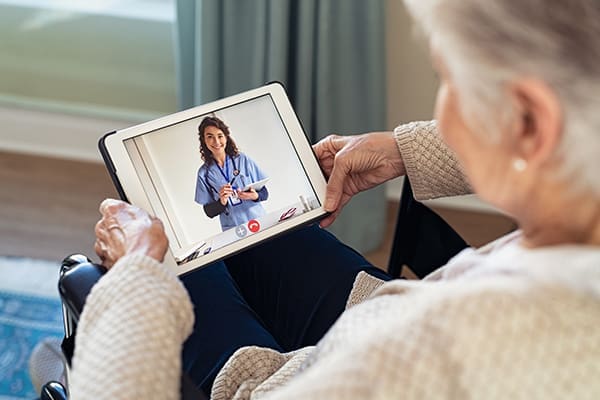
Frequent travel for appointments can be stressful for anyone managing a complex illness. Getting to the doctor can be even more difficult for palliative care patients with mobility issues or who live in rural areas.
Telehealth has grown significantly since the COVID-19 pandemic, especially for cancer patients. It offers several benefits to people seeking palliative care, such as:
- Enhanced quality of life
- Improved accessibility
- Personalized support
Read on to discover how telehealth can help mesothelioma cancer patients who are receiving palliative care.
1: Improved Accessibility and Convenience
One major benefit of telehealth for palliative care patients is the ease of access to care. You’ll need a smartphone or computer with a stable internet connection. For many people, those are easier to come by than a ride to a cancer center.
Each year, an estimated 56.8 million people, including 25.7 million in the last year of life, are in need of palliative care.
World Health Organization (WHO)
Meeting virtually with your care team can mean:
- Reduced travel time: If you need frequent check-ups for any reason, the travel time alone can be overwhelming. Virtual appointments reduce the physical and emotional strain of traveling to see a doctor in person. They can also help you manage medications and symptoms.
- Better access for rural patients: If you live in an underserved or remote area, you may not be able to see the doctor as often as you need to. Bad weather and other unforeseen circumstances may force you to delay care. Telehealth can help bridge these gaps for patients in rural areas.
- More flexible scheduling: You can choose from a wider range of appointment times when seeing your doctor from the comfort of your home. You also don’t have to worry about travel delays.
Current Research on Telehealth’s Success
According to research, telehealth palliative care may improve quality of life and in-person care. Telehealth could allow earlier access to palliative care, which may provide additional benefits.
Experts also suggest that telemedicine for palliative care can reduce hospital visits by:
- Setting care goals early
- Finding ways to stay at home safely
- Spotting troubling symptoms
- Teaching caregivers safe home care practices
2: Enhanced Communication and Support
Virtual care can improve communication and support for patients and families. Telehealth platforms provide tools like:
- Remote monitoring
- Secure messaging
- Smartphone apps
- Video and audio calls
With virtual appointments, multiple care team members can meet the patient at the same time. An oncologist, pain specialist and counselor could all participate in one session.
Family members can also join appointments remotely from anywhere. They can offer support and help by asking questions or taking notes. The presence of loved ones can help patients feel more comfortable during their visits.
3: Comprehensive Symptom Management
Managing symptoms might not seem like an obvious use for telehealth, but it’s a key advantage. Palliative care patients may hesitate to report pain. They may also be more sensitive to medications and their side effects.
Skipping the stress of travel can help patients talk about changes in their pain and symptoms sooner. Symptom-tracking apps and remote monitoring tools make it easier for patients to stay aware of how they feel. Together, these qualities of telehealth may improve overall symptom management.
Mesothelioma patients can access many types of treatment through telehealth. These include:
You can call your insurance company and request a list of available telehealth resources. Large cancer centers may also be able to connect you with virtual care options.
4: Reduced Out-of-Pocket Cost
Telehealth visits are often more affordable and efficient than in-person visits. Some insurance providers now routinely cover telehealth services for palliative care, as well.
Virtual visits reduce wait times and streamline the appointment process. They also get rid of travel costs—and the price of getting to an in-person appointment can add up fast.
You have to factor in the visit itself, but also gasoline, tolls, parking and other related expenses. If you need to see a specialist that is farther away, you might also be adding flights, car rentals and hotels to your final cost. Eliminating all those things could significantly reduce your out-of-pocket costs.
Let’s Talk Dollars Saved
Recent studies highlight how telehealth programs can help patients save money:
- A 2023 study looked at nearly 25,500 virtual care appointments split among thousands of patients. Researchers found that telehealth saved these Florida patients an average of $147 – $186 per visit.
- A 2021 study looked at a telehealth program for hospice and palliative care patients in rural Kansas. It analyzed telehealth video calls made over 6 months. The average monthly savings in mileage reimbursement and travel time was $19,200. These savings were in patient-related, non-patient-related and administrative expenses.
Explore your telehealth options
Telehealth is a practical and effective solution for people seeking palliative care. Virtual care is worth considering for the added accessibility, cost savings and more.
Be sure to ask your healthcare providers which telehealth options are available to you at your next visit. For mesothelioma patients, telehealth may be more than a convenience—it could be a lifeline that keeps care within reach.


Sources
Greer JA, Temel JS, El-Jawahri A, Rinaldi S, Kamdar M, Park ER, et al. Telehealth vs in-person early palliative care for patients with advanced lung cancer: a multisite randomized clinical trial. JAMA. 2024 Sep 11;332(14):1153–64.
Huo B, Song Y, Chang L, Tan B. Effects of early palliative care on patients with incurable cancer: A meta-analysis and systematic review. Eur J Cancer Care (Engl). 2022 Nov;31(6):e13620.
Imam SN, Braun UK, Garcia MA, Jackson LK. Evolution of telehealth-its impact on palliative care and medication management. Pharmacy (Basel). 2024 Apr 2;12(2):61.
Lomenick AF, Kuhlman SJ, Barnes JL, Gurley-Calvez T, Spaulding AO, Krebill HM, et al. Economics of using telemedicine to supplement hospice care in rural areas. J Palliat Med. 2021 Sep;24(10):1461–6.
National Cancer Institute. Delivering Palliative Care by Telehealth Meets the Needs of People with Cancer.
National Hospice and Palliative Care Organization. Alliance Leads National Coalition for Continued Telehealth Flexibilities.
Patel KB, Turner K, Alishahi Tabriz A, Gonzalez BD, Oswald LB, Nguyen OT, et al. Estimated indirect cost savings of using telehealth among nonelderly patients with cancer. JAMA Netw Open. 2023 Jan 3;6(1):e2250211.
Woo JA, Maytal G, Stern TA. Clinical challenges to the delivery of end-of-life care. Prim Care Companion J Clin Psychiatry. 2006;8(6):367–72.
World Health Organization. Palliative care.
Free Mesothelioma Treatment Guide


Written by
Tara Strand
Senior Content Writer
Tara Strand specializes in writing content about mesothelioma and asbestos. She focuses on topics like mesothelioma awareness, research, treatment, asbestos trust funds and other advocacy efforts.