Hope & Resilience Index: How Mindset and Self-Care Shape the Cancer Journey
Written by Linda Molinari on June 7, 2026
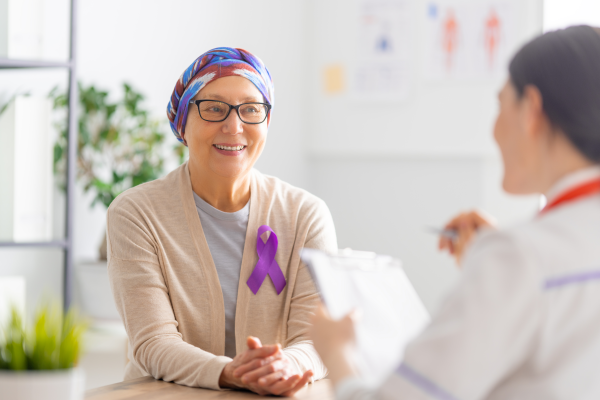
When someone receives a cancer diagnosis, the impact reaches far beyond that one person. We surveyed cancer patients and caregivers to understand the human side of that journey: the emotional strain, the small moments of peace and the habits that helped people hold on.
What we found was a story of resilience. Even under real pressure, people leaned on relationships, faith and daily self-care to keep going. For those facing mesothelioma or exposure-linked cancers, the burden ran deeper, and their experiences deserve to be seen.
How We Reported This
We asked 150 cancer patients and caregivers about hope, resilience and self-care during the cancer journey, including people with mesothelioma and other asbestos-linked cancers. Our goal was to understand how mindset is connected to real-world outcomes.
What We Found
- 87% of cancer patients find daily moments of peace, but fewer than half (41%) can still picture a meaningful future.
- Cancer patients who can imagine a future are nearly 6x more likely to rate their quality of life as good (81% vs. 14%).
- Patients focused only on the present are twice as likely as those with a long-term outlook to feel emotionally isolated (68% vs. 34%).
- Nearly 2 in 5 patients whose cancer is tied to workplace or environmental exposure (37%) don’t feel represented in mainstream cancer awareness campaigns or support resources.
- Caregivers report lower emotional well-being than the patients they support, with 51% feeling emotionally drained more often than not, compared to 39% of patients.
The Emotional Weight of a Cancer Diagnosis
Resilience rarely comes from a single place. For most cancer patients, it reflects a combination of mindset, close relationships and the simple determination to keep going through the hardest days.

Most patients reported finding moments of joy or peace in daily life, but not all could imagine making plans for the future. That gap helps explain why resilience looks uneven from one person to the next. Even when daily life still holds happy moments, long-term hope appears much harder to sustain.
The beginning of the cancer journey often brought the sharpest emotional shock. For many patients, that first period felt harder to manage than the stages that followed.

Coping felt hardest at initial diagnosis for 40% of patients, making it the most difficult point in the journey by a wide margin. Another 17% said active treatment felt hardest, 13% pointed to waiting for a treatment plan, 5% said remission and 3% said after treatment ended. Another 13% said it was difficult to pinpoint a single moment when coping felt hardest.
Patients also reported several barriers that made self-care more difficult to maintain. The most common were physical fatigue (51%), emotional exhaustion (45%) and financial constraints (37%). Family dynamics added another layer of pressure, with 61% of patients saying relatives pushed them to stay positive throughout the experience.
Caregivers felt that strain too. More than half (51%) said they felt emotionally drained more often than not, compared with 39% of patients, showing that the emotional burden often extended well beyond the person receiving treatment.
Mindset Strongly Shaped Daily Life
The way patients viewed the future appeared closely tied to their experiences of treatment, isolation and everyday well-being. A longer-term outlook was linked to a steadier sense of control and a better day-to-day experience.

Patients who maintained a long-term outlook were far more likely to rate their quality of life as good. Among long-view patients, 81% rated it positively, compared with 14% of patients who were focused only on the present.
A present-focused mindset was also associated with greater emotional and physical strain. Present-focused patients were more likely to:
- Feel emotionally isolated (68% vs. 34%)
- Say physical symptoms affected daily life (71% vs. 34%)
- Feel emotionally drained on a regular basis (64% vs. 29%)
- Miss or consider skipping medical appointments (43% vs. 15%)
Even amid stress and pressures, patients found real sources of strength. The most commonly cited by 36% of respondents was an interpersonal relationship, such as a spouse, family member or close friend. Faith came second at 19%, followed by inner willpower and care teams, each at 15%.
Exposure Added Emotional Weight
Patients whose cancer was tied to workplace or environmental exposure often faced another layer of emotional burden. Their experience reflected not only the illness itself but also the lasting impact of how it occurred.

After receiving an exposure-linked diagnosis, the most common emotions patients reported were frustration (50%), acceptance (39%) and sadness (36%). However, 75% still found moments of joy or peace in daily life.
Looking ahead was harder. Only 33% felt they could still make plans for the future, compared to 44% of the broader cancer population. They also felt more emotionally isolated (61% vs. 40%), with 36% saying their emotional burden makes self-care harder to sustain overall.
Compared to other cancer patients, patients with exposure-related cancer were less likely to view their diagnosis as "a battle to fight" (19% vs. 29%) and more likely to describe it as "something that had happened to them" (28% vs. 21%). Exposure-linked patients also reported lower emotional reserves across several important measures.

Exposure-linked patients were less likely to say they had enough energy for self-care beyond treatment, with 42% saying so compared with 67% of the broader cancer population. They were also less likely to believe they had the emotional strength to handle what comes next (61% vs. 80%) and less likely to feel in control of how they respond to challenges (53% vs. 69%).
Self-Care Still Played a Meaningful Role
Even under strain, patients with exposure-linked cancers still leaned on routines and relationships that helped them cope. Their most helpful habits often centered on connection, movement and simple grounding practices.

Exposure-linked cancer patients actually practiced more self-care habits per week on average than non-exposure patients, at four versus three. The habits with the most positive impact were social time with friends or family and exercise or physical movement, with each habit cited by 33% of respondents.
Time outdoors and faith or spiritual practices followed at 25% each, while hobbies or creative activities came next (19%). Self-care remains a meaningful source of resilience, even when emotional strain makes it harder to sustain consistently.
Patients facing mesothelioma and other asbestos-linked cancers could also benefit from more support that speaks more directly to their specific experience.

Conclusion: Moving Forward Together
Cancer changes the way people think about time, the future and what it means to take care of themselves and the people they love. What this research makes clear is that mindset matters and so does feeling seen and supported.
For patients and caregivers navigating this journey, the data points to something worth holding onto: connection, faith and small daily acts of self-care can make a real difference, even on the hardest days. For those facing mesothelioma or an exposure-linked diagnosis, finding resources and communities that understand your specific experience is not just helpful, it can be transformative.
If you or a loved one has been affected by mesothelioma or asbestos exposure, Mesothelioma.com is here to help. From treatment information to legal options, our goal is to make sure no family has to figure this out alone.
Who We Heard From
Our findings were based on responses from 150 cancer patients and caregivers surveyed in 2026. The average respondent age was 53, and the respondent group included women (74%), men (25%) and non-binary individuals (1%). By generation, 33% were baby boomers, 39% were Gen X, 23% were millennials and 5% were Gen Z.
This research may be shared for noncommercial purposes with proper attribution to Mesothelioma.com.


Free Mesothelioma Treatment Guide