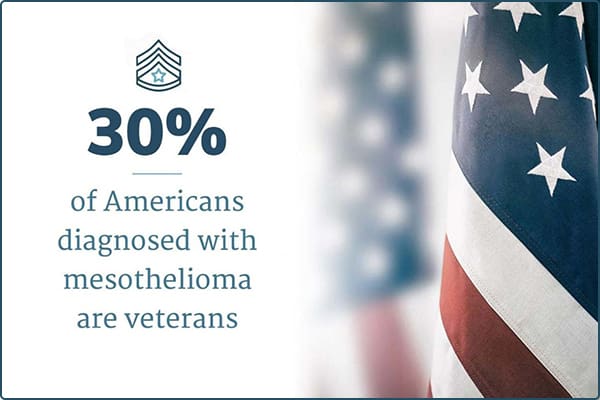
Percentage of Mesothelioma Diagnoses Among Veterans
Branches of the Military in the 20th Century Used Asbestos
Highest Risk Years for Asbestos Exposure in the Military
Compensation, Trust Funds & Mesothelioma Lawsuits for Veterans With Mesothelioma
01. VA Benefits
Veterans Benefits for Mesothelioma
Veterans diagnosed with mesothelioma can seek a variety of disability benefits. One way is through the U.S. Department of Veterans Affairs (VA). VA compensation for asbestos exposure may be available for eligible veterans with mesothelioma. Veterans with asbestos illnesses may also pursue compensation through other options, like lawsuits and trust fund claims against asbestos manufacturers.
Who Is Eligible for Asbestos Disease VA Benefits?

Any veteran diagnosed with an asbestos-related disease may be eligible for compensation. Eligibility depends on whether asbestos exposure occurred during military service and other factors. Family members of a veteran who died from an asbestos-related disease also have options. They may be eligible for VA Dependency and Indemnity Compensation (VA DIC).
Types of Benefits for Veterans With Mesothelioma
Veterans with mesothelioma or other asbestos-related diseases may be eligible for compensation. Depending on an individual’s case, they may qualify for different types of asbestos benefits from the VA.
Other Compensation Options for Veterans
Mesothelioma Compensation Options for Dependents of Veterans
Dependents of veterans may also be eligible for VA benefits. The family of a veteran who passed away from a service-related asbestos disease may be eligible for special VA compensation, such as mesothelioma burial benefits.
Dependency and Indemnity Compensation (DIC) is a monthly benefit. The surviving spouse, child or other dependents of the veteran may receive DIC.

A surviving spouse of a veteran who died from mesothelioma may receive nearly $1,600 in monthly compensation.
Asbestos-Related Diseases Qualified for VA Benefits
VA benefits may vary according to the severity of the asbestos-related disease. Veterans diagnosed with one of the following diseases may qualify for VA benefits:

Compensation from the VA may vary based on the asbestos-related disease. Monthly VA disability compensation depends on a disability rating. VA disability ratings for some asbestos conditions can vary based on severity of illness.
For example, the disability rating for asbestosis can range from 0% to 100%. The VA rates mesothelioma at 100% disability rating. With this rating, individuals with no dependents may receive upwards of $3,000 a month. A mesothelioma lawyer can help veterans determine the best benefit, or combinations of benefits, for their situation.

02. Filing VA Claims
How to File an Asbestos VA Claim
Veterans with mesothelioma or another asbestos-related disease will most likely file a VA claim for a post-service disability. Veterans should speak with a mesothelioma lawyer to begin the process of filing a VA claim. Experienced mesothelioma law firms can assist veterans through the VA claims process.

What Is Required to File a VA Claim?
- Evidence of an asbestos-related diagnosis due to asbestos exposure in the military
- Records of duties involving asbestos exposure during military service


03. Veteran Asbestos Exposure
Veterans and Asbestos Exposure
Asbestos was commonly used in U.S. military branches. The mineral was largely used for fireproofing, heat resistance and durability purposes. The widespread use of asbestos puts veterans at higher risk for mesothelioma and other asbestos-related diseases.

The military predominantly used asbestos from 1930 to 1980. Asbestos is still found in military bases and older equipment used today.
Military Locations With Asbestos Use
Asbestos use was common across all branches of the U.S. military in the 20th century. The mineral was used in aircraft, equipment, military bases and ships.
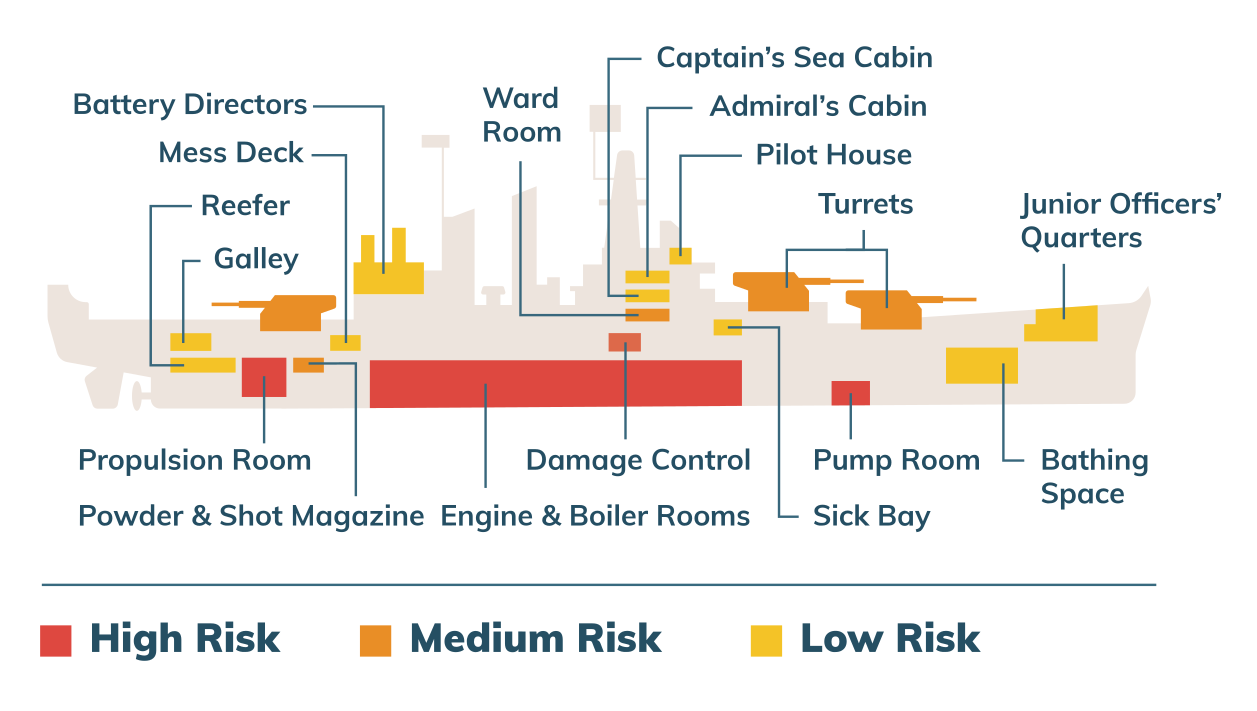
Researchers suggest ships were among the most dangerous sources of asbestos exposure for service members. Asbestos was widely used on ships. Damage to the asbestos materials could create highly concentrated areas of the carcinogenic fibers. Veterans in the U.S. Navy and other branches that spent time aboard ships, such as the U.S. Marine Corps, may have been exposed while at sea. According to an industry report, 55% of mesothelioma claims filed in 2021 alleging military exposure listed the Navy as a jobsite.
All veterans may have experienced exposure to asbestos products while in the military. However, common exposure scenarios may vary between military branches.
Common Places for Exposure to Asbestos in the Military:
“Each time they fired the guns, the dust would fall into our beds.”
– Boilerman, E2, USS Uhlmann, 1959 – 1963, Navy Veteran
04. Exposure by Branch
Asbestos Exposure by Military Branch
Asbestos was used widely across the branches of the armed forces in the 20th century. Each veteran’s asbestos exposure scenario is unique. However, some common instances of exposure have occurred among members of the same service branch. For example, U.S. Navy members may have experienced exposure from asbestos materials used on ships and in shipyards.
05. Other Asbestos Exposure
Other Asbestos Exposure Related to the Military
Asbestos is the only known cause of mesothelioma. The health risks related to asbestos exposure were well known as early as the 1920s. However, veterans continued to be exposed for decades through asbestos in products like pipes, insulation and adhesives. These products were present on ships and bases, in vehicles and other locations. But for many, the risk of exposure carried over into their home life and subsequent careers.
Secondary Asbestos Exposure From the Military
Secondary exposure involves asbestos fibers brought home on a person’s clothing, hair or body. Veterans may have exposed their loved ones to asbestos.
Examples of Secondary Exposure From the Military:
- Cleaning military uniforms or other clothing worn during service, training or anytime on base
- Hugging the veteran in their uniform or otherwise asbestos-contaminated clothing
- Riding in cars containing asbestos fibers

Veteran Asbestos Exposure Following Service
Many service members found employment after the military in related fields. Veterans may have worked in the private sector as construction workers, mechanics and engineers, among others. These occupations are at high risk of asbestos exposure. There is no safe level of asbestos exposure. Continued long-term exposure can increase the risk of developing asbestos-related diseases.

06. Treatment for Veterans
Mesothelioma Treatment for Veterans
Veterans with mesothelioma or another asbestos-related disease are eligible for medical treatment at one of the many VA treatment centers across the country. Many VA treatment centers specialize in the treatment of mesothelioma and asbestos-related diseases.
Veteran Care Options Outside the VA System
Veterans can also opt to receive care outside the VA system. They may qualify for financial assistance for travel and lodging related to treatment.

Find Mesothelioma Doctors & Cancer Centers Near You
Treatment Options for Veterans Who Don’t Want to Travel
Veterans who do not want to travel or are unable to travel for treatment have options. They may participate in the Veterans Community Care Program (an updated version of the Veterans Choice Program).
The Veterans Community Care Program allows eligible veterans to receive care from a neighborhood provider or another mesothelioma specialist instead of through a VA facility.

VA Treatment Centers
There are more than 1,000 VA health care facilities in the United States. Veterans diagnosed with an asbestos-related disease may receive care at any of these specialized facilities. Many of these facilities collaborate with other expert cancer centers nearby.

07. Common Questions
Common Questions About Mesothelioma and Veterans
- What claim options are available specifically for veterans?
Veterans may file a VA claim to receive disability compensation as a result of their asbestos exposure and related diagnosis. Veterans may also be eligible to file a mesothelioma lawsuit.
- What is the time limit for filing a mesothelioma disability claim with the VA?
VA claims to receive disability compensation can be filed at any time. VA claims are separate from mesothelioma lawsuits, which involve statutes of limitations that vary by state.
- Who is eligible for VA benefits?
Veterans diagnosed with mesothelioma may be able to receive compensation through a VA disability claim. Spouses of veterans who have died from an asbestos-related illness as a result of their service may be eligible for Dependency and Indemnity Compensation (DIC).
- Is mesothelioma a VA disability?
The VA considers mesothelioma and other asbestos-related diseases as service-related disabilities. Veterans diagnosed with an asbestos illness may be eligible for disability compensation from the VA. The amount of compensation will vary based on several factors, including the specific diagnosis. This compensation can help cover medical expenses.
- Does the military still use asbestos?
U.S. military branches no longer actively use asbestos. The mineral was widely used across nearly all branches until the late 1970s. Old uses of asbestos may still be present at military bases, in old equipment and on ships.