
Asbestos Cement

Asbestos cement was used in a variety of industries, including construction and manufacturing. Popular transite products included roofing sheets, wall cladding and cement pipes. Contact with these products puts workers at risk of asbestos diseases, including mesothelioma.
Learn More About Asbestos-Containing Products
Why Was Asbestos Used in Cement?
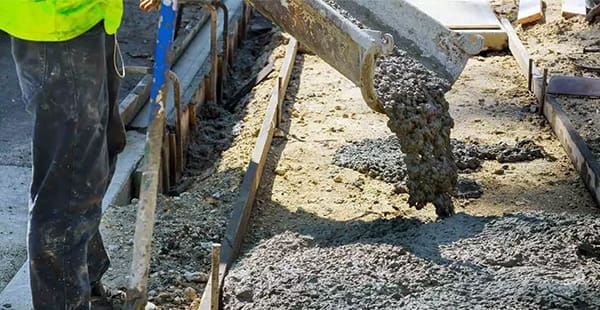
Asbestos was used in cement and concrete products to provide strength, durability and flame resistance. Asbestos cement products were produced from the early 1900s to around 1980.
Asbestos Cement History at a Glance
- Other Names: Transite, AC, plastic cement, wallboard, finishing cement, cement pipe, bonding cement, refractory cement, AC sheets, corrugated sheets
- Years of Manufacture: Early 1900s – Early 1980s
- Military Use: Barracks, boilers, military buildings, ships
- Places Used: Ceilings, flooring, furnaces, insulation, lab equipment, masonry, pipes, roofing, wall siding
- Asbestos Use Banned: No
- Noteworthy Brands: Johns-Manville, Celotex Corporation, GAF Corporation, CertainTeed Corporation
Asbestos cement products are most often a mixture of chrysotile asbestos fibers and cement. These products came in many forms, including sheets, pipes and gutters.
These parts were used for several reasons. For example, one of the most common asbestos products was transite. Transite was strong, easy to handle, resistant to corrosion and had low friction. It was often used in building materials and refractory products.
Transite pipes were used for water, sewage systems and drainage pipes. These pipes could withstand corrosion from sulfides and chemicals. These products also reduced operating costs, as water flowed smoothly through the low-friction pipes.
Asbestos cement sheeting was durable and easier to work with than heavy concrete. It was used in roofing, building siding and other construction applications. Today, cement sheets contain fibrous cellulose instead of asbestos. However, any cement sheet produced before 1980 may contain asbestos fibers.
Government agencies began to enact asbestos regulations in the late 1970s. These regulations were created by the Occupational Safety and Health Administration (OSHA) to protect workers.
As these rules went into effect, asbestos cement use declined. Asbestos cement manufacturing in the U.S. has largely halted. However, cement products containing less than 1% asbestos may still be imported from other countries.
As a result, workers and consumers are still at risk of asbestos exposure. Exposure can lead to dangerous illnesses, including mesothelioma.
Dangers of Asbestos in Cement
Individuals exposed to asbestos cement may have developed illnesses such as asbestos lung cancer or mesothelioma. Asbestos exposure may occur during production, installation or due to product deterioration over time.
Individuals may also have experienced secondary exposure. This occurs when fibers cling to people in direct contact with the mineral, such as workers. These fibers may then be inhaled or ingested by family members at a later date.
For example, one study measured the mesothelioma cases in a small town where an asbestos cement factory operated from 1932 to 1993. Researchers identified several cases of mesothelioma in workers and their loved ones.
The researchers found:
- 147 total mesothelioma cases among factory workers, including 138 pleural mesothelioma cases and nine peritoneal mesothelioma cases
- 37 mesothelioma cases among family members of workers
- 72 mesothelioma cases among town residents
Occupational exposure is a common problem for asbestos workers. However, secondary and environmental exposure can be just as harmful. Any individual in contact with asbestos fibers may be at risk of developing mesothelioma, asbestosis or other diseases.
Connect With a Top Mesothelioma Doctor Find a mesothelioma specialist near you Get Connected
Asbestos Cement Product List
Asbestos cement was used in a variety of products. These products were used in homes, landmarks, factories, ships and many other applications.
Asbestos cement products include:
- Bonding cement
- Cement
- Cement pipe
- Finishing cement
- Fireproofing cement
- Furnace cement
- Insulating cement
- Joint cement
- Masonry cement
- Plastic cement
- Refractory cement
- Transite
- Wallboard
| Product Name | Start Year | End Year |
|---|---|---|
| A.P. Green Asbestos Cement | 1948 | 1972 |
| A.P. Green Kast-O-Lite Refractory Cement | 1956 | 1972 |
| A.P. Green No. 36 Refractory Cement | ||
| A.P. Green Refractory Cement | ||
| A.P. Green SK-7 Asbestos-containing Cement | ||
| A.P. Green SK-7 Cement | 1953 | 1972 |
| AC & S Armatemp Cement No. 10 | 1961 | 1972 |
| AC & S Armatemp Cement No. 166 | ||
| AC & S Armatemp Insulating Cement | 1967 | 1974 |
| Armstrong 314 Acoustic Cement | 1945 | 1953 |
| Armstrong Nonpareil High Pressure Cement | 1909 | 1932 |
| Babcock & Wilcox Refractory Products | ||
| Bestwall Joint System Cement 1956-1965 | 1956 | 1965 |
| Bondex All Purpose Joint Cement | 1976 | |
| Bondex Bondek Roof Cement | 1969 | 1981 |
| Bondex Joint Cement | 1977 | |
| Bondex NPD All Purpose Joint Cement | 1977 | |
| Bondex Pre-Mixed Joint Cement | 1977 | |
| Capco Permaflex Waterpipe | ||
| Capco Pipe Asbestos Cement Pipe | 1965 | 1993 |
| Celotex Carey 7M Cement | ||
| Celotex Carey Asbestos Cement | ||
| Celotex Carey BTU Cement | ||
| Celotex Carey Insulating Cement | ||
| Celotex Careytemp Cement | ||
| Celotex Careytemp Finishing Cement | 1941 | 1968 |
| Celotex Vitricel Cement No. 10 | 1940 | 1969 |
| Celotex Vitricel Cement No. 19 | 1940 | 1969 |
| CertainTeed Asbestos Cement Pipe | 1962 | 1992 |
| CertainTeed Asbestos Cement Sheets | 1950 | 1976 |
| CertainTeed Cold Process Cement | 1940 | 1967 |
| Certainteed Plastic Cement | 1930 | 1977 |
| CertainTeed Sealing Cement | 1930 | 1976 |
| Certainteed Wet Seal Plastic Cement | 1961 | 1977 |
| Combustion Engineering Block Stick | 1963 | 1972 |
| Combustion Engineering Buck Stay Cement A-1360 | 1965 | 1966 |
| Combustion Engineering Calcrete 30 Insulating Cement | 1964 | 1970 |
| Combustion Engineering Castablock Insulating Cement | 1965 | 1966 |
| Combustion Engineering Expansion Joint Material | 1963 | 1966 |
| Combustion Engineering Gunisul | 1963 | 1966 |
| Combustion Engineering Hilite Insulating Cement | 1964 | 1968 |
| Combustion Engineering Lite Wate 22 | 1969 | 1972 |
| Combustion Engineering MHD Finishing Cement | 1964 | 1968 |
| Combustion Engineering Mix A | 1963 | 1972 |
| Combustion Engineering Pyroscat Fireproofing Cement | 1964 | 1972 |
| Combustion Engineering SDK 50 Insulating Cement | 1963 | 1966 |
| Combustion Engineering Stick-tite Insulating Cement | 1963 | 1972 |
| Combustion Engineering Super 711 Insulating Cement | 1964 | 1972 |
| Combustion Engineering Super Finish Insulating Cement | 1965 | 1968 |
| Combustion Engineering Super Finish Stick-tite Insulating Cement | 1963 | 1972 |
| Combustion Engineering Super Stick-tite Insulating Cement | 1964 | 1972 |
| Combustion Engineering Utility Thermal Finish Cement | 1964 | 1972 |
| Crown Cork and Seal Mundet Asbestos Cement | 1950 | 1963 |
| Eagle Picher Fireproofing Cement | 1947 | 1965 |
| Eagle Picher Super "66" Insulating Cement | ||
| Eagle-Picher 43 Insulating Cement | 1944 | 1971 |
| Eagle-Picher Hylo Insulating Cement | 1963 | 1971 |
| Eagle-Picher Insulating Cement | 1936 | |
| Eagle-Picher One-Cote Insulating Cement | 1960 | 1971 |
| Eagle-Picher Super 66 Insulating Cement | 1930 | 1971 |
| Eagle-Pitcher "43" Finishing Cement | 1944 | 1972 |
| Eagle-Pitcher 106 Finishing Cement | 1948 | 1962 |
| Eagle-Pitcher 99 Finishing Cement | 1935 | 1962 |
| Eagle-Pitcher Hylo Finishing Cement | 1963 | 1971 |
| Empire Ace Cement | 1959 | |
| Empire Ace Insulating Cement | ||
| Empire Ace Stic-On Cement | 1959 | |
| Fibreboard 127 Cement | ||
| Fibreboard Caltemp Insulating Cement | ||
| Fibreboard F1 Insulating Cement | ||
| Fibreboard Pabco 85% Magnesia Insulating Cement | 1941 | 1971 |
| Fibreboard Pabco Asbestos Cement | 1941 | 1971 |
| Fibreboard Pabco Insulating Cement | 1941 | 1971 |
| Fibreboard Prasco Insulating Cement | 1928 | 1957 |
| Fibreboard Super Caltemp Insulating Cement | ||
| Flinkote Stik-Tab Cement | 1950 | 1965 |
| Flintkote Cement | ||
| Flintkote Fibrex Asbestos Cement | ||
| Flintkote GF-8 Floor Tile Cement | 1940 | 1982 |
| Flintkote Orangeburg Cement Pipe | 1940 | 1971 |
| Flintkote Plastic Cement | 1940 | 1982 |
| Flintkote Weld-On Cement | ||
| Foster Wheeler MWI - Hi Temp Bonding Cement | 1967 | 1968 |
| Foster Wheeler Ouik-Set Insulating Cement | ||
| Foster Wheeler Quik-Set Fitting Cement | 1967 | 1970 |
| Foster Wheeler Super 48 Insulating Cement | 1970 | |
| GAF Ruberoid “115” Insulation Cement | 1937 | 1975 |
| GAF Ruberoid “214” Insulation Cement | 1937 | 1975 |
| Harbison Walker Metalkase Chromex 8 | 1964 | 1970 |
| Harbison Walker Micacrete 7/H-W 21-63 | 1963 | 1975 |
| Harbison-Walker Chromepak G Asbestos Cement | ||
| Hercules Furnace Cement | 1973 | 1983 |
| Johns-Manville 301 Cement | ||
| Johns-Manville 319 Semi-Refractory Cement | 1925 | 1969 |
| Johns-Manville 352 Insulating Cement | 1922 | 1973 |
| Johns-Manville 85% Magnesia Cement | 1902 | 1970 |
| Johns-Manville Chemtite Epoxy Joint Cement | ||
| Johns-Manville Finishing Cement | ||
| Johns-Manville Furnace Cement | 1924 | 1973 |
| Johns-Manville Insulating Cement | 1930 | 1973 |
| Johns-Manville Thermobestos Cement | 1950 | 1974 |
| Johns-Manville Transite Pipe | 1906 | 1975 |
| Kaiser Aluminum Hard-Top Insulating & Finishing Cement | 1964 | 1972 |
| Kaiser Aluminum Plastic K-N Refractory Cement | ||
| Kaiser Gypsum Masonry Cement | 1973 | |
| Kaiser Gypsum Plastic Cement | ||
| Kaiser Gypsum Plastic Gun Cement | ||
| Keasbey & Mattison Amblerex Finishing Cement | ||
| Keene Baldwin-Hill Insulating Cement | ||
| Keene B-H #1 Insulating Cement | ||
| Keene Ehret Durant Insulated Pipe | 1938 | 1945 |
| Keene Enduro Insulating Cement | 1924 | 1955 |
| Keene Mundet Mineral Wool Finishing Cement | ||
| Keene No. 1 Insulating Cement | 1938 | 1971 |
| Keene No. 1 Plus Insulating Cement | 1938 | 1971 |
| Keene Super Powerhouse Insulating Cement | 1957 | 1971 |
| Keene Thermalite Insulating Cement | 1950 | 1974 |
| Kelly-Moore Bedding Cement | 1960 | 1970 |
| Kelly-Moore Paco Joint Cement | ||
| M.H. Detrick Calcrete Insulating Cement | 1949 | 1964 |
| M.H. Detrick Hilite Insulating Cement | 1959 | 1964 |
| M.H. Detrick Insulating Cement | 1943 | 1958 |
| M.H. Detrick MDH Finishing Cement | 1947 | 1964 |
| M.H. Detrick MW Insulating Cement | 1937 | 1956 |
| M.H. Detrick Pyroscat Fireproofing Cement | 1954 | 1964 |
| M.H. Detrick Super 711 Insulating Cement | 1956 | 1964 |
| M.H. Detrick Utility Thermal Insulating Cement | 1956 | 1964 |
| Mobil Oil Armorcote Cement | 1964 | 1973 |
| Mobil Oil Dum-Dum Cement | 1964 | 1973 |
| Mobil Oil Dum-Dum Masonic Cement | 1964 | 1979 |
| Mobil Oil Dum-Dum Nail Hole | 1964 | 1973 |
| National Gypsum All Purpose Joint Cement | 1949 | 1973 |
| National Gypsum Gold Bond All-Purpose Joint Cement | ||
| National Gypsum Gold Bond Crown Coat Cement | 1935 | 1976 |
| National Gypsum Gold Bond Insulating Cement | ||
| National Gypsum Gold Bond No. 340 Insulating Cement | 1944 | 1946 |
| National Gypsum Gold Bond Ready Mixed Joint Cement | 1953 | 1976 |
| National Gypsum Gold Bond Tri-Treatment Joint Cement | 1957 | 1973 |
| National Gypsum Natcor | 1944 | 1946 |
| National Gypsum RockWool Insulating Cement | ||
| National Gypsum Wesco Joint Cement | 1952 | 1965 |
| Nicolet Finishing Cement | ||
| Owens-Corning Fiberglass Finishing Cement | 1962 | 1964 |
| Owens-Corning Fiberglass Insulating Cement | ||
| Owens-Corning Fiberglass One Cote Cement | ||
| Pittsburgh Corning Unarco Insulating Cement #50 | ||
| Pittsburgh Corning Unarco Insulating Cement #75 | ||
| Plibrico Plisulate Asbestos Cement | ||
| Plibrico Plisulate Insulating Cement | ||
| Quigley Insulag Refractory Cement | 1935 | 1974 |
| Quigley Insulbox Refractory Cement | 1935 | 1974 |
| Quigley Insuline Refractory Cement | 1940 | 1970 |
| Quigley Panelag Refractory Cement | 1945 | 1974 |
| Quigley Panelbond Refractory Cement | 1940 | 1974 |
| Quigley Waterproof Cement | 1959 | 1974 |
| Rock Wool Delta Maid One Shot Insulating Cement | 1958 | 1970 |
| Rock Wool Delta Maid High Temp Insulating Cement | 1958 | 1970 |
| Rock Wool Delta Maid High Temp-Master Insulating Cement | 1958 | 1970 |
| Rock Wool Insulation Cement | ||
| Ruberoid Calsilite Insulation Cement | 1951 | 1960 |
| Rutland Fireclay Furnace Cement | 1920 | 1977 |
| Synkoloid SYNKO Triple Duty Joint Cement and Texture | 1950 | 1975 |
| Unarco Insulating Cement | ||
| United States Mineral Cafco Cominco All-Purpose Insulating Cement | ||
| United States Mineral Cafco Cominco Mono-Ply Insulating Cement | ||
| W.R. Grace Zonolite High Temp Insulating Cement | 1945 | 1970 |
Many asbestos companies produced, distributed and used these asbestos cement products. Exposure to these asbestos materials could result in serious health conditions.
- AC&S
- A.P. Green Industries
- Armstrong World Industries
- ASARCO, LLC
- Blodgett Corporation
- Bondex International
- Celotex Corporation
- CertainTeed Corporation
- Combustion Engineering
- DAP, Inc.
- EaglePicher Technologies
- Fisher Scientific
- The Flintkote Company
- Foster Wheeler Corporation
- GAF Corporation
- Harbison-Walker Refractories Company
- Hercules Chemical Company, Inc.
- Johns-Manville
- Kaiser Aluminum
- Kaiser Gypsum Company
- Keene Corporation
- Kewaunee Scientific Corporation
- M.H. Detrick Company
- NARCO/Honeywell
- National Gypsum Company
- Owens-Corning Fiberglas
- Owens Corning/Fibreboard Corporation
- Pecora Corp.
- Pittsburgh Corning
- Quigley Company
- Sid Harvey Industries, Inc.
- Synkoloid Company
- Turner & Newall
- UNARCO Industries
- U.S. Gypsum Company
- United Gilsonite Laboratories
- United States Mineral Products Company
- W.R. Grace
- Weil-McLain Company
Contact with these companies’ products, equipment and/or manufacturing plants may lead to asbestos exposure. Any amount of exposure can cause dangerous conditions, such as mesothelioma cancer.
 Did You Know?
Corporate documents show that asbestos companies knew the products they made were dangerous.
Speak with a lawyer today about filing a mesothelioma claim against these irresponsible companies.
Did You Know?
Corporate documents show that asbestos companies knew the products they made were dangerous.
Speak with a lawyer today about filing a mesothelioma claim against these irresponsible companies.
Who Is at Risk of Asbestos Exposure From Cement?
Individuals who worked with asbestos cement may have experienced occupational asbestos exposure. One of the largest populations at risk from cement products are those who worked in manufacturing plants.
Other professionals are also at risk of asbestos exposure from cement products. As asbestos cement products begin to corrode, fibers are released into the air. These asbestos fibers can be inhaled by demolition crews, renovation professionals and building inspectors, among others.
- Boilermakers
- Bricklayers
- Construction workers
- Demolition crews
- Dockworkers
- Electricians
- Flooring installers
- Former asbestos cement manufacturers
- Foundation contractors
- Industrial workers
- Masons
- Pipefitters
- Plumbers
- Renovation teams
- Roofers
- Siding installers
- Shipyard workers
Occupational exposure is not the only way to come into contact with asbestos cement debris. Besides secondary exposure for family members, the general public can also be at risk in certain situations. For example, pipe explosions or building demolition may release asbestos cement debris.
Asbestos Lawsuits, Settlements & Other Compensation
Individuals who develop asbestos-related diseases due to wrongful exposure may be eligible to file a lawsuit or claim. Taking legal action may result in compensation for the asbestos victim. Possible avenues of compensation include lawsuit verdicts, asbestos settlements and asbestos trust fund claims.
Notable asbestos cement companies with trust funds include:
- A.P. Green Industries: APG Trust
- Celotex Corporation: Celotex Asbestos Settlement Trust
- Combustion Engineering: Combustion Engineering 524(g) Asbestos Personal Injury Trust
- GAF Corporation: G-I Holdings Inc. Trust
- Johns-Manville: Manville Personal Injury Settlement Trust
- W.R. Grace: WRG Asbestos PI Trust
Patients can file claims directly to these trusts to gain compensation. An experienced asbestos lawyer can assist with gathering information and submitting the claim. There is more than $30 billion set aside for asbestos victims in various trusts.
However, some patients may not be eligible to file with an asbestos trust. In these cases, individuals may still choose to file a lawsuit to gain compensation.
Examples of Compensation Following Exposure to Asbestos Cement
Asbestos victims may choose to file a lawsuit to seek compensation. Lawsuits may end in a verdict or settlement. Notable lawsuit verdicts relating to asbestos cement include:
- In 2001, a San Francisco jury awarded a resident and his wife more than $2.3 million. The plaintiff worked around Johns-Manville asbestos cement transite products from the 1950s to the late 1980s. As a result, he developed asbestosis.
- In 2015, a jury awarded a plaintiff $7.5 million for his asbestos exposure and mesothelioma case. The plaintiff developed mesothelioma as a result of his work at Fritz Heating and Cooling from 1973 to 1984. The plaintiff was exposed to a variety of asbestos products in boilers and furnaces, including asbestos cement.
Successful cases like these can assist patients with medical expenses and lost wages. Asbestos attorneys can help plaintiffs choose their best option for compensation. They will also assist with filing the lawsuit and seeing it to a resolution.
Sources
Garrett Concrete Coring & Sawing, Inc. Why and When Asbestos Was Used in Concrete. April 2018.
Ghirmay AM and Wood CM. Determination of Asbestos-Cement Pipe Deterioration Rate Using Accelerated Acid Degradation. American Water Works Association Journal. May 2018;110(6):E27-E38. doi: 10.1002/awwa.1041
Hughes JM, Weill H, et al. Mortality of workers employed in two asbestos cement manufacturing plants. BMJ Journals: Occupational & Environmental Medicine. March 1987;44(3):161-174. doi: 10.1136/oem.44.3.161
Mensi C, Riboldi L, Matteis SD, et al. Impact of an asbestos cement factory on mesothelioma incidence: Global assessment of effects of occupational, familial, and environmental exposure. Environment International. January 2015;74:191-199. doi: 10.1016/j.envint.2014.10.016
Trellis. Guadalupe and Amalia Laguna v. Calaveras Asbestos, Ltd. 2001.
Legal Rights for Mesothelioma Victims

Tara Strand specializes in writing content about mesothelioma and asbestos. She focuses on topics like mesothelioma awareness, research, treatment, asbestos trust funds and other advocacy efforts.

 Legally
Reviewed by
Jennifer Lucarelli
Mesothelioma Lawyer and Legal Advisor
Legally
Reviewed by
Jennifer Lucarelli
Mesothelioma Lawyer and Legal Advisor
For more than two decades, Jennifer Lucarelli has served as Legal Advisor at Mesothelioma.com. She has advocated for more than 1,000 asbestos victims, securing millions in settlements and helping them access quality medical care.