
Asbestos Insulation

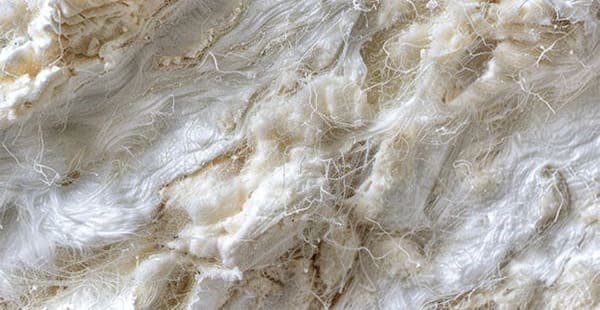
Asbestos insulation was widely used in buildings until the 1990s. Its use exposed many people to asbestos, which can lead to diseases like mesothelioma. These insulation products are still found in thousands of older buildings today. Some well-known brands include Zonolite, Kaylo and Unibestos.
Learn More About Asbestos-Containing Products
Why Was Asbestos Used in Insulation?
Asbestos was used in a variety of insulation products for nearly a century. From the mid-1860s through the late 1970s, the mineral was used in many types of insulation. Common areas for this insulation include buildings, machinery, pipes, boilers and more.
Asbestos insulation is one of the largest sources of asbestos exposure. Thousands of workers and residents have been exposed to the dangerous material. Asbestos exposure can lead to serious health problems, including mesothelioma.
Asbestos diseases can develop after an individual inhales or ingests the microscopic fibers. This often happens when friable (crumbly) asbestos products are disturbed. Once disturbed, the mineral fibers may become airborne and can easily enter the body.
Asbestos Insulation History at a Glance
- Other Names: Block insulation, fill insulation, loose insulation, pipe insulation, spray-on insulation
- Years of Manufacture: 1866 – 1990
- Military Use: Aircraft, military barracks, ships, shipyards
- Places Used: Attics, boilers, buildings, ceilings, factories, floors, manufacturing floors, residential buildings, sheet packing, ships, walls
- Asbestos Use Banned: Chrysotile asbestos was banned for new uses in 2024, but some old insulation may still contain asbestos
- Noteworthy Brands: Kaylo, manufactured by Owens-Illinois Inc. and Owens-Corning Fiberglas; Unibestos, manufactured by Pittsburgh Corning; Zonolite, manufactured by W.R. Grace
Asbestos Insulation Regulations
From the 1970s through the 1990s, U.S. federal agencies began to regulate asbestos. Notable regulations around asbestos-containing materials (ACMs) include:
- In 1973, the Environmental Protection Agency (EPA) banned spray-applied ACMs used for fireproofing and insulating.
- In 1975, the EPA banned the installation of asbestos pipe insulation and asbestos block insulation on facility components, such as boilers and hot water tanks.
- In 1977, the Consumer Product Safety Commission (CPSC) banned asbestos in artificial fireplace embers and wall patching compounds.
- In 1978, the EPA banned spray-applied surfacing materials not covered under the 1973 ban.
- In 1990, the EPA prohibited spray-on materials containing more than 1% asbestos.
The mineral may still be present in insulation products manufactured before these dates.
Dangers of Asbestos in Insulation
Asbestos exposure can lead to the development of many related diseases. Exposure to asbestos insulation may cause any of the following illnesses:
- Asbestos cancer
- Asbestosis
- Laryngeal cancer
- Lung cancer
- Mesothelioma (pleural, peritoneal and pericardial)
- Ovarian cancer
- Pleural plaques
- Pleural thickening
A study of insulators in Ireland found increased mortality rates due to asbestos diseases. The researchers followed 162 insulators from 1940 through 1975. They found elevated mortality from mesothelioma, asbestosis and bronchial carcinoma.
Another study evaluated asbestos exposure among 13 occupations. Studied occupations included insulators, pipefitters and sheet metal workers. Researchers found insulators had the highest levels of asbestos exposure.
Higher levels of exposure were observed from the 1940s through the 1950s. By the 1970s, exposure began to decline with the rise of industrial hygiene practices. Around this time, agencies such as the Occupational Safety and Health Administration (OSHA) and the EPA began to regulate asbestos use.
High asbestos exposure levels do not necessarily guarantee an asbestos disease. However, asbestos exposure is the primary cause of mesothelioma. Any level of exposure may lead to an asbestos disease, such as mesothelioma or asbestos lung cancer.
U.S. agencies have tried to curb asbestos exposure with regulations and standards for handling the mineral.
What Color Is Asbestos Insulation?
Common insulation colors include pink, yellow, gray, white, brown and black. The color of the insulation does not indicate whether it has asbestos in it or not. The only way to figure out if asbestos is in your insulation is to have a professional test it.
Connect With a Top Mesothelioma Doctor Find a mesothelioma specialist near you Get Connected
List of Asbestos Insulation Products
Many products produced before 1980 contained asbestos. Asbestos products were used across several industries, including construction, metalworking and shipbuilding. Asbestos insulation was used in many industries that included manufacturing or high temperatures in their processes.
Click on any of the asbestos insulation products below to see a list of brands and manufacturers.
- Asbestos canvas
- Asbestos rope
- Asbestos sheets
- Asbestos spray
- Asbestos wool
- Attic insulation
- Block insulation
- Calcium silicate
- Cork covering
- Insulation
- Lagging
- Marinite
- Millboard
- Pipe insulation
- Rollboard
- Sheet packing
- Silicate calsilite
- Sponge block
- Vermiculite
- Wicking
| Product Name | Start Year | End Year |
|---|---|---|
| A&I Company Asbestos Insulation | ||
| ACandS Aircell Pipe Covering | 1958 | 1968 |
| ACandS Armabestos Block Insulation and Pipe Covering | 1958 | 1968 |
| ACandS Armatemp Block Insulation | ||
| ACandS Armstrong 85% Magnesia Block Insulation | 1958 | 1970 |
| ACandS Armstrong Hi-Temp Block Insulation | 1958 | 1965 |
| ACandS Armstrong Hi-Temp Pipe Covering | 1958 | 1965 |
| ACandS Armstrong Kay-Therm Pipe Covering | 1957 | 1964 |
| ACandS Duplex Wool Felt Pipe Insulation | 1956 | 1963 |
| ACandS Kaylo Pipe Covering | 1958 | 1959 |
| ACandS Limpet Spray | 1958 | 1974 |
| ACandS LK Block Insulation | 1960 | 1973 |
| ACandS LK Pipe Covering | 1960 | 1973 |
| Amatex Asbestos Rope | 1962 | |
| Amatex Asbestos Wick | 1962 | |
| Armstrong Armaspray | 1966 | 1968 |
| Armstrong LT - Cork Covering | 1956 | 1960 |
| Armstrong LT - Minus Thirty Cork Covering | 1956 | 1960 |
| Armstrong LT - Thirty Cork Covering | 1956 | 1960 |
| Armstrong LT - Zero Cork Covering | 1956 | 1960 |
| Armstrong Nonpareil High Pressure Covering Block | 1909 | 1932 |
| Atlas Turner Asbestos Lagging | 1948 | |
| Celetox Excel Pipe Covering | 1925 | 1960 |
| Celotex Carey Asbestos Insulating Ducts | ||
| Celotex Carey Asbestos Millboard | 1906 | 1982 |
| Celotex Carey Asbestos Rope | 1925 | 1945 |
| Celotex Carey Block | ||
| Celotex Carey Calcium Silicate Block | ||
| Celotex Carey Calcium Silicate Pipecovering | ||
| Celotex Carey Cell Pipe Covering | ||
| Celotex Carey Pipe Covering | ||
| Celotex Carey Thermalite | 1906 | 1937 |
| Celotex Carey Woolfelt | ||
| Celotex Carey York Pipe Covering | ||
| Celotex Careytemp Block | ||
| Celotex Careytemp Pipe Covering | ||
| Celotex Careytemp Pre-Molded Insulation | ||
| Celotex Careytemp-Check PCB (Pipe Covering) | 1942 | 1958 |
| Celotex Vitricel Asbestos Sheets | 1941 | 1960 |
| Combustion Engineering Kaiser M Block Insulation | 1963 | 1966 |
| Crown Cork and Seal Mundet Pipe Covering | 1958 | 1963 |
| Crown Cork and Seal MundetBlock | 1958 | 1963 |
| Crown Cork and Seal Mundetcork | 1958 | 1963 |
| Eagle Picher Hylo Pipe Covering | ||
| Eagle Picher Supertemp Block | 1938 | 1945 |
| Eagle-Picher Pipe Coverings | 1956 | |
| Empire Ace Aircell Pipe Covering | 1959 | 1984 |
| Fibreboard Pabco 85% Magnesia Pipe Covering | 1941 | 1971 |
| Fibreboard Pabco Block Insulation | 1941 | 1971 |
| Fibreboard Pabco Rolled Roofing | 1920 | 1968 |
| Fibreboard Pabco Super Caltemp Block Insulation | 1965 | 1975 |
| Fibreboard Pabco Super Caltemp Insulation | 1965 | 1975 |
| Fibreboard Prasco High Temperature Block Insulation | 1928 | 1957 |
| Fibreboard Super Caltemp Pipe Covering | 1965 | 1975 |
| Flintkote Thermalkote | ||
| GAF Ruberoid Asbestos Millboard | 1928 | 1981 |
| GAF Ruberoid Asbestos Rollboard | 1928 | 1981 |
| GAF Ruberoid Calsilite Block | 1944 | 1971 |
| GAF Ruberoid Calsilite Pipe Covering | 1944 | 1971 |
| Garlock Compressed Asbestos Sheet Gasket | 1907 | 1980 |
| Garlock Rope | ||
| H.K. Porter Canvas | ||
| Johns-Manville 373 AAA Grade Rope | 1982 | |
| Johns-Manville 566 Commercial Grade Rope | 1982 | |
| Johns-Manville 702 Commercial Grade Rope | 1982 | |
| Johns-Manville 733 Commercial Grade Rope | 1982 | |
| Johns-Manville 787 Commercial Grade Rope | 1982 | |
| Johns-Manville 788 AAA Grade Rope | 1982 | |
| Johns-Manville 857 AAA Grade Rope | 1982 | |
| Johns-Manville 869 AAA Grade Rope | 1982 | |
| Johns-Manville Asbestocel | 1902 | 1975 |
| Johns-Manville Asbestos 85% Magnesia Locomotive Lagging | ||
| Johns-Manville Asbestos Canvas | ||
| Johns-Manville Asbestos Fire Felt Locomotive Lagging | 1900 | 1906 |
| Johns-Manville Asbestos Sponge Felt | 1961 | |
| Johns-Manville Asbestos Wick Packing | 1983 | |
| Johns-Manville Block Insulation | 1930 | 1973 |
| Johns-Manville Marinite Board | 1906 | 1975 |
| Johns-Manville Millboard | 1910 | 1990 |
| Johns-Manville Pipe Covering | 1902 | 1970 |
| Johns-Manville Superex 1900 Sheet/Block | 1922 | 1973 |
| Johns-Manville Superex Pipe Covering | 1930 | 1971 |
| Johns-Manville Thermobestos Block Insulation | 1950 | 1974 |
| Johns-Manville Thermobestos Pipe Covering | 1950 | 1974 |
| Johns-Manville Thermo-Pac Asbestos Rope | ||
| Johns-Manville Transite Sheets | 1906 | 1975 |
| Kaiser Aluminum M Block Insulation | 1959 | 1972 |
| Kaiser Aluminum Plastic Insulation | ||
| Kaiser Aluminum Super D Block Insulation | 1971 | 1974 |
| Kaiser Aluminum Vee Block Castable Insulation | 1959 | 1974 |
| Kaiser Gypsum K-Spray Ceiling Texture | 1961 | 1976 |
| Keasbey & Mattison Asbestos Rope | ||
| Keasbey & Mattison Millboard | ||
| Keene Enduro Block Insulation | 1924 | 1955 |
| Keene Enduro Pipe Covering | 1924 | 1955 |
| Keene Monoblock Insulating Block | 1941 | 1968 |
| Keene Mono-Spray | 1963 | 1970 |
| Keene Pyrospray | 1963 | 1971 |
| Keene Pyrospray “S” | 1963 | 1971 |
| Keene Thermalite Block Insulation | 1950 | 1964 |
| Keene Thermalite Pipe Covering | 1950 | 1974 |
| Keene Thermasil Block Insulation | 1956 | 1972 |
| Keene Thermasil Pipe Covering | 1956 | 1972 |
| M.H. Detrick Block Insulation | 1937 | 1956 |
| M.H. Detrick Griptex Block Insulation | 1956 | 1964 |
| National Gypsum Asbestos-Faced Mineral Wool Insulation Board | 1944 | 1945 |
| National Gypsum Gold Bond Corrugated “Economy 250” Asbestos Cement Sheet | 1954 | 1981 |
| National Gypsum Gold Bond Spray Quick | 1967 | 1972 |
| National Gypsum Gold Bond Spray Quick A | 1963 | 1964 |
| National Gypsum Gold Bond Sprayolite | 1956 | 1973 |
| National Gypsum Gold Bond Thermotec Asbestos Cement Sheets | 1960 | 1981 |
| National Gypsum Gold Bond Velvet White Super Spray | 1962 | 1967 |
| National Gypsum Perfect Spray | 1971 | 1972 |
| National Gypsum Sprayed “Limpet” Asbestos | 1945 | 1949 |
| Nicolet Asbestos Millboard | ||
| Nicolet BestFelt Block | 1962 | 1963 |
| Nicolet BestFelt Pipe Covering | 1962 | 1963 |
| Nicolet Cellotone | 1939 | 1968 |
| Nicolet Kay-Therm Pipe Insulation | 1962 | 1964 |
| Nicolet Wick Packing | ||
| Nicotet 450 (No. 453 Wt. Mineral Wool) | 1966 | |
| Owens-Corning Fiberglas Kaylo Block Insulation | 1955 | 1975 |
| Owens-Corning Fiberglas Kaylo Heat Insulation | 1955 | 1975 |
| Owens-Corning Fiberglas Kaylo Pipe Covering | 1955 | 1975 |
| Owens-Illinois Kaylo Block Insulation | 1948 | 1958 |
| Owens-Illinois Kaylo Pipe Covering | 1948 | 1958 |
| Pacor Insulation | ||
| Pittsburgh Corning Foamglas Building Insulation | ||
| Pittsburgh Corning Insubestos Felt Insulation | ||
| Pittsburgh Corning Unibestos Insulation | 1962 | 1972 |
| Pittsburgh Corning Unibestos Pipe Covering | 1962 | 1972 |
| Plibrico Plisulate Insulating Block | 1948 | 1972 |
| Raymark Raybestos Quik-Flame Woven Asbestos Wicking | ||
| Raymark Rope | ||
| Raymark Wick | ||
| Rock Wool Block | ||
| Ruberoid Anti-Sweat Pipe Covering | 1936 | 1958 |
| Ruberoid Frost-Proof Pipecovering | 1928 | 1958 |
| Ruberoid WatcoCell | 1942 | 1960 |
| Ruberoid Woolfelt Pipe Covering | 1928 | 1959 |
| Shook & Fletcher Insulation | ||
| TBAC Asbestos Lagging | 1948 | |
| Turner & Newall Aircell Pipe Covering | 1952 | 1964 |
| Turner & Newall Featherweight Pipe Covering | 1962 | 1964 |
| Turner & Newall K & M Hy-Temp Block Insulation | ||
| Turner & Newall K & M Pipe Covering | 1962 | 1964 |
| Turner & Newall Kay-Therm Pipe Covering | 1962 | 1964 |
| Turner & Newall Limpet Spray | 1930 | 1973 |
| Unarco Amocel Pipe Covering | ||
| Unarco Asbestos Rope | 1940 | 1969 |
| Unarco Mineral Wool | 1957 | 1960 |
| United States Gypsum Corrugated Cool Felt Air C. Covering | 1936 | 1939 |
| United States Gypsum Corrugated Wool Felt Covering | ||
| United States Gypsum Pipe Covering | 1936 | 1939 |
| United States Gypsum Pyrobestos PC Board & Stack Lining | 1936 | 1939 |
| United States Gypsum Rigid Block Insulation (Generic) | 1943 | 1971 |
| United States Gypsum Super Hard Spray | 1968 | 1969 |
| United States Mineral Cafco Spray | ||
| United States Mineral J Spray | ||
| W.R. Grace Perltex Super-40 Fog | 1966 | 1973 |
| W.R. Grace Perltex Super-40 Perlite | 1966 | 1973 |
| W.R. Grace Perltex Super-40 Polycoarse | 1968 | 1973 |
| W.R. Grace Perltex Super-40 SAV | 1968 | 1973 |
| W.R. Grace Zonolite Mono-Kote (MK-3) | 1959 | 1973 |
| W.R. Grace Zonolite Spra-Insulation (MK-2) | 1960 | 1973 |
| W.R. Grace Zonolite Spra-Tex | 1955 | 1972 |
Types of Asbestos Insulation
Asbestos insulation can be divided into four main types. The mineral was used for its durability and resistance to heat and chemicals.
This type of insulation came in semi-rigid slabs or blocks. These were often made of nearly pure asbestos, making them particularly risky. These were often used to insulate equipment, including boilers. This type of insulation could also be used in walls.
This type of insulation was molded to insulate pipes, ducts and other plumbing snugly. It often becomes crumbly as it ages, releasing asbestos dust if it is disturbed. This type of insulation can pose a particular threat to Navy veterans, as it was used liberally aboard ships.
This is a fluffy asbestos material often used in attics and walls of buildings. It was designed to fill hollow spaces in structures, being poured or blown into empty spaces. Its loose composition makes it extremely prone to becoming airborne with little disturbance. Cellulose and fiberglass loose-fill insulation have become popular since companies stopped manufacturing the product with asbestos.
Developed to be less labor-intensive when installed, this type of insulation was often used on ceilings and walls. It can be easily damaged, releasing asbestos fibers. Since 1990, the U.S. has heavily restricted spray insulation.
Other types of insulation products that may contain asbestos include cement, electrical panels, plaster and certain brands of batt insulation.
In addition to the mineral’s ability to withstand high temperatures, ACMs were cost-effective to produce. As a result, many companies included it in their products.
One of the most well-known asbestos insulation brands was Zonolite, which was produced with asbestos as early as the 1940s. The Zonolite Company was then acquired by W.R. Grace in 1963. The Zonolite product was vermiculite insulation, often used in residential attics.
Pure vermiculite is not dangerous. However, nearly 80% of the world’s vermiculite supply came from the asbestos-contaminated Libby, Montana mine. As a result, vermiculite insulation can cause health risks because it is contaminated with asbestos fibers.
Zonolite has not been manufactured in decades. However, it can still be found in homes and buildings constructed before 1980. As a result, homeowners, contractors and demolition crews are still at risk of exposure from Zonolite.
Insulation products often contained high concentrations of asbestos. For instance, some millboard products reportedly consisted of upwards of 85% asbestos. These products were used frequently in the construction of residential and commercial buildings.
Asbestos insulation has been found in businesses, factories, homes, hospitals and schools.
Asbestos insulation was also used to line other products, such as boilers, steam pipes and valves. These industrial uses of asbestos insulation were common in factories and plants across the United States.
A wide range of manufacturers included asbestos in their insulation materials. These manufacturers often sold products to other asbestos companies to distribute and install. Companies also acquired and sold brands, which can complicate tracking the responsible manufacturer.
Over the years, many companies produced and sold asbestos insulation.
- ACandS
- Amatex Corporation
- Armstrong Contracting and Supply
- Celotex Corporation
- Combustion Engineering
- Crown Cork & Seal Company
- Eagle Picher
- E.J. Bartells Company
- The Flintkote Company
- GAF Corporation
- Garlock Sealing Technologies
- Johns-Manville
- Kaiser Aluminum
- Kaiser Gypsum Company Inc.
- Keene Corporation
- Melrath Gasket Inc.
- Metalclad Insulation Corporation
- National Gypsum Company
- New England Insulation
- Nicolet/Keasbey & Mattison
- Owens-Corning Fiberglas
- Pittsburgh Corning
- Raybestos/Raymark Industries Inc.
- Rock Wool Manufacturing
- Shook & Fletcher
- Turner & Newall
- U.S. Gypsum Company
- W.R. Grace
Asbestos companies were often aware of the risks of asbestos exposure but chose not to protect their employees. As a result, companies exposed thousands of workers and consumers to asbestos-containing materials.
 Did You Know?
Corporate documents show that asbestos companies knew the products they made were dangerous.
Speak with a lawyer today about filing a mesothelioma claim against these irresponsible companies.
Did You Know?
Corporate documents show that asbestos companies knew the products they made were dangerous.
Speak with a lawyer today about filing a mesothelioma claim against these irresponsible companies.
Who Is at Risk of Asbestos Exposure From Insulation?
Asbestos insulation exposed thousands of workers, consumers and bystanders to the harmful mineral. Some occupations were in almost constant contact with asbestos products at work. These workers are more likely to develop diseases, such as mesothelioma.
For a large part of the 20th century, asbestos insulation products were unavoidable in certain settings. For example, the U.S. Navy required asbestos use aboard its ships for decades.
Other occupations may have only occasionally encountered asbestos. However, any amount of asbestos exposure can be dangerous.
- Auto mechanics
- Boiler workers
- Bricklayers
- Carpenters
- Construction workers
- Demolition crews
- Drywall tapers
- Electricians
- Equipment operators
- Factory workers
- HVAC workers
- Industrial workers
- Insulators
- Machine operators
- Machinists
- Masons
- Metal workers
- Molders
- Pipefitters
- Plumbers
- Roofers
- Shipyard workers
- Steamfitters
- Veterans
Occupational exposure is one of the most common ways to come into contact with asbestos. However, secondhand exposure can be just as dangerous. This can happen when asbestos fibers settle on the clothing of asbestos workers. The fibers may later be disturbed and inhaled by family members and loved ones. Secondary exposure can still cause mesothelioma and other asbestos diseases.
Asbestos Lawsuits, Settlements & Other Compensation
Asbestos exposure victims with an asbestos-related disease may be eligible for compensation. Victims can seek justice from the parties responsible for their exposure.
Compensation can come in many forms. Asbestos victims may be able to receive awards from a trust fund claim, lawsuit or settlement.
Notable asbestos insulation companies with trust funds include:
- Celotex Corporation: Celotex Asbestos Settlement Trust
- Combustion Engineering: Combustion Engineering 524(g) Asbestos Personal Injury Trust
- Garlock Sealing Technologies: GST (Garlock Sealing Technologies) Settlement Facility
- Johns-Manville Corporation: Manville Personal Injury Settlement Trust
- W.R. Grace: WRG Asbestos PI Trust
Claimants can file directly with these trusts to receive compensation. An asbestos lawyer can help individuals gather the necessary information for their mesothelioma claims. More than $30 billion is set aside in various asbestos trusts.
However, many asbestos companies do not have trust funds. In this instance, individuals may wish to file an asbestos lawsuit. Lawsuits can result in asbestos settlements or verdicts.
Insulation Case Set Precedent for Future Asbestos Litigation
One of the first successful asbestos insulation cases involved an industrial insulation worker.
The worker, Clarence Borel, was exposed to asbestos throughout his 30-year career. From 1936 to 1969, he was in contact with asbestos insulation daily. He was not required to wear a respirator or any personal protective equipment (PPE).
In his deposition, the worker testified he often inhaled asbestos dust from insulation. However, he did not know how dangerous the dust was.
“Yes, I knew the dust was bad,” Borel said. “But we used to talk [about] it among the insulators, [about] how bad was this dust, could it give you TB, could it give you this, and everyone was saying no, that dust don’t hurt you, it dissolves as it hits your lungs.”
As a result of asbestos exposure, Borel developed asbestosis and mesothelioma. In 1969, he filed a case against 10 asbestos companies. Four defendants settled out of court. The other six continued to trial.
The remaining companies involved in Borel’s case were:
- Armstrong Cork Corporation
- Fibreboard Paper Products Corporation
- Johns-Manville
- Philip Carey Corporation
- Pittsburgh Corning
- Ruberoid Corporation, a Division of GAF Corporation
Borel passed away before the case concluded, so his wife stood in as the plaintiff. All defendants were found liable and his wife received the jury award.
The American Museum of Tort Law considers this case an important landmark in asbestos litigation.
Borel v. Fibreboard Paper Products Corp. was the first successful suit by an insulation worker against asbestos manufacturers. The success of the Borel case inspired a large number of lawsuits. It also facilitated controlling hazardous materials in the workplace through product liability actions. Subsequently, hundreds of thousands of asbestos victims, mostly workers, filed lawsuits in courts across the country.
Compensation Following Exposure to Asbestos Insulation
Lawsuits are one avenue mesothelioma patients can seek compensation. Notable asbestos insulation-related lawsuit verdicts include:
- In September 2020, a California jury awarded a retired Navy veteran $2.6 million. He developed mesothelioma from exposure to asbestos insulation during his time in service. He was exposed to insulation manufactured by Metalclad Insulation Corporation.
- In October 2018, a North Carolina jury awarded one of the largest verdict amounts for an asbestos insulation case. The jury awarded the family of an asbestos victim $32.7 million. The victim died of mesothelioma resulting from workplace exposure to asbestos insulation. He worked in a tire plant, where he was exposed to asbestos pipe insulation installed by Covil Corporation. Though Covil Corporation tried to appeal the verdict, it was affirmed by several federal appellate courts.
- In September 2017, a Massachusetts jury awarded a former power plant worker $7.55 million. From 1968 to 1976, he worked as an equipment operator at a New Hampshire plant. During his work, he was exposed to Kaylo brand insulation produced by Owens-Corning Fiberglas. The insulation was installed by New England Insulation, the defendant in the case. The exposure at his workplace led him to develop mesothelioma. The jury ordered New England Insulation to pay the man damages for his exposure and disease.
Experienced mesothelioma lawyers can help mesothelioma patients and other asbestos victims receive compensation. Lawyers will assist plaintiffs with choosing their best option for compensation.
Safely Removing Asbestos Insulation
Asbestos insulation may still be present in older buildings, factories, equipment and more. Asbestos removal can pose risks and abatement professionals must follow strict guidelines.
Only asbestos abatement professionals should handle, remove and dispose of asbestos and asbestos products. Mishandling asbestos insulation may lead to fibers becoming airborne, increasing the risk of exposure. The EPA recommends the general public not attempt to handle or remove asbestos.
The EPA requires abatement specialists to complete training and certification. These professionals also understand and will follow federal and state laws. These regulations are in place to protect people from asbestos exposure.
Other organizations, such as the CPSC and OSHA also have regulations, rules and requirements in place for handling the mineral.
Common Questions About Asbestos Insulation
Which insulation is most likely to contain asbestos?
How do I know if insulation has asbestos?
Can blown-in insulation have asbestos?
Should homeowners handle asbestos insulation?
Handling asbestos products can be very dangerous. Only trained professionals should remove asbestos. Asbestos insulation can be particularly hazardous in older homes and building materials. Homeowners may accidentally find the product and potentially harm themselves by handling it incorrectly. Asbestos insulation may also be mistaken for fiberglass insulation.
Fiberglass and asbestos are different materials but can be difficult to tell apart just by looking at them. The only way to be sure insulation contains asbestos is to have it tested.
If you suspect there may be asbestos in their home, contact an asbestos abatement specialist. They will conduct asbestos testing and safely remove and dispose of any materials.
Sources
Advantage Home Performance. Insulation Materials.
American Museum of Tort Law. Dangerous Exposure: Borel v. Fibreboard Paper Products Corp., 1973.
Annals New York Academy of Sciences. THE OCCURRENCE OF ASBESTOSIS AMONG INSULATION WORKERS IN THE UNITED STATES.
Banner Environmental Services, Inc. How To Tell If Insulation Is Asbestos.
Elmes PC, Simpson MJ. Insulation workers in Belfast. A further study of mortality due to asbestos exposure (1940-75). Br J Ind Med. 1977 Aug;34(3):174–80.
Ewing WM, Hays SM, Hatfield R, Longo WE, Millette JR. Zonolite attic insulation exposure studies. Int J Occup Environ Health. 2010;16(3):279–90.
Haztrainer. Fiberglass and Asbestos: Similarities and Differences.
Korda RJ, Clements MS, Armstrong BK, Law HD, Guiver T, Anderson PR, et al. Risk of cancer associated with residential exposure to asbestos insulation: a whole-population cohort study. Lancet Public Health. 2017 Nov;2(11):e522–8.
Law.com VerdictSearch. Suit argued insulation company concealed asbestos dangers.
Oracle Solutions. How To Tell The Difference Between Asbestos Insulation, Fibreglass Lagging And Cellulose Insulation.
Research School of Population Health, ANU College of Health & Medicine. How dangerous is it to live in a Mr Fluffy house?
Reuters. Despite Zoom trial irregularities, Navy vet wins $2.5 mln asbestos verdict.
Spear TM, Hart JF, Spear TE, Loushin MM, Shaw NN, Elashhab MI. The presence of asbestos-contaminated vermiculite attic insulation or other asbestos-containing materials in homes and the potential for living space contamination. J Environ Health. 2012 Oct;75(3):24–9.
Storm Master Construction & Roofing. Loose-Fill Insulation: Features and Benefits.
United States District Court for the Middle District of North Carolina. MEMORANDUM OPINION AND ORDER.
United States Environmental Protection Agency. EPA Actions to Protect the Public from Exposure to Asbestos.
United States Environmental Protection Agency. Protect Your Family from Asbestos-Contaminated Vermiculite Insulation.
U.S. Court of Appeals for the Fifth Circuit. Clarence Borel, Plaintiff-appellee, v. Fibreboard Paper Products Corporation et al.,defendants-appellants, Nationalsurety Corporation,intervenor-appellee, 493 F.2d 1076 (5th Cir. 1973).
Williams PRD, Phelka AD, Paustenbach DJ. A review of historical exposures to asbestos among skilled craftsmen (1940-2006). J Toxicol Environ Health B Crit Rev. 2007;10(5):319–77.
Legal Rights for Mesothelioma Victims

Tara Strand specializes in writing content about mesothelioma and asbestos. She focuses on topics like mesothelioma awareness, research, treatment, asbestos trust funds and other advocacy efforts.

 Legally
Reviewed by
Jennifer Lucarelli
Mesothelioma Lawyer and Legal Advisor
Legally
Reviewed by
Jennifer Lucarelli
Mesothelioma Lawyer and Legal Advisor
For more than two decades, Jennifer Lucarelli has served as Legal Advisor at Mesothelioma.com. She has advocated for more than 1,000 asbestos victims, securing millions in settlements and helping them access quality medical care.