Asbestos on Merchant Marine Ships

The Merchant Marine fleet consists of cargo ships, tankers and many other vessels. Merchant ships contained asbestos products like boilers, gaskets and pipe insulation. Workers and sailors on them faced asbestos exposure risks. Many have developed asbestos diseases like mesothelioma as a result.
Learn About Asbestos on Merchant Marine Ships in Our Free Guide
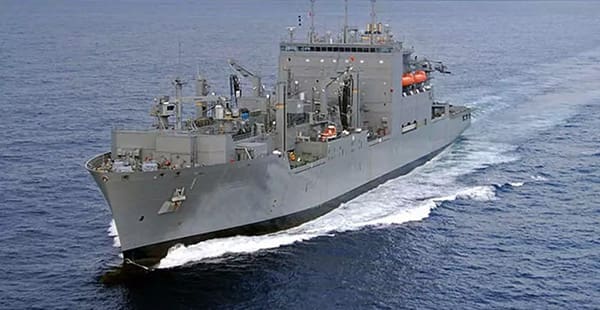
Types of Merchant Marine Ships
Merchant Marine ships are an important auxiliary to the U.S. Navy. During wartime and national emergencies, the Navy can call on different types of commercial ships to help transport supplies and military personnel.
The Merchant Marine fleet consists of both privately- and federally-owned merchant ships registered with the U.S. government. The many types of ships serve different purposes related to transport work.
Bulk Carriers
Bulk carriers, also known as bulkers, carry unpacked or loose cargo. This may include items like grains, cement, steel, coal and ores. This type of ship was first developed in the 1950s. Today, around 5,000 are in use.
Cargo Ships
Cargo ships, also known as freighters, carry the majority of maritime freight. They transport many kinds of commodities in different forms, like refrigerated, boxed and palletized. Individual cargo ships are usually constructed for a specific type of cargo and vary in size.
Container Ships
Container ships, also known as boxships, carry non-bulk cargo like manufactured products in reusable containers. The containers are intermodal, meaning they can be moved via trucks and trains as well as by ships. They are among the largest types of ships and are used mainly on liner routes.
Passenger Ships
Passenger ships transport people and vehicles. The two main types are ferries and cruise ships. Ferries carry people and vehicles, like cars and trucks, across short distances. Whereas cruise ships are massive ships built for luxury sailing experiences.
Passenger ships carrying vehicles may be Roll-on/Roll-off (RORO), meaning the vehicles can be driven on and off it. They may also be Lift-on/Lift-off (LOLO), meaning they are loaded and unloaded via crane.
Tanker Ships
Tanker ships carry liquids and gases and include oil tankers, chemical tankers, product tankers and gas carriers. They are responsible for transporting materials that supply the energy that we use every day.
Other Types of Merchant Marine Vessels
The Merchant Marine fleet currently contains over 10,000 ships and vessels. Besides the main types listed above, other types of ships in the fleet include:
- Barges
- Charter boats
- Dredges
- Excursion vessels
- Fireboats
- Heavy lifting vessels
- Icebreakers
- Towboats
- Tugboats
- Water boats
During the 20th century, asbestos use on ships was common. Many companies used the mineral in their products due to its durability, heat resistance and affordability. The military even required contractors to use asbestos in hundreds of materials for decades. Asbestos products commonly used on ships and other vessels include boiler insulation, brake linings, cement sheets, gaskets, joint compounds and turbines.
 Did You Know?
Asbestos exposure is still responsible for thousands of deaths each year.
Victims of asbestos exposure who have been diagnosed with mesothelioma may be eligible for financial compensation.
Did You Know?
Asbestos exposure is still responsible for thousands of deaths each year.
Victims of asbestos exposure who have been diagnosed with mesothelioma may be eligible for financial compensation.
Major Merchant Marine Ship Operators
The Merchant Marine fleet consists of ships and vessels owned and operated by private and government entities. Thousands of ships have served as part of the Merchant Marine fleet over the years. People who built and crewed them faced asbestos exposure risks on the job.
Major operators in the Merchant Marine industry include:
- Alaska Marine Highway System
- Alaska Steamship Company
- American Roll-On Roll-Off Carrier
- APL Maritime LTD
- Caltex Group
- Central Marine Logistics
- Chevron Shipping Company LLC
- Crowley
- Eastern & Western Steamship
- Fairwater Vessel Management LLC
- Hammond Shipping Company
- Interocean Steamship Corporation
- Interstate Steamship
- Isbrandtsen Line
- Keystone Shipping Company
- Liberty Maritime Corporation
- Maersk Line Limited
- Maritime Administration (MARAD)
- Matson Navigation Company Inc.
- Merchants & Miners Transportation Company
- Military Sealift Command (MSC)
- Naess Shipping Company
- Ocean Shipholdings Inc.
- OSG Ship Management Inc.
- Pacific-Gulf Marine Inc.
- Pasha Hawaii Holdings LLC
- Patriot Contract Services LLC
- Polar Tankers Inc.
- Savage Marine Management LLC
- Schuyler Line Navigation Company
- Shell Oil Company
- Standard Oil Company
- Texaco
- TOTE Services LLC
- Transoceanic Cable Ship Company LLC
- U.S. Marine Management Inc.
- U.S. Ocean Fleet Management
- Universe Tankships (National Bulk Carriers)
Anyone who develops asbestos diseases after serving on Merchant Marine ships may have options for compensation. Veterans may be eligible for benefits from the U.S. Department of Veterans Affairs (VA). The VA sets aside money for veterans and certain Merchant Mariners with service-related injuries to acknowledge their service to the country.
Mesothelioma patients may also be able to sue companies that provided asbestos supplies used on merchant ships. Lawsuits may result in verdicts and settlements.
Attorneys at experienced mesothelioma law firms can help explore all your legal options. They can also file VA benefits and handle lawsuits on behalf of clients.
Merchant Marine Ships During World War II
Merchant ships were loosely organized before World Wars I and II. The Shipping Act of 1916 created the first federal agency meant to promote a Merchant Marine, in response to shipping shortages caused by World War I (WWI).
In 1936, President Roosevelt signed the Merchant Marine Act. It created a multi-year shipbuilding program for using merchant ships for trade during peacetime, and military support during wars and national emergencies.
In 1938, the Merchant Marine Cadet Corps was established. During World War II (WWII), shipyards mass-produced thousands of cargo ships to help the war effort.
Two famous classes of cargo ships, the Liberty and the Victory, were essential to WWII. Shipyards built these ships using asbestos products like boilers, cement sheets and gaskets.
Liberty-Class Cargo Ships
During WWII, the transportation needs of the military led it to develop a cargo ship type that could be mass-produced. Called Liberty ships, shipyard workers made 2,710 of them for the war effort. The first one was launched in September 1941. The ships both carried cargo and transported personnel. They also contained various types of asbestos materials.
When President Roosevelt saw the design of the ship class, he approved of its evident usefulness but said, “She isn’t much to look at, though, is she? A real ugly duckling.” Afterward, it was not uncommon to hear these ships referred to as “ugly ducklings.”
After the United States entered the war at the end of 1941, the Liberty class proved too slow and small for the military’s purposes. Many of the ships ended up sold to private owners.
Victory-Class Cargo Ships
Victory ships replaced Liberty ships as WWII progressed. The Oregon Shipbuilding Company at Portland Shipyard launched the first one in January 1944. In total, shipyard workers built more than 500 Victory ships. Many of these ships were likely made with asbestos products.
The Victory ships were larger and faster than the Liberty ships they replaced. This made them more difficult for German U-boats to target. At the end of the war, the military used many Victory ships as part of Operation Magic Carpet to return service members home.
After WWII, many of these ships were used in commercial ventures. They also played an important role in postwar reconstruction around the world.
List of Merchant Marine Ships
Over the decades, the U.S. Merchant Marine fleet has included tens of thousands of ships and other vessels. The following is a small number of notable merchant ships active during WWII:
- SS Alcoa Cavalier
- SS Bay State
- SS Berkeley Victory
- SS Blue Grass State
- SS Borinquen
- SS Buckeye State
- SS Burco Trader
- SS CHM Jones
- SS Cilco Logger
- SS Copper State
- SS Coxcomb Hill
- SS Defiance
- SS Del Mar
- SS EJ Block
- SS Elizabeth W. Moran
- SS Empire State
- SS Evergreen State
- SS Excalibur
- SS Gopher State
- SS Keystone State
- SS Little Butte
- SS Lurline (Matson Line)
- SS Mobilube (Bethlehem Steel, Sparrows Point Yard, Maryland)
- SS Mormacdove
- SS Mormacsea
- SS Morris Hillquit
- SS Oakey L. Alexander, formerly SS Laconia Victory
- SS Pacific Victory
- SS Pan Massachusetts
- SS Pine Tree State
- SS President Cleveland (Bethlehem Steel West Coast Shipyard, California)
- SS Robin Gray, formerly USS Fayette (APA-43) (Ingalls Shipbuilding Company, Missouri)
- SS Samuel Chase
- SS Sheldon Clark (Bethlehem Shipbuilding at Fore River Shipyard, Massachusetts)
- SS Simon Benson
- SS Socony 10
- SS Spencer Kellogg
- SS Steel Traveler (Federal Shipbuilding, New Jersey)
- SS Stonewall Jackson
- SS Thomas H. Barry, formerly SS Oriente (Newport News Shipbuilding and Dry Dock Co., Virginia)
- SS Thomas Lynch
- SS Thomas Nelson
- SS Tydol Bayonne
- SS Uruguay, formerly SS California
- SS William Hooper
- SS William J. Bryan
- SS William Mulholland
- SS Wilson B. Keene
Asbestos attorneys can help mesothelioma patients and their families assess if they may have been exposed to asbestos aboard specific ships. These specialized attorneys have the resources and experience to track down this information.
Merchant Marine Ships After World War II
Post-WWII, the Merchant Marine fleet was part of a general demobilization effort in the military. Per the Merchant Ship Sales Act of 1946, the government sold many surplus ships to civilian operators inside and outside the United States.
Many ships built during WWII, such as the Victory-class ships, formed a significant part of the postwar civilian merchant fleet. The act also created a reserve fleet to keep vessels from falling into disrepair in case of a war or other national emergency. The reserve fleet went into action during both the Korean and Vietnam wars.
During this period, companies continued to supply the U.S. military with asbestos products to be used on ships. Major suppliers include:
- American Standard Inc.
- Babcock & Wilcox (B&W)
- Bath Iron Works
- Cleaver-Brooks Company
- Combustion Engineering
- Foster Wheeler Corporation
- Garlock Sealing Technologies
- Ingersoll Rand Company
- John Crane Inc.
- Johns-Manville
- Kewanee Boiler Company
- Metalclad Insulation Corporation
- ON Marine Services
- U.S. Gypsum Company
Merchant Mariners continue to develop asbestos diseases. Asbestos diseases can take decades after exposure to develop. People who believe they experienced asbestos exposure can talk to their doctors. A medical expert can watch for signs of mesothelioma and other asbestos diseases.
Sources
Congress.gov. Veteran Status Based on Service with Certain Civilian Groups.
Franke K, Paustenbach D. Government and Navy knowledge regarding health hazards of asbestos: a state of the science evaluation (1900 to 1970). Inhal Toxicol. 2011 Dec;23 Suppl 3:1–20.
Marine Insight. Types of Ships in Merchant Navy.
National Museum of the U.S. Navy. Liberty Ships.
National Museum of the U.S. Navy. Victory Ships.
National Park Service. Liberty Ships and Victory Ships, America’s Lifeline in War (Teaching with Historic Places).
TEC Container. TYPES OF MERCHANT SHIPS.
The National WWII Museum. Supplying Victory: The History of Merchant Marine in World War II.
U.S. Department of Transportation Maritime Administration. Military to Mariner.
U.S. Department of Transportation Maritime Administration. The Maritime Administration’s First 100 Years: 1916 – 2016.
Legal Rights for Mesothelioma Victims

Tara Strand specializes in writing content about mesothelioma and asbestos. She focuses on topics like mesothelioma awareness, research, treatment, asbestos trust funds and other advocacy efforts.

 Legally
Reviewed by
Jennifer Lucarelli
Mesothelioma Lawyer and Legal Advisor
Legally
Reviewed by
Jennifer Lucarelli
Mesothelioma Lawyer and Legal Advisor
For more than two decades, Jennifer Lucarelli has served as Legal Advisor at Mesothelioma.com. She has advocated for more than 1,000 asbestos victims, securing millions in settlements and helping them access quality medical care.